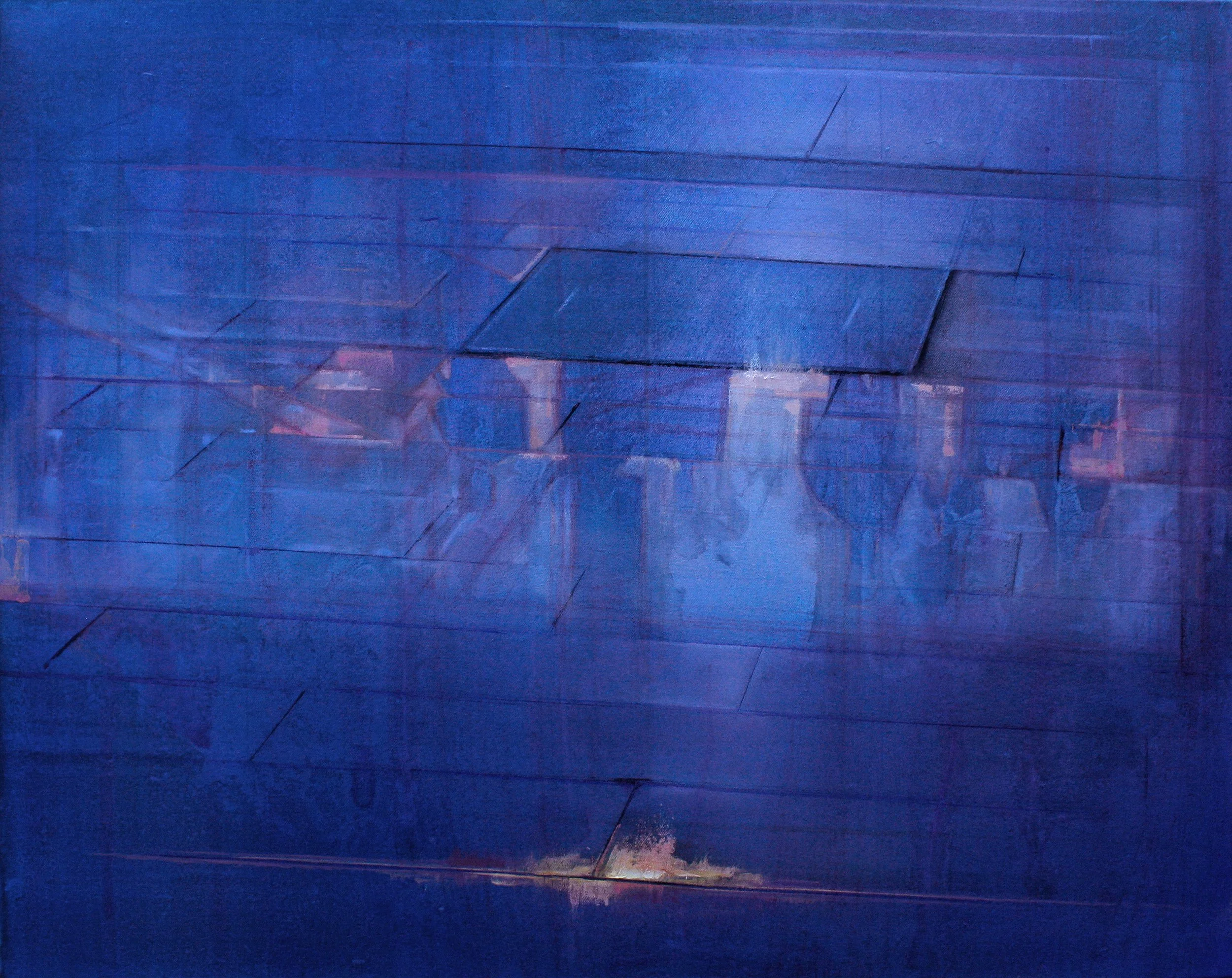

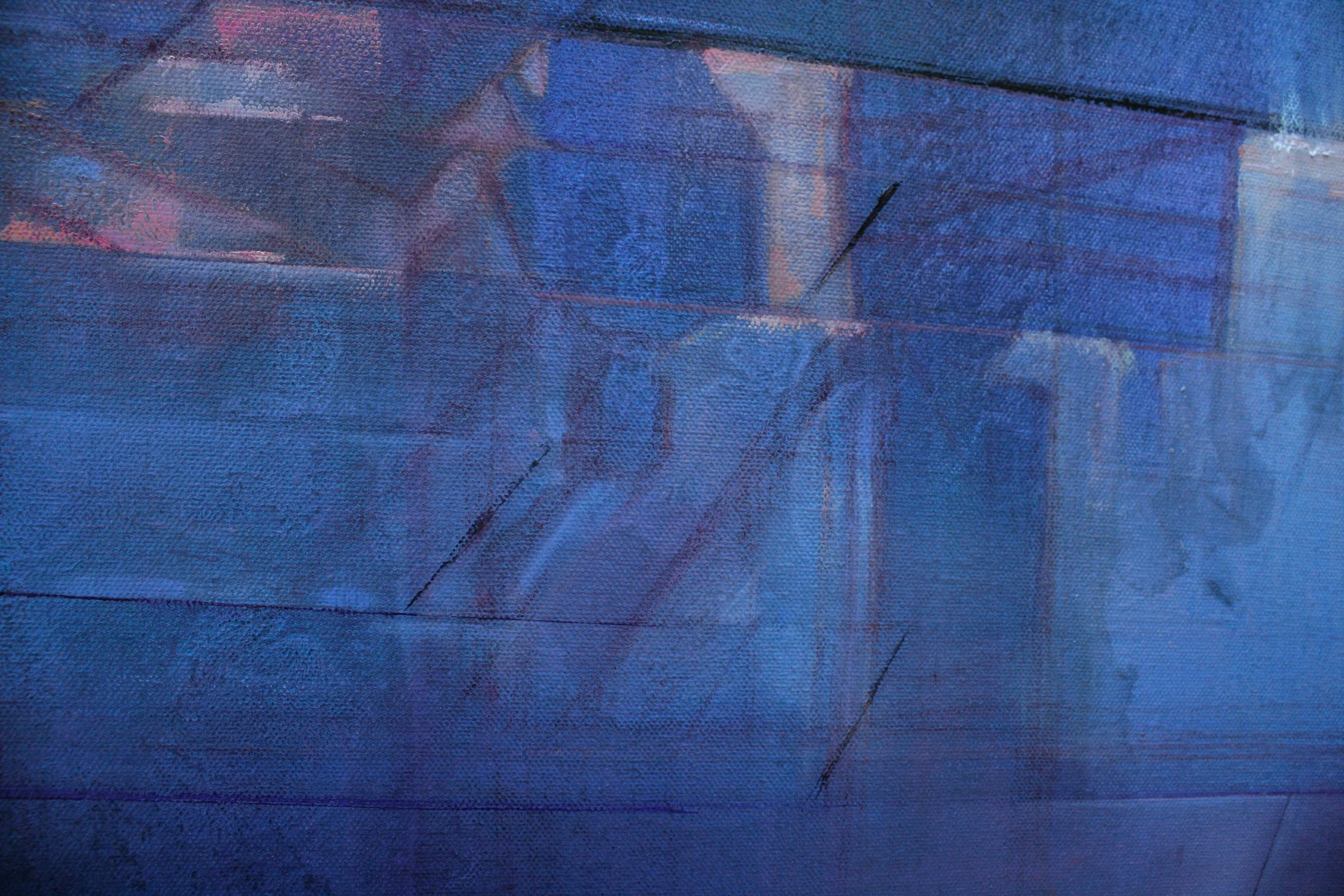
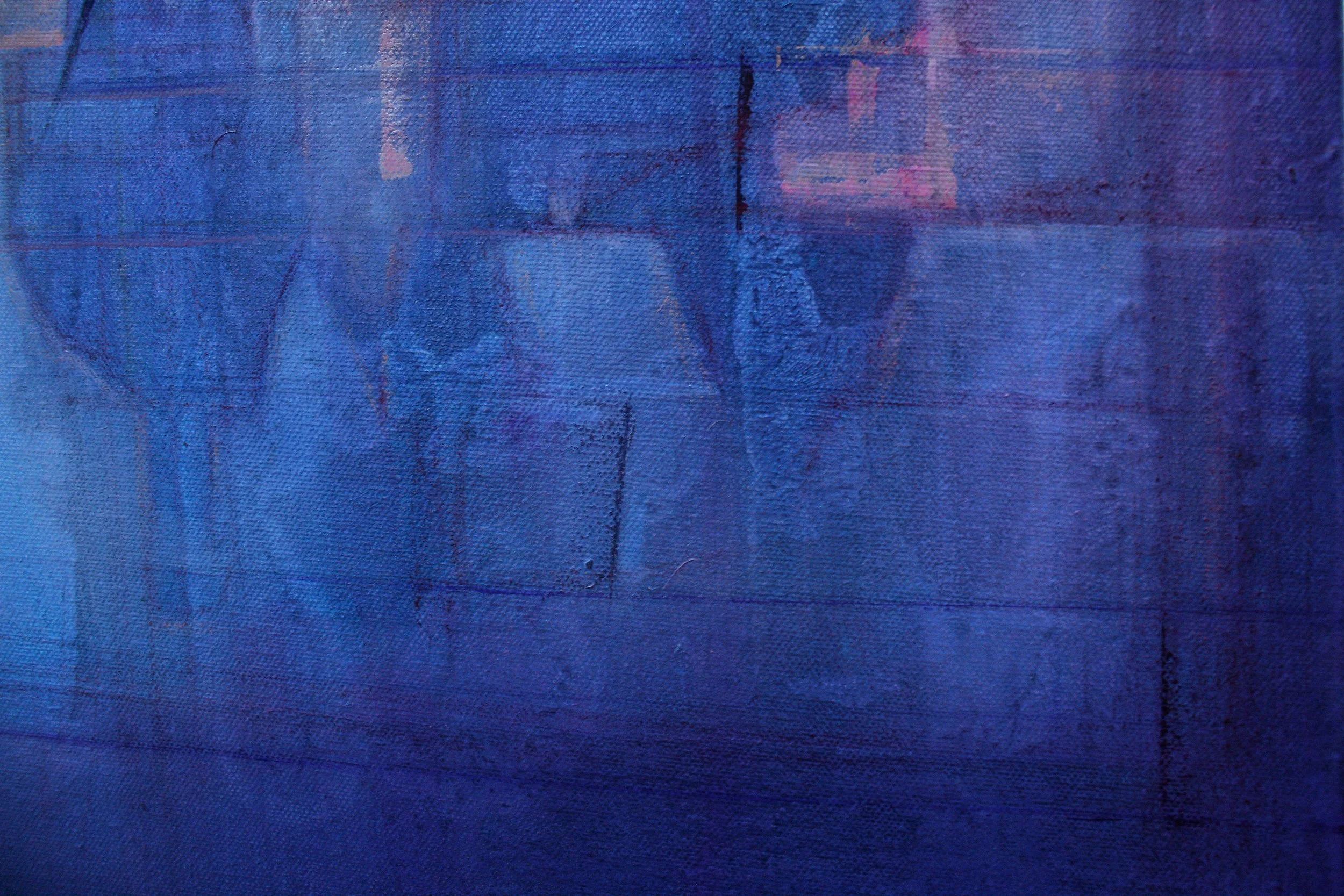

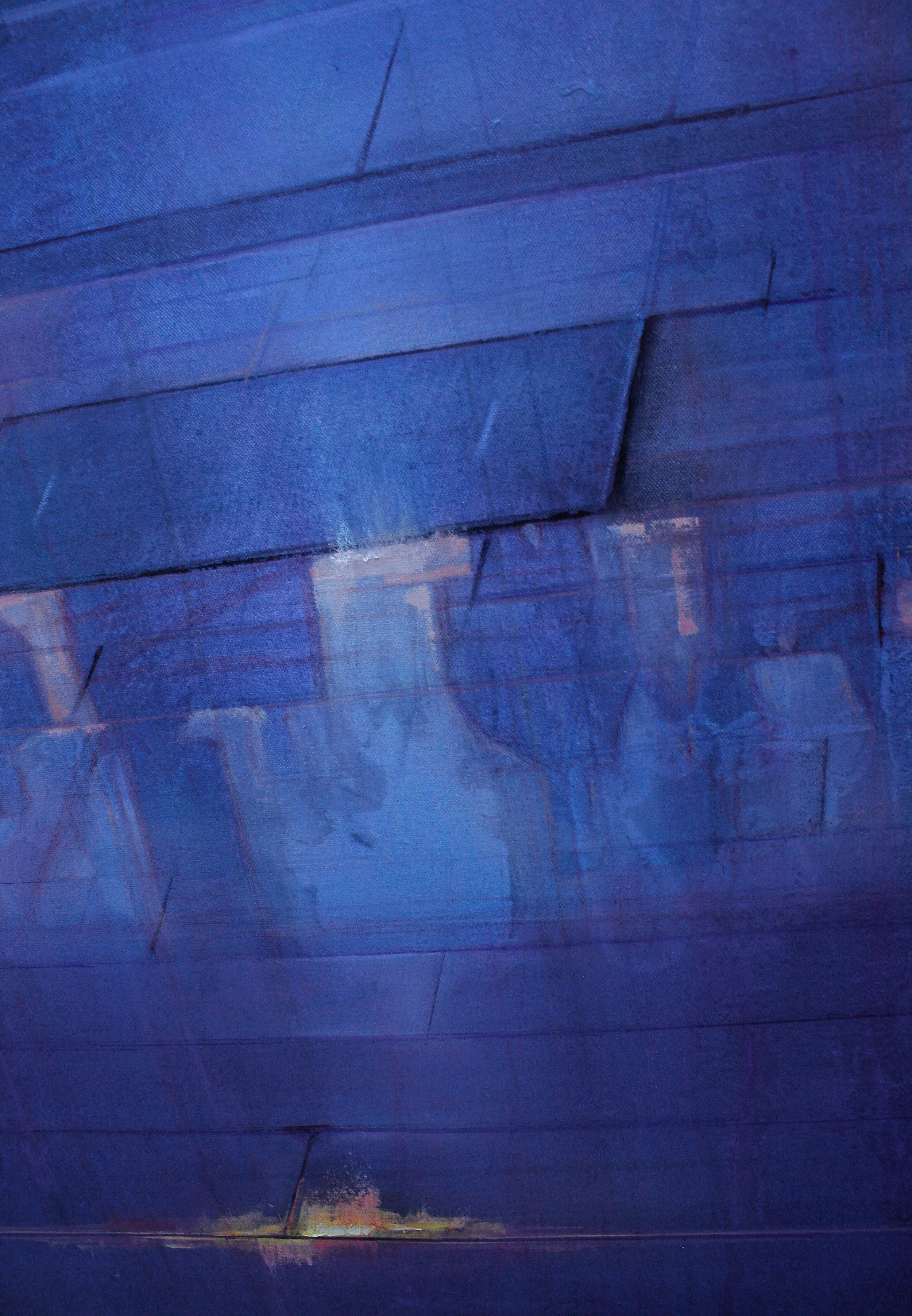
Cave draws from Plato’s Allegory of the Cave, transforming the philosophical metaphor into a contemporary and deeply personal image of perception, confinement, and mediated experience. The painting depicts the reflected movement of figures entering and exiting a subway through layered handprints embedded into the surface, collapsing bodily presence, memory, and illusion into a single unstable field. These imprints recall both Paleolithic cave markings and the repetitive traces of urban existence, positioning the hand simultaneously as evidence of presence and a sign of entrapment within constructed systems.
The composition operates through reflection rather than direct depiction. Figures appear fragmented and partially dissolved across the dark blue surface, as though suspended between apparition and erasure. The tiled geometry of the floor introduces a rigid spatial order, while the blurred movement of bodies and the spectral quality of the handprints destabilize it. In this tension, Leonov extends his ongoing inquiry into the relationship between the sensible and the intelligible: the visible world becomes a shifting projection rather than fixed reality.
Rather than illustrating Plato directly, Cave translates the allegory into lived contemporary experience. The subway functions as a modern passageway of repetition and conditioned movement, where human presence becomes absorbed into systems larger than itself. The work marks an important emergence of Leonov’s “human disease” framework, where geometry, reflection, bodily trace, and philosophical structure converge into a meditation on alienation, memory, and the fragile possibility of self-awareness within constructed realities.