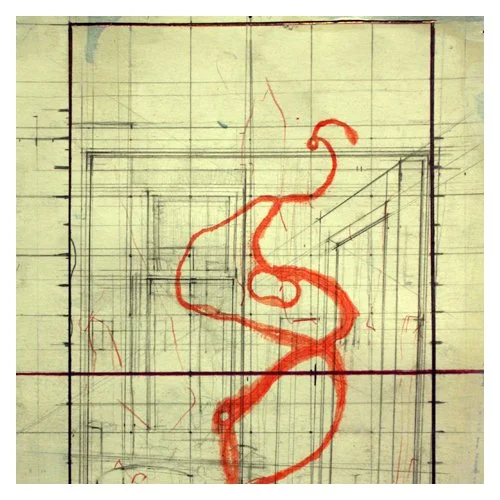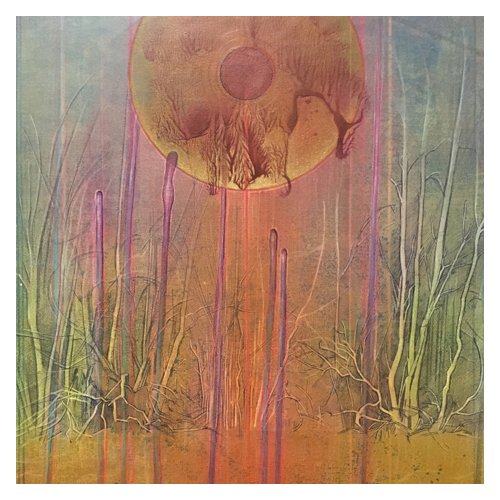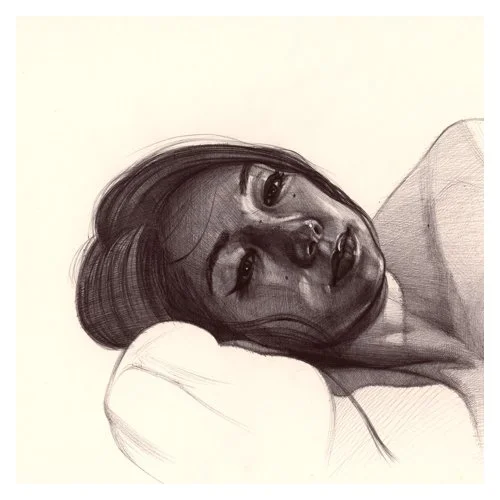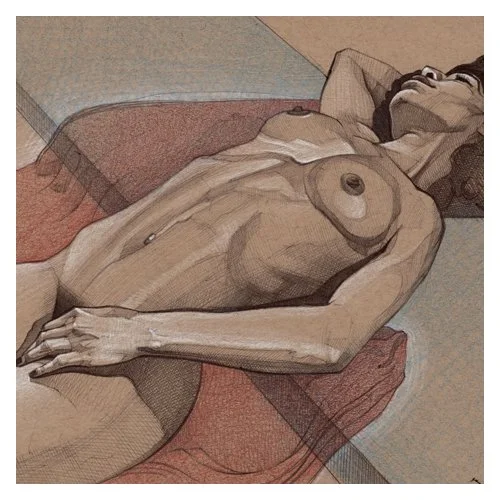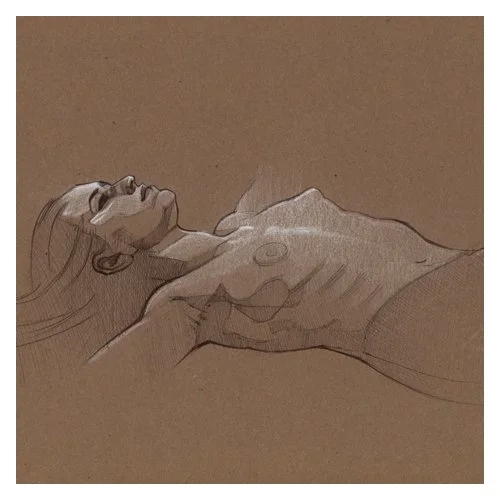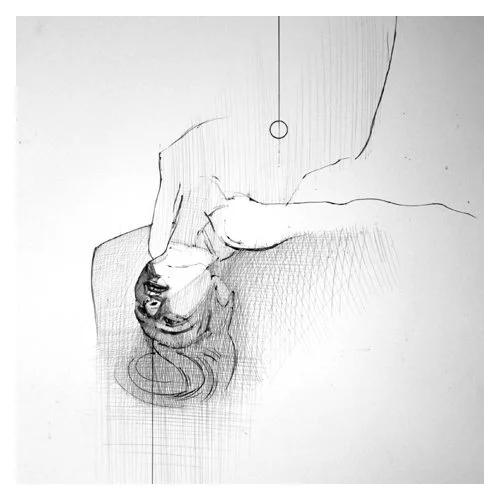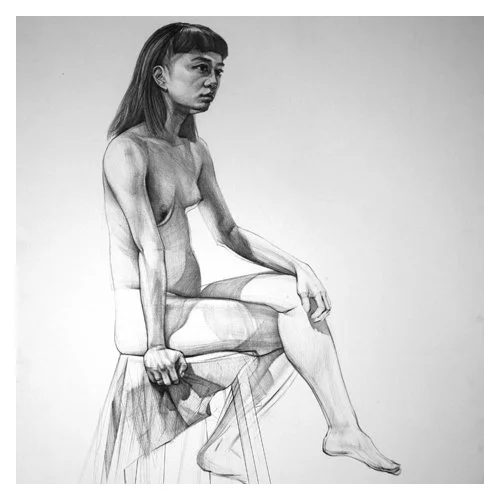
These works function as preparatory drawings while remaining complete in their own right. Developed as compositional frameworks for later paintings, they establish spatial structure, directional force, and visual hierarchy, while already carrying the emotional and conceptual core of the final work. Through line, imprint, fluid mark, and layered surface, Leonov applies the same “human disease” methodology—where structure and disruption, control and release, coexist within a single field. Grids, perspectival systems, and measured divisions operate alongside gestural intrusions and material unpredictability, producing images that are both constructed and unsettled. What emerges is not a neutral plan, but a charged translation: thought and feeling articulated through spatial terms, where the initial impulse of the work—its psychological and emotional origin—is made visible with clarity, restraint, and precision.
Concepts brings together works that function as concentrated points of inquiry within Leonov’s practice. Spanning different periods, these pieces test material, formal, and symbolic ideas that extend into more developed bodies of work. Rather than resolving into fixed conclusions, they operate as sites of compression, where perception, environment, embodiment, and structure remain in active relation.
The 2018 drawings extend the practice to its widest range. Highly resolved portraits, built through dense crosshatching and precise tonal calibration, coexist with geometric constructions in which lattices, radial systems, cubes, and sacred structures act directly upon the figure. Anatomy and geometry interrogate one another until they read as a single language in tension, positioning the live model drawing as a fully realized field—intimate and architectural, precise and experimental, vulnerable and monumental.
The 2017 drawings bring a concentrated integration of specificity and invention. Portraits of heightened psychological presence coexist with more composite figures, while circles, radiating lines, and geometric systems function as a transparent architecture across the page. These structures operate simultaneously as measuring devices, spatial frameworks, and metaphors for the mind’s search for order, allowing the drawing to unfold as a complete visual proposition.
The 2016 works introduce a heightened formal pressure, as geometry acts decisively within the drawings. Axes, arcs, and intersecting structures do not merely frame the body but test it, divide it, and reorganize its internal logic. These works hold the softness and vulnerability of the observed figure against a more severe order, producing images in which anatomy and abstraction enter into direct and unresolved negotiation.
The 2015 drawings expand the figure into a more layered and unstable field. Multiple poses, repeated contours, and shifting viewpoints turn the body into a palimpsest, where time, motion, and perception accumulate within a single composition. Negative space becomes fully active, and the drawings gain a sense of breadth and elasticity, allowing observation to extend into memory, atmosphere, and design.
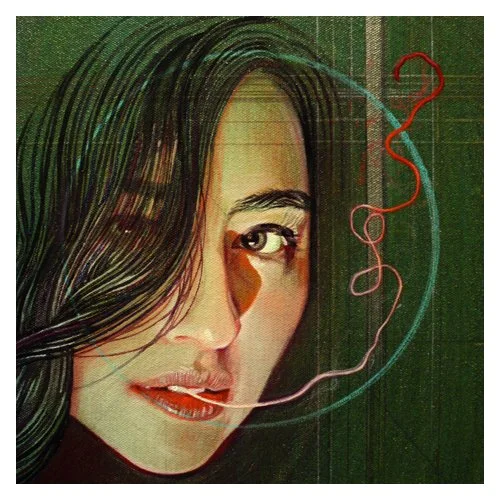
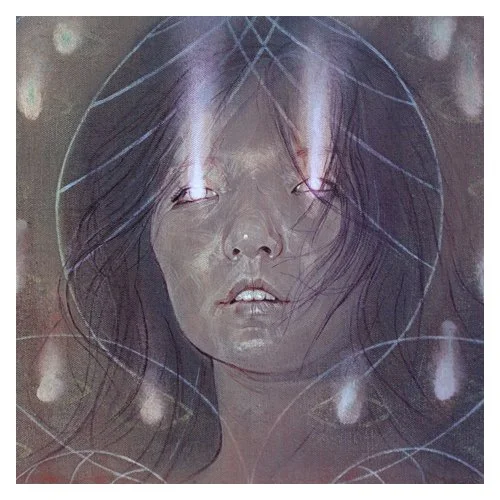
Melpomene positions portraiture as a constructed field in which identity is both articulated and withheld. The figure—an actress cast as muse—is rendered with controlled precision, yet the work resists functioning as likeness alone. A spherical framework encircles the head, establishing an interior field that both contains and extends the figure, while the partially obscured gaze suspends the subject between visibility and concealment.
The most developed element emerges from the mouth, where a string-like imprint extends outward into the composition. This gesture displaces expression from the face into a material trace, suggesting a form of projection that is at once vocal, structural, and unresolved. Rather than resolving identity, the work stages its formation—held between articulation and obstruction, interiority and outward expression.
The 2014 drawings are marked by a sharpened sense of control and economy, where likeness is held with increasing precision and the figure gains greater formal authority on the page. Crosshatching becomes more deliberate, tonal transitions more assured, and the drawings achieve a refined balance between observation and construction. What distinguishes this body of work is its restraint: the figure remains central, while a deeper structural logic quietly organizes the image from within.
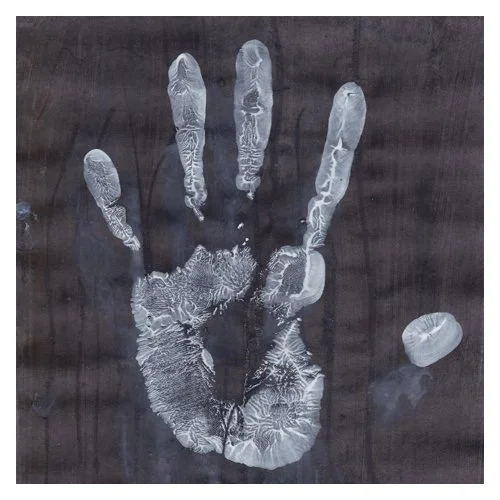
Hands reduces the image to an essential register, where representation is stripped down to gesture, imprint, and trace. Rejecting technical refinement, Leonov deliberately abandons developed painterly skill in favor of a more immediate and unmediated mark, positioning the work as evidence of presence rather than depiction.
Comprising a body of works on paper, the project is defined by a limited palette and a disciplined exploration of surface through shifting material conditions—variations of contact, absorption, and resistance—each producing a distinct register. Methodology evolves from piece to piece, emphasizing process as a means of testing the limits of mark-making, where control is continually negotiated against the behavior of the medium.
Drawing from the logic of cave painting, the hand becomes both subject and instrument—an index of the self. The works establish a methodological origin for later conceptual systems, including the development of a broader “human disease” framework, where image-making functions as inscription tied directly to the body. Rather than constructing form, they register a darker, introspective condition, where mark, surface, and identity collapse into a singular act of assertion.
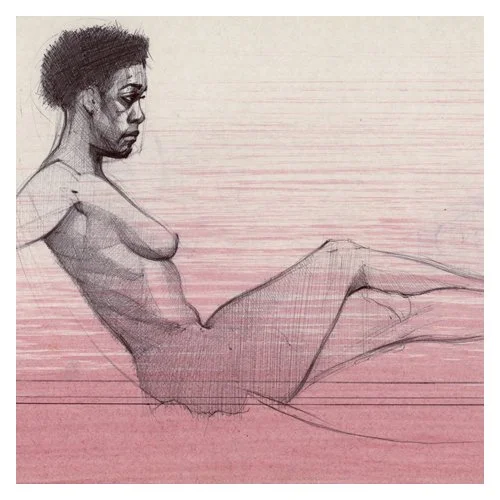
Developed through the live model sessions Leonov organized himself, the 2013 drawings establish the live figure as a central field of inquiry within his practice. Executed in ballpoint pen, they combine anatomical discipline with a notable openness and play, allowing observation, contour, and tonal construction to remain active rather than resolved. The works hold the immediacy of the session while treating the page as more than a site of study: the body becomes a living structure through which line, attention, and presence operate as one.
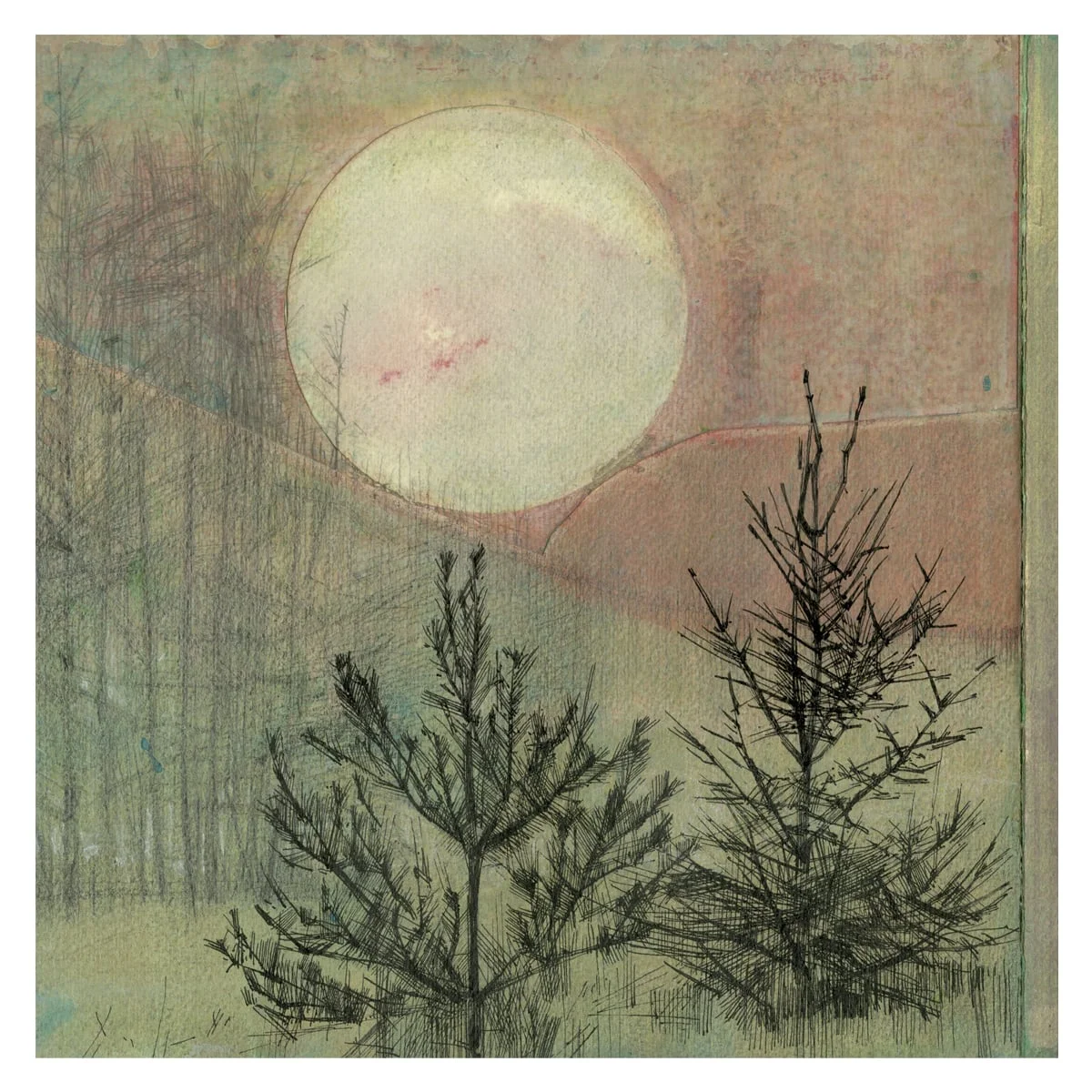
Trip develops a non-linear and deliberately ambiguous narrative through the interplay of abstraction and figuration. Images emerge and dissolve across the surface, resisting fixed sequence and remaining open-ended, with meaning held in a state of continuous formation—at once a journey and a perceptual experience.
Inspired by a visit with the artist’s grandmother to her childhood village, the works operate less as depiction than as a loose reconstruction. Figures, landscapes, and abstract passages shift between recognition and indeterminacy, where memory is not resolved, but dispersed— fragmented, provisional, and intentionally undefined.
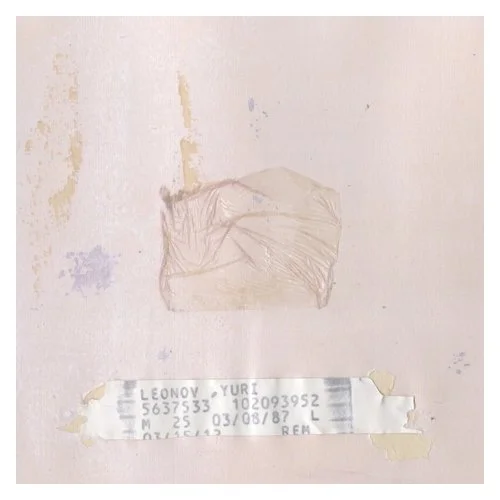
Modus Operandi marks an early, open phase in Leonov’s practice, where experimentation within the studio becomes the primary driver of the work. Process takes precedence over resolution, with each piece functioning less as a finished image than as an active site of testing, accumulation, and revision.
Working primarily with acrylic, the surface becomes a field of intervention, allowing for the embedding of disparate materials—hair, organic matter, and found elements, including remnants such as medical infusion labels—directly into the work. Unorthodox mixtures—coffee, tea, dirt —extend the material language beyond conventional limits, while works on paper provide a flexible and immediate framework for exploration.
The series establishes a methodological foundation that carries forward into later work. Rather than constructing fixed compositions, these pieces register a process of emergence, where material, gesture, and lived residue converge—marking a point at which experimentation, confession, and form begin to coalesce.
Cherub extends Leonov’s practice into a more explicitly symbolic register, where a religious archetype is reworked through a contemporary lens. The centrally rendered face, constructed with controlled precision, emerges from a layered field of stains, markings, and radiating structures that resist fixed interpretation.
Rather than affirming its traditional role, the cherub is destabilized into an ambiguous figure of perception and influence. Repeated eye-like forms and orbiting linear systems suggest vision as both insight and burden, while the surrounding rings and traces function less as symbols than as residues of interaction—forces that shape, distort, and circulate around the subject. The image unfolds through accumulation, where clarity and diffusion remain in tension, and meaning is held in a state of suspension.
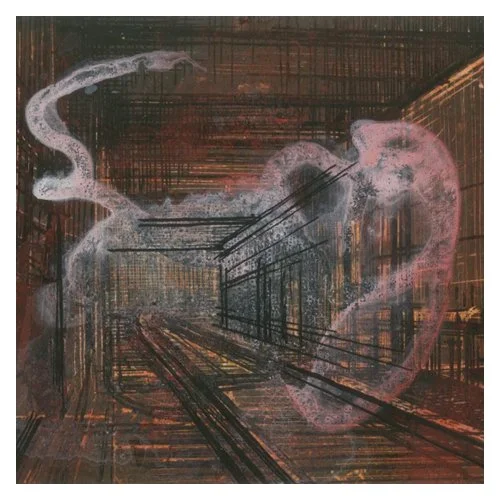
Metro transforms discarded New York City MetroCards into sites of inscription, where personal and cultural memory are reworked through material intervention. Using scratching, carving, and inking, Leonov treats the plastic surface as both support and resistance, producing images that register as etched rather than drawn—marked by pressure, abrasion, and erosion.
Fragments of text, schematic mapping, and references to the Russian metro are embedded within the cards, establishing a dialogue between systems of transit and histories of displacement. The works function as palimpsests, where surfaces are not built but worn into— carrying traces of movement, rupture, and adaptation. Rather than stabilizing memory, the series renders it as layered, provisional, and continually in transit.
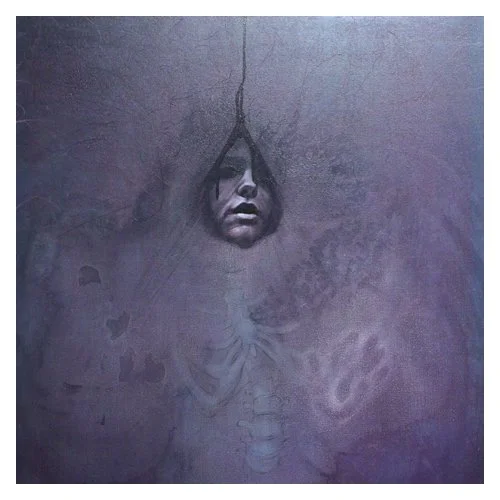
Hyperbole positions the figure within a layered field that both invites and resists contact. The image operates through multiple registers, as if submerged—separating the subject from the viewer across successive depths of perception. The picture plane becomes a threshold rather than an opening, holding the figure in a state of suspended approach.
Hair functions as a primary structural element, veiling the gaze and introducing blindness as a condition of the image. At the same time, it anticipates later developments in Leonov’s work, where filament-like forms extend beyond the body. The enlarged mouth emerges as a site of attempted connection, where projection and expression accumulate without resolution. Rather than establishing presence, the work stages distance—articulated through layering, obstruction, and the deferral of contact.