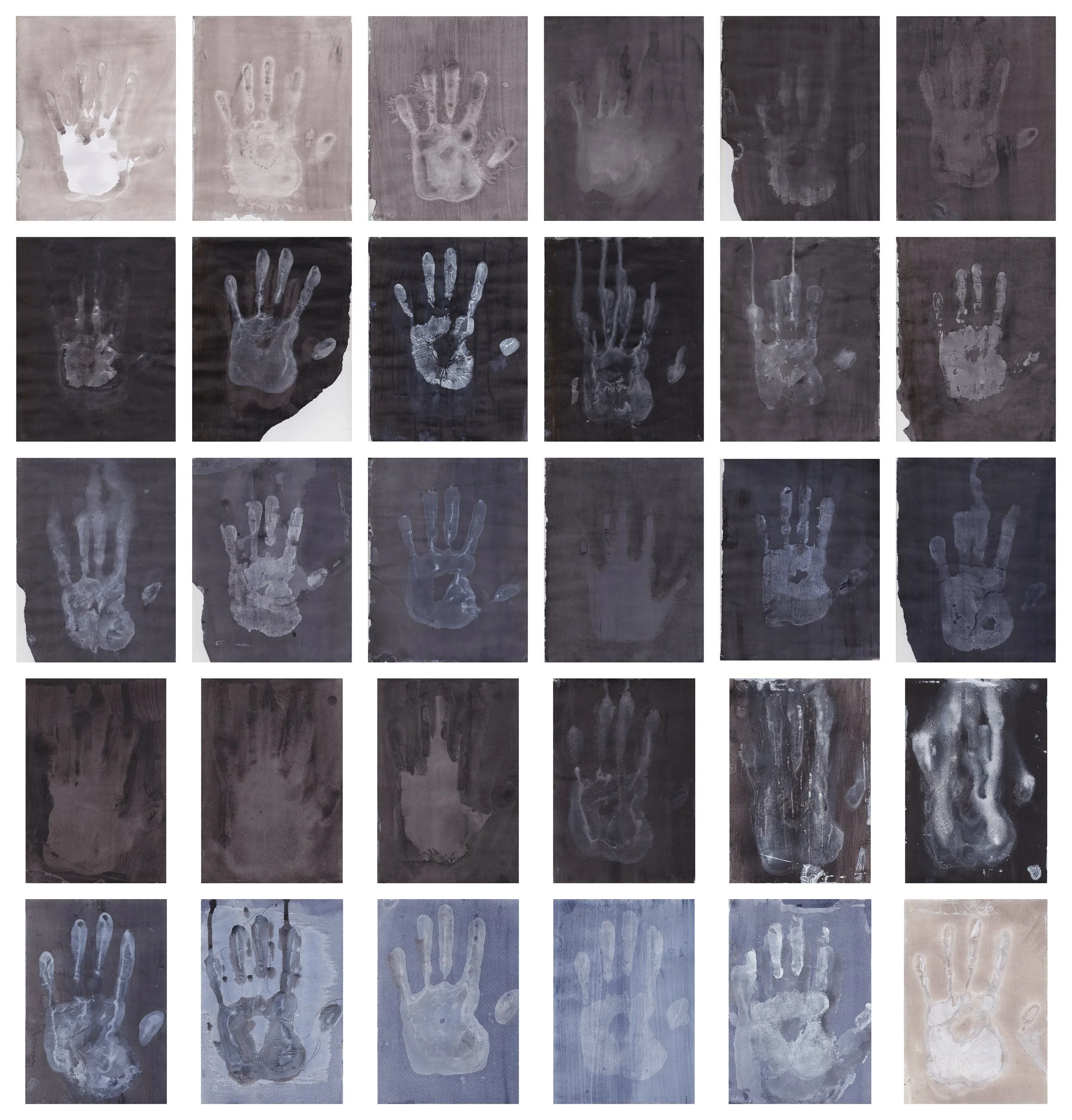
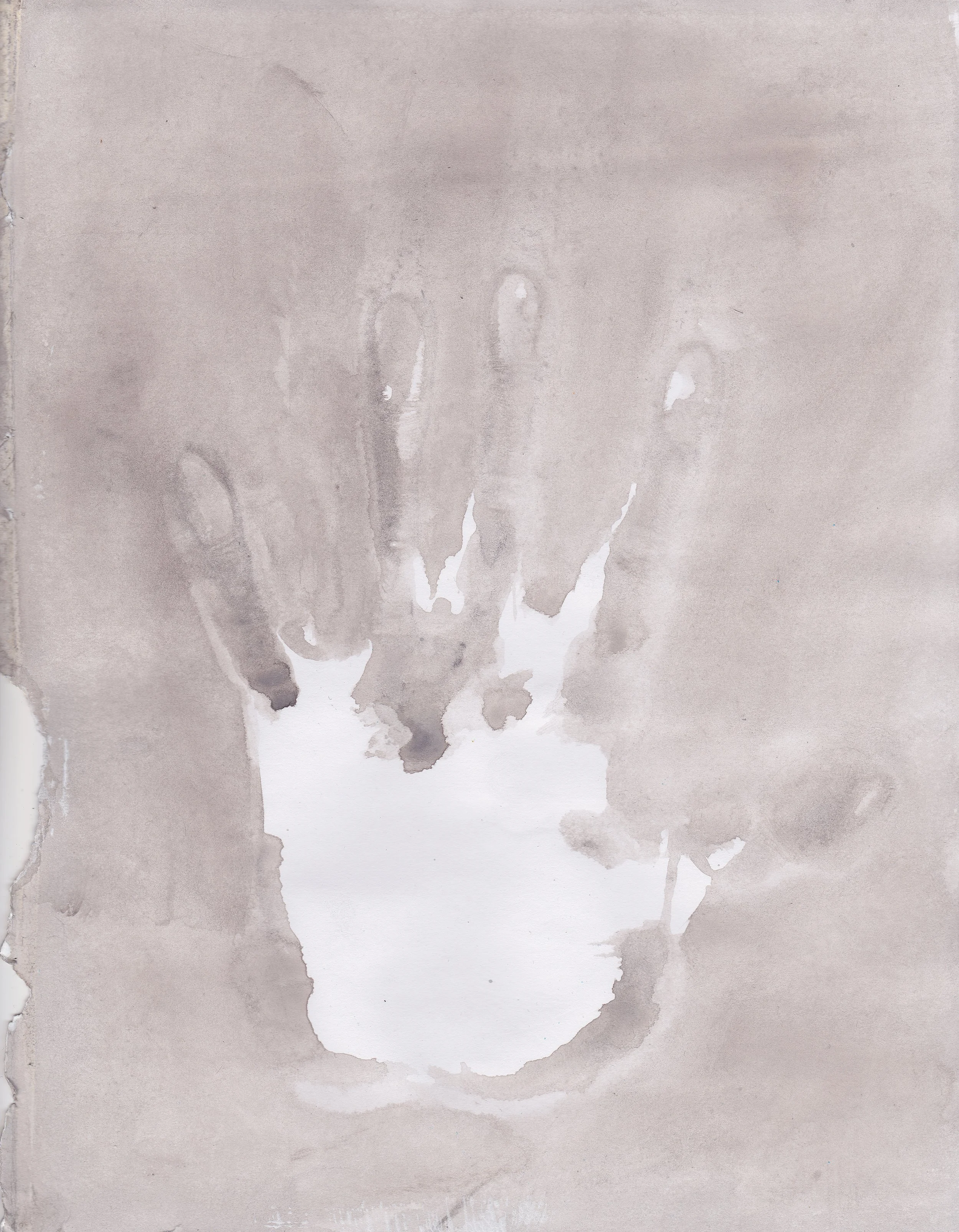
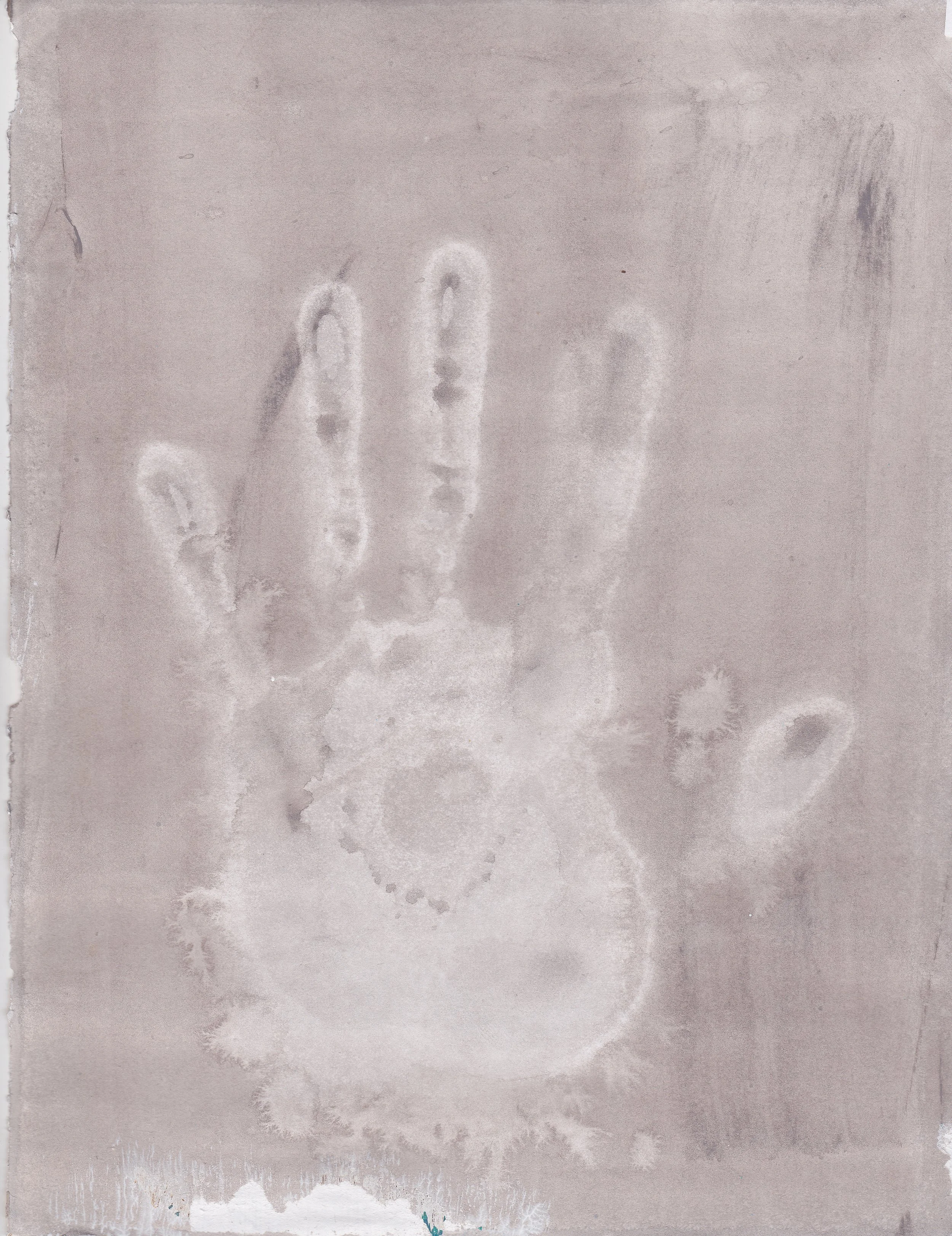
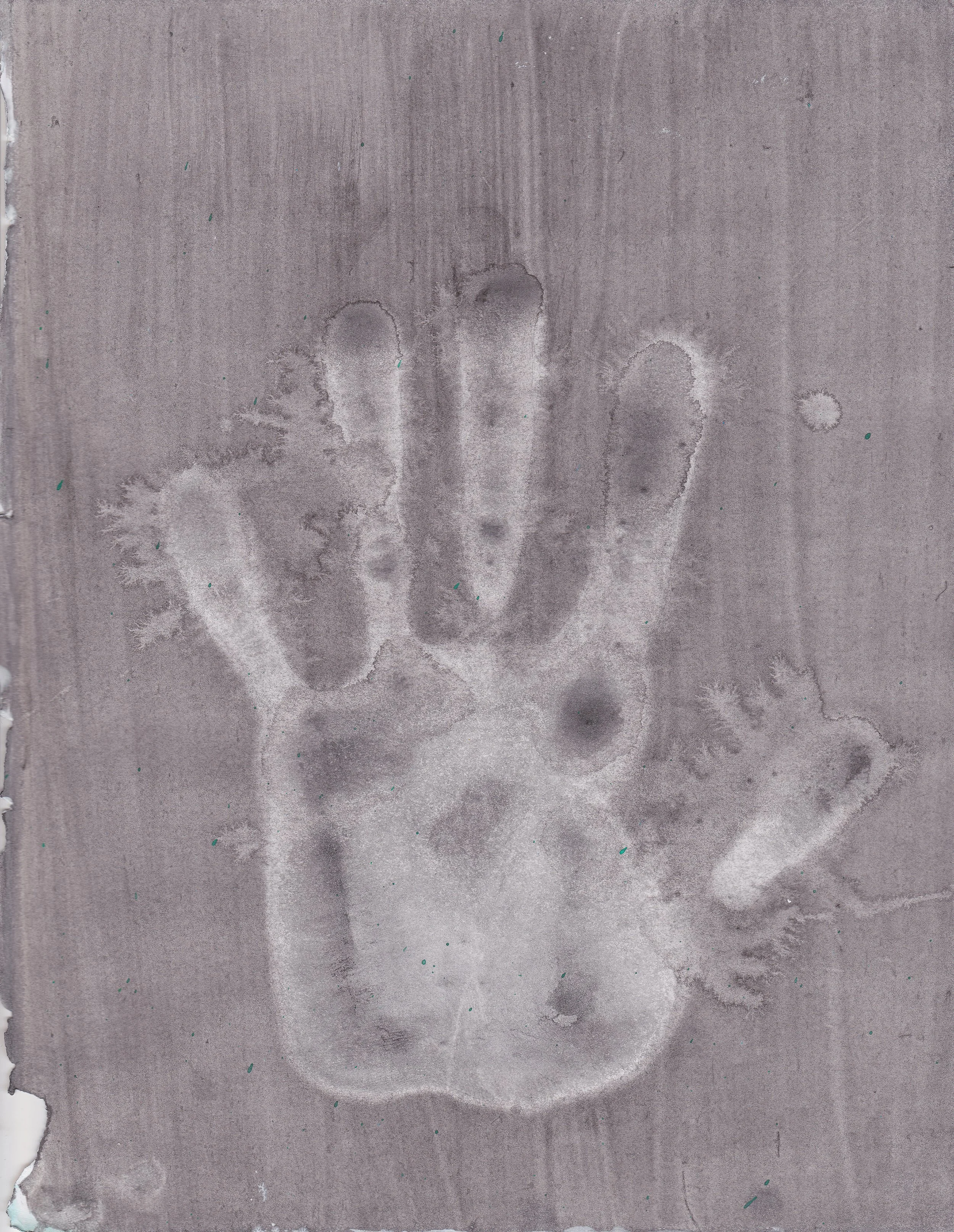
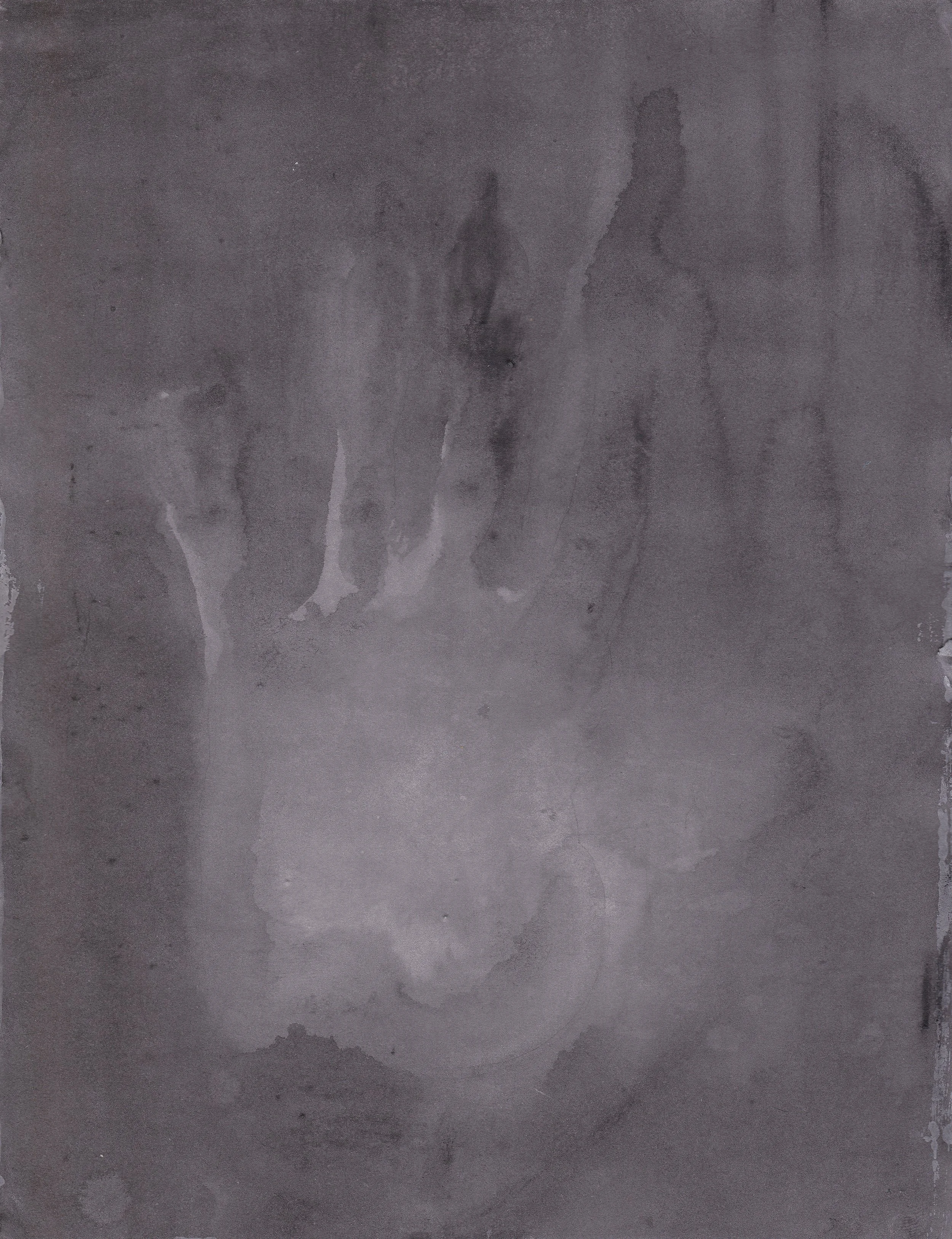
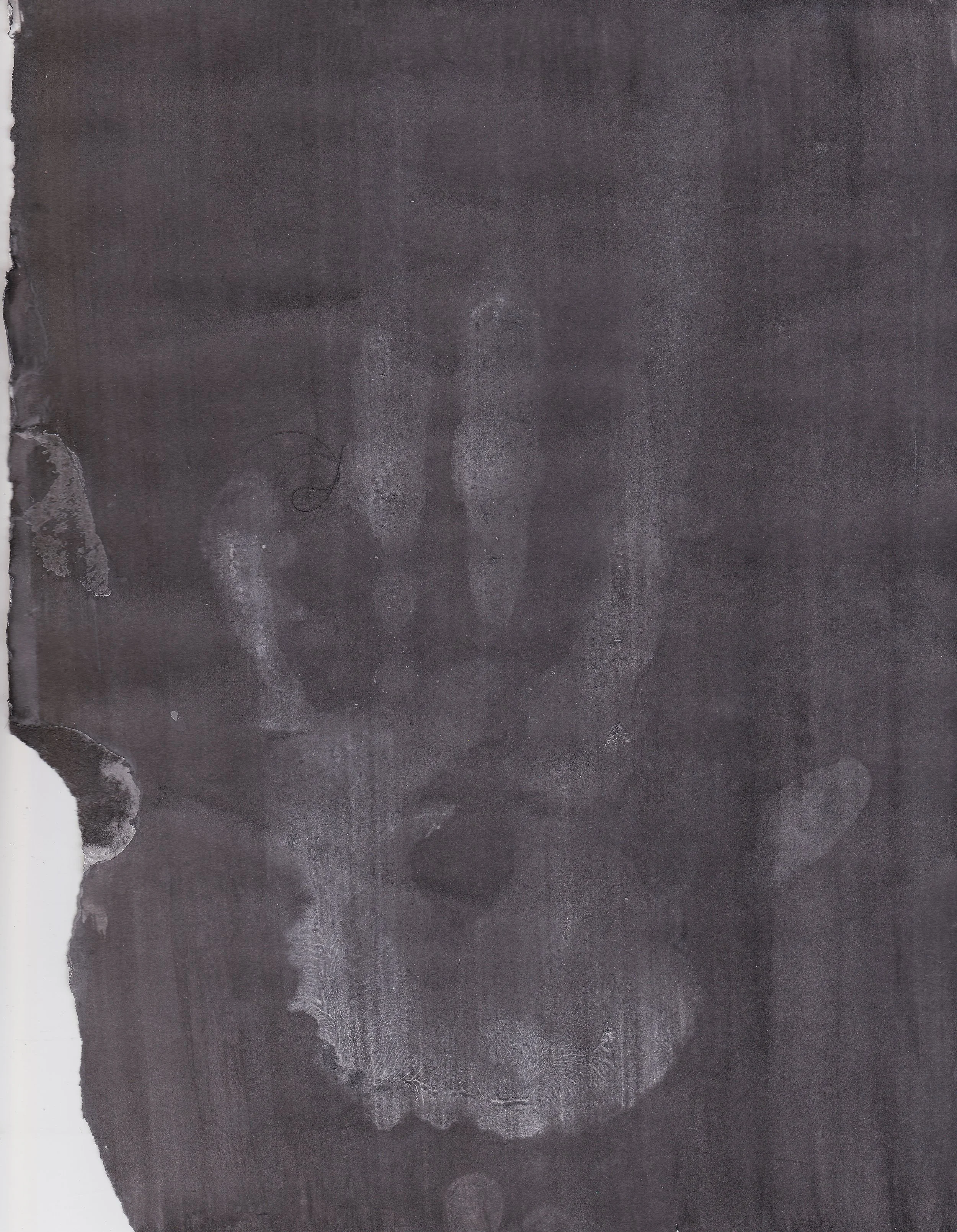
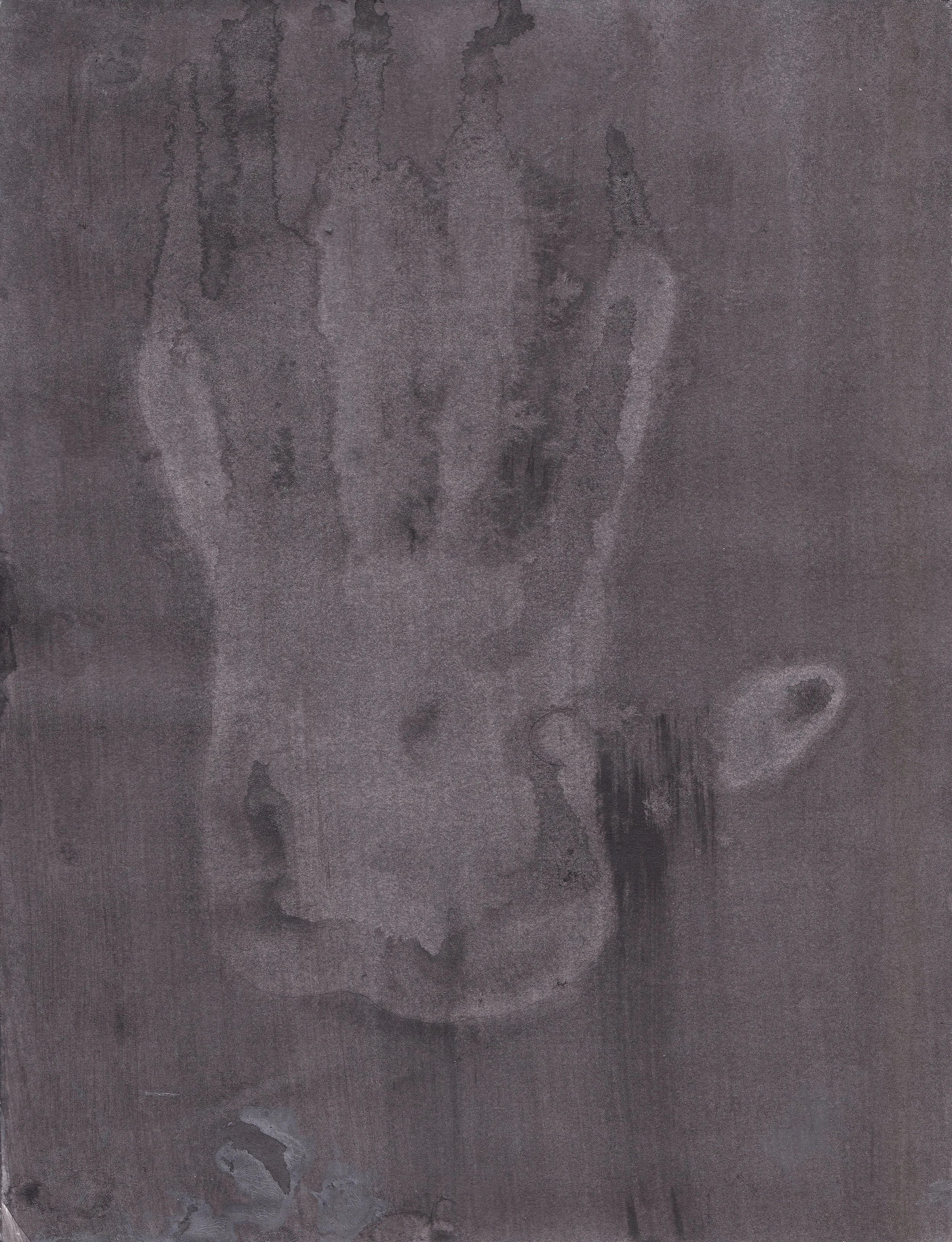
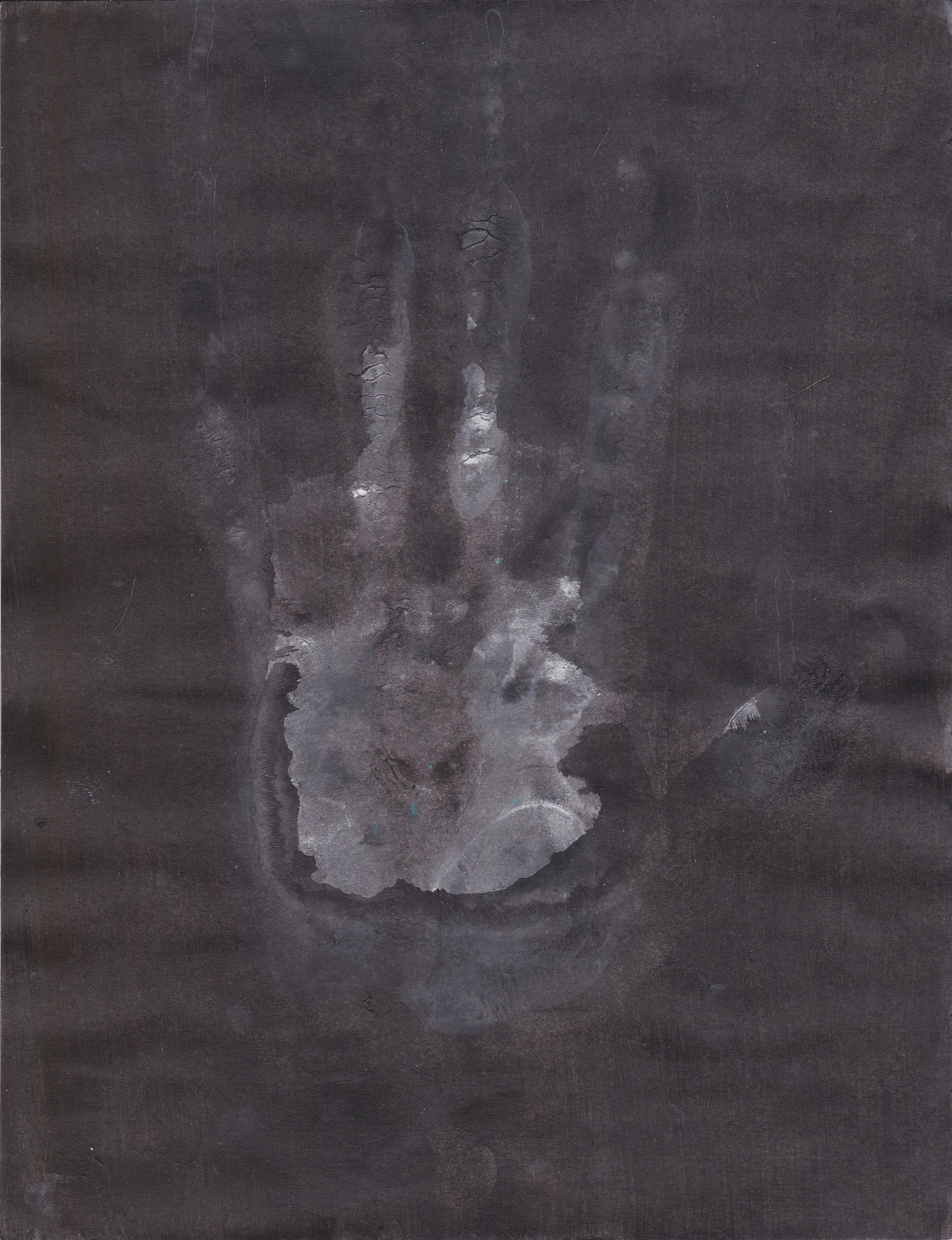
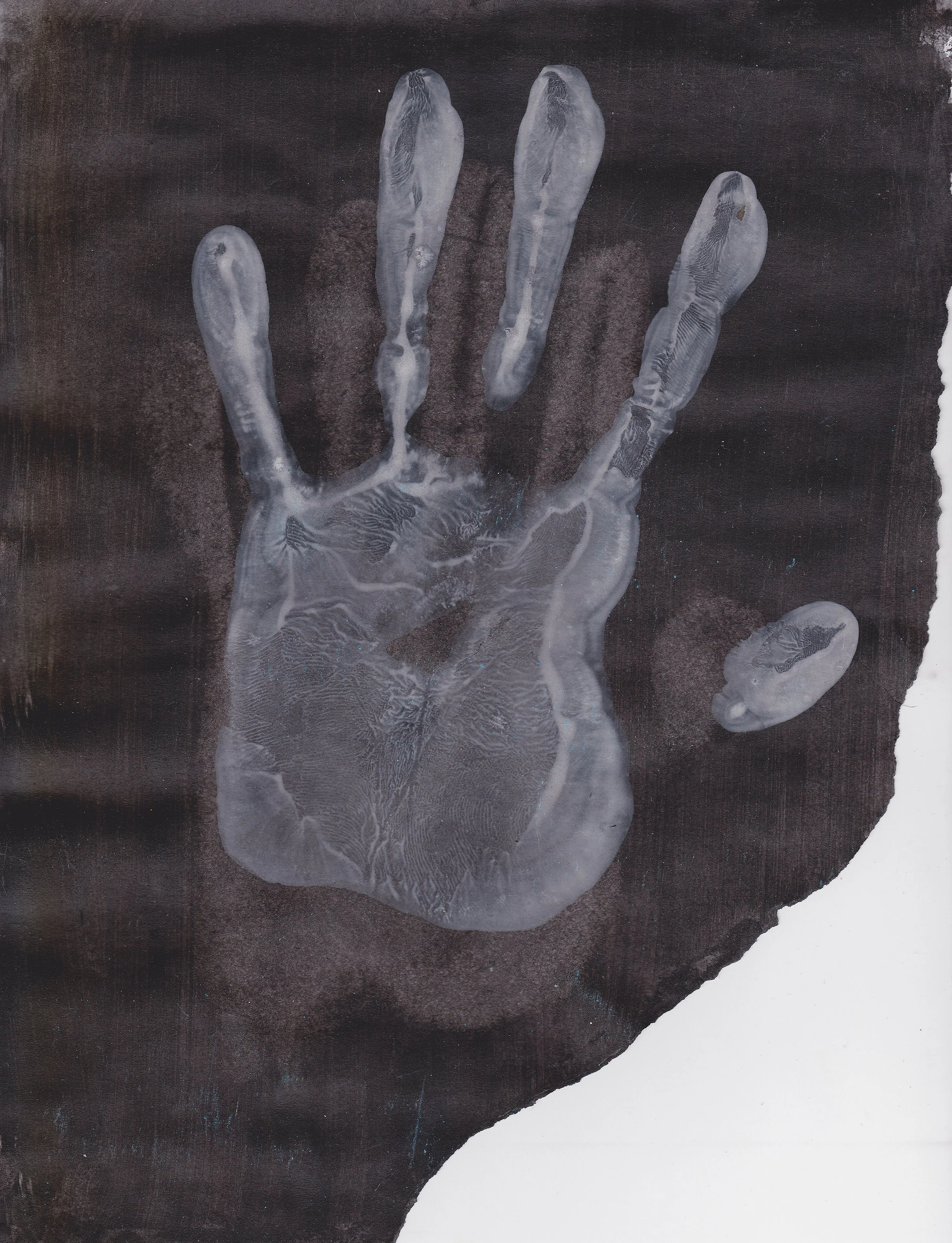
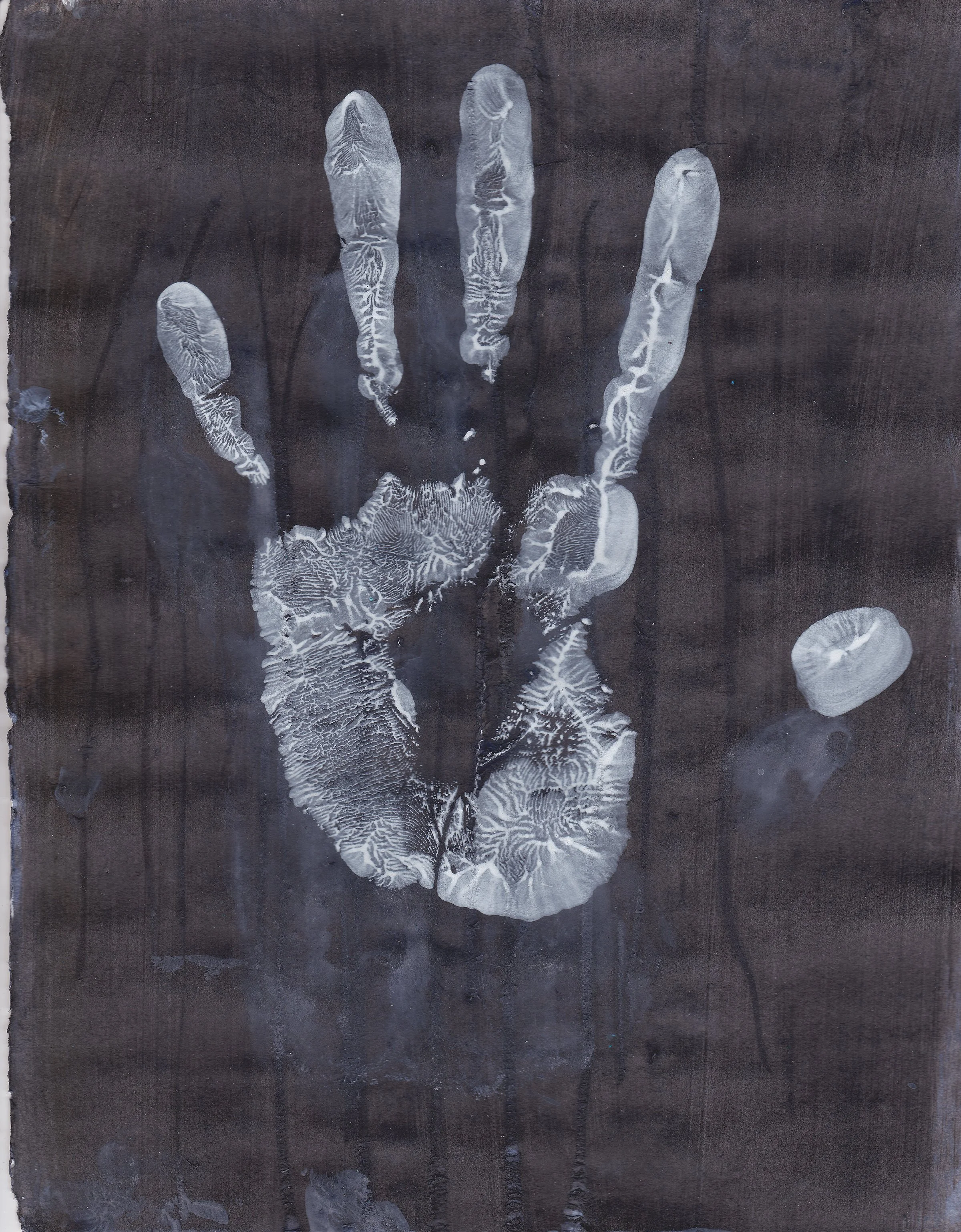
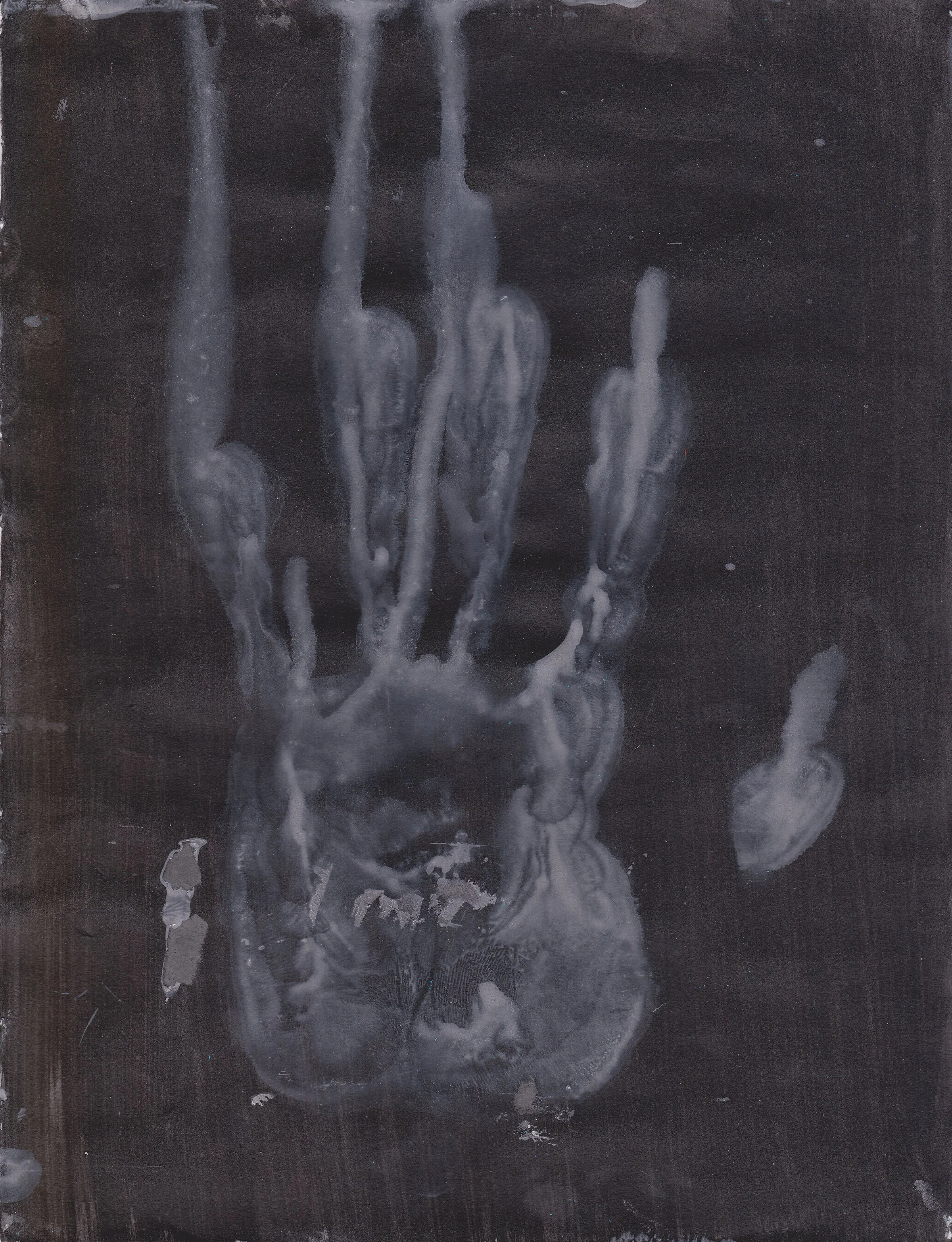
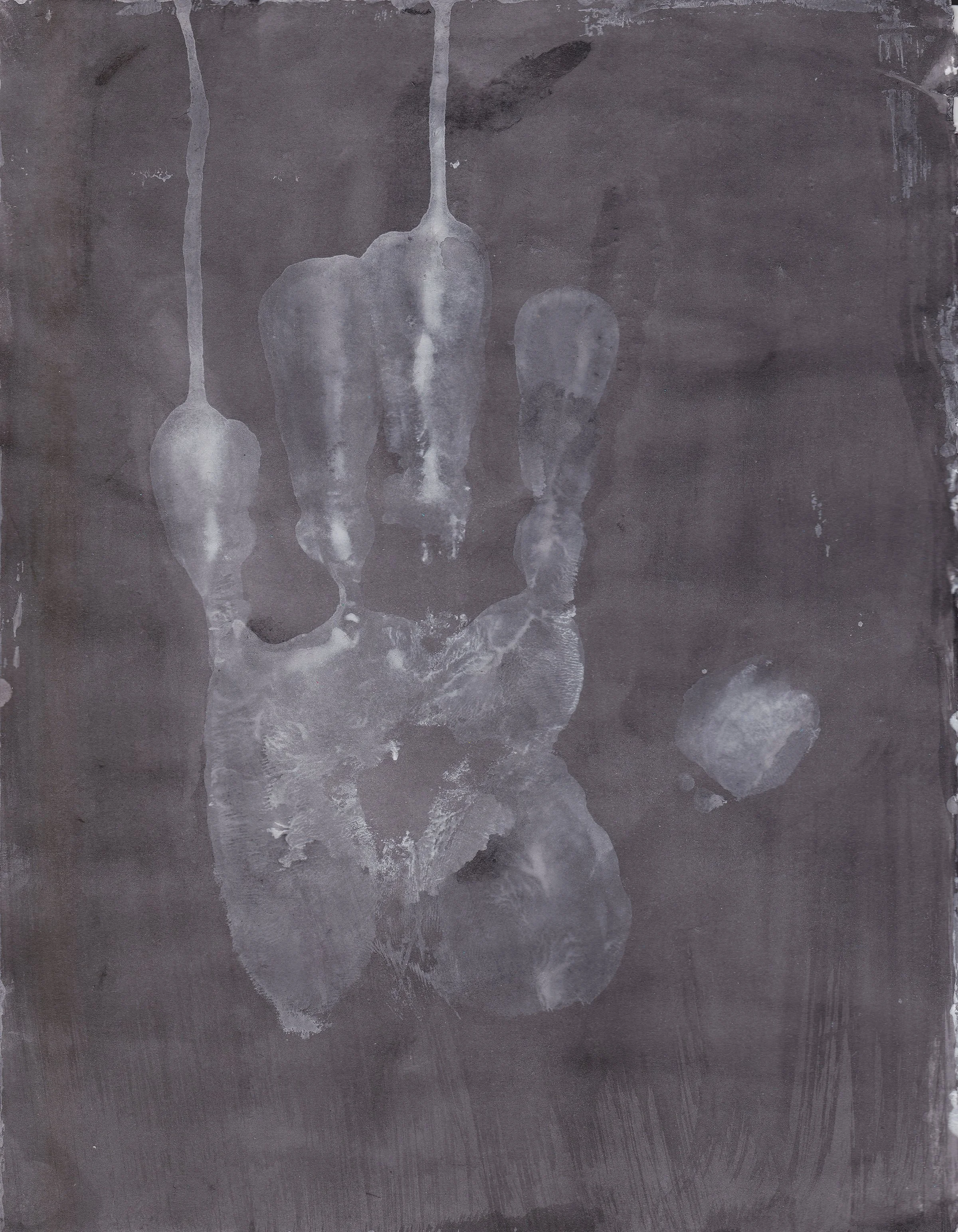
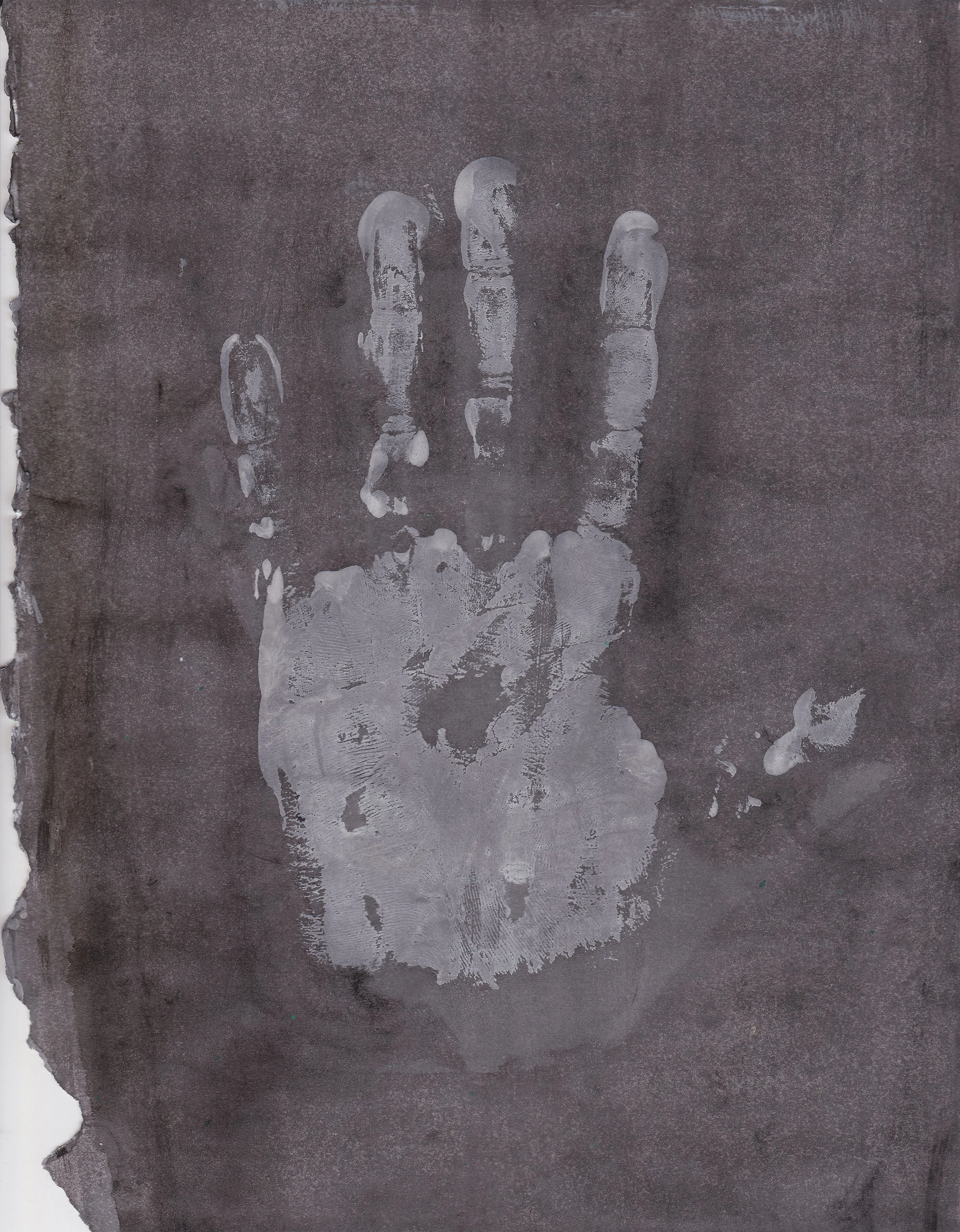
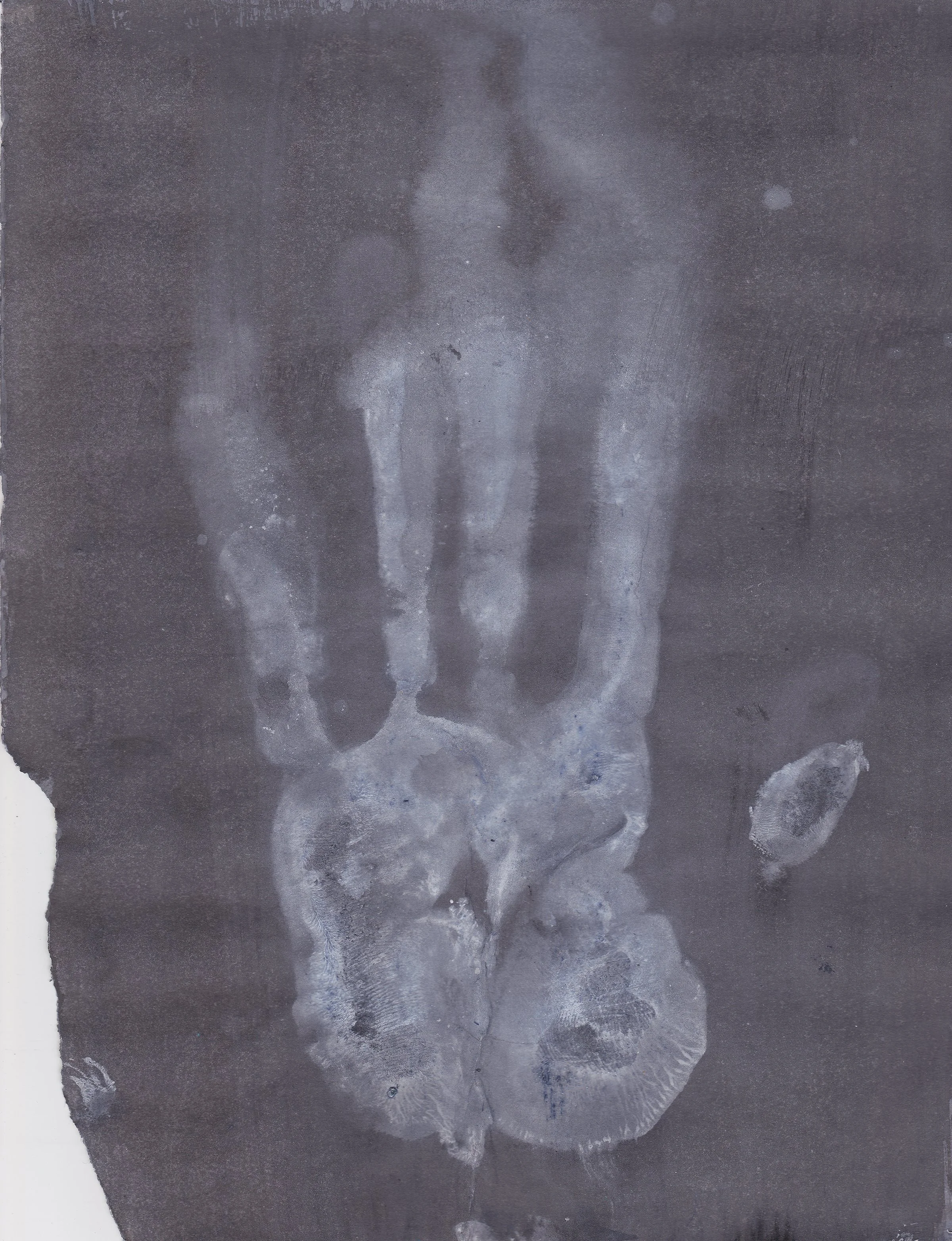
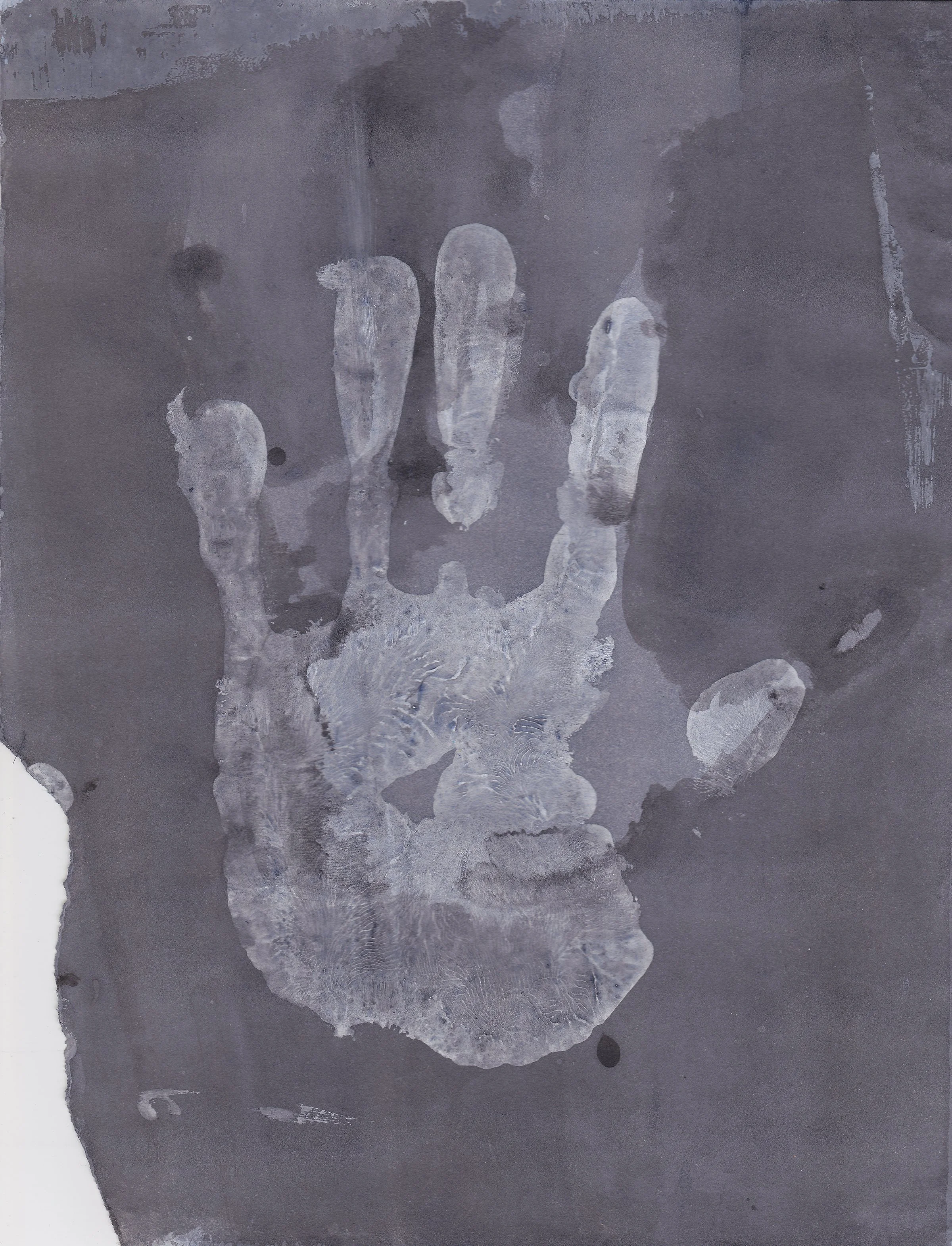
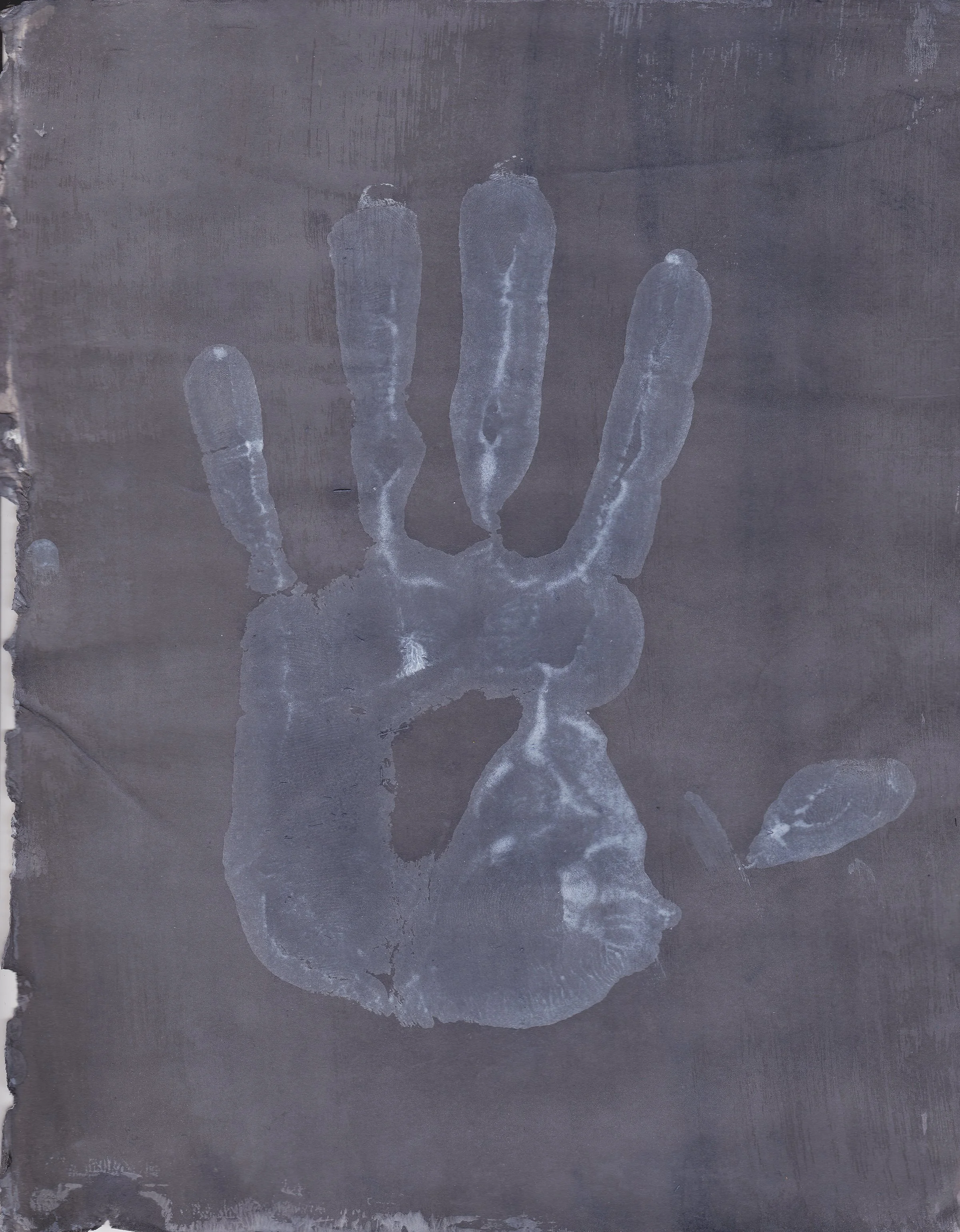
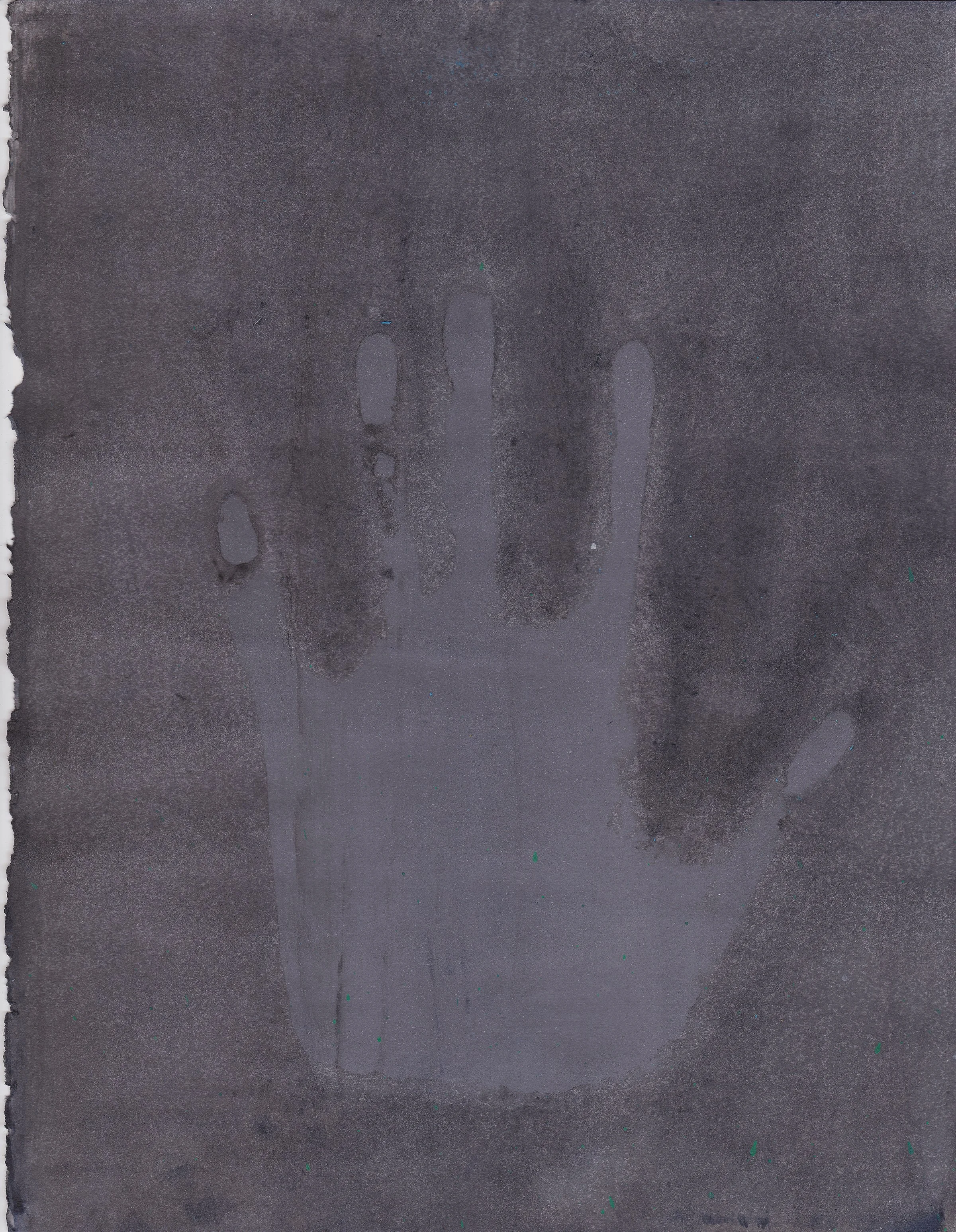
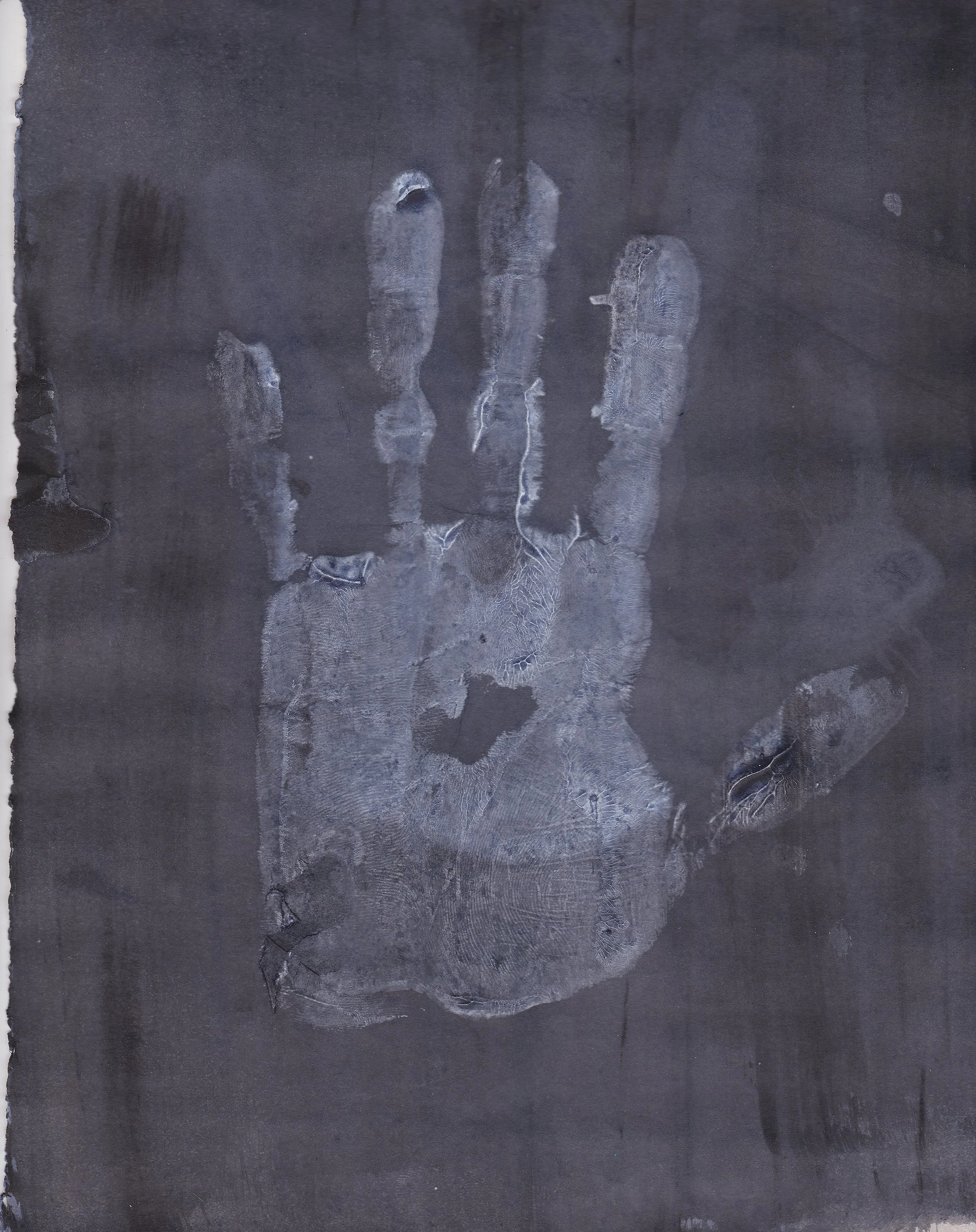
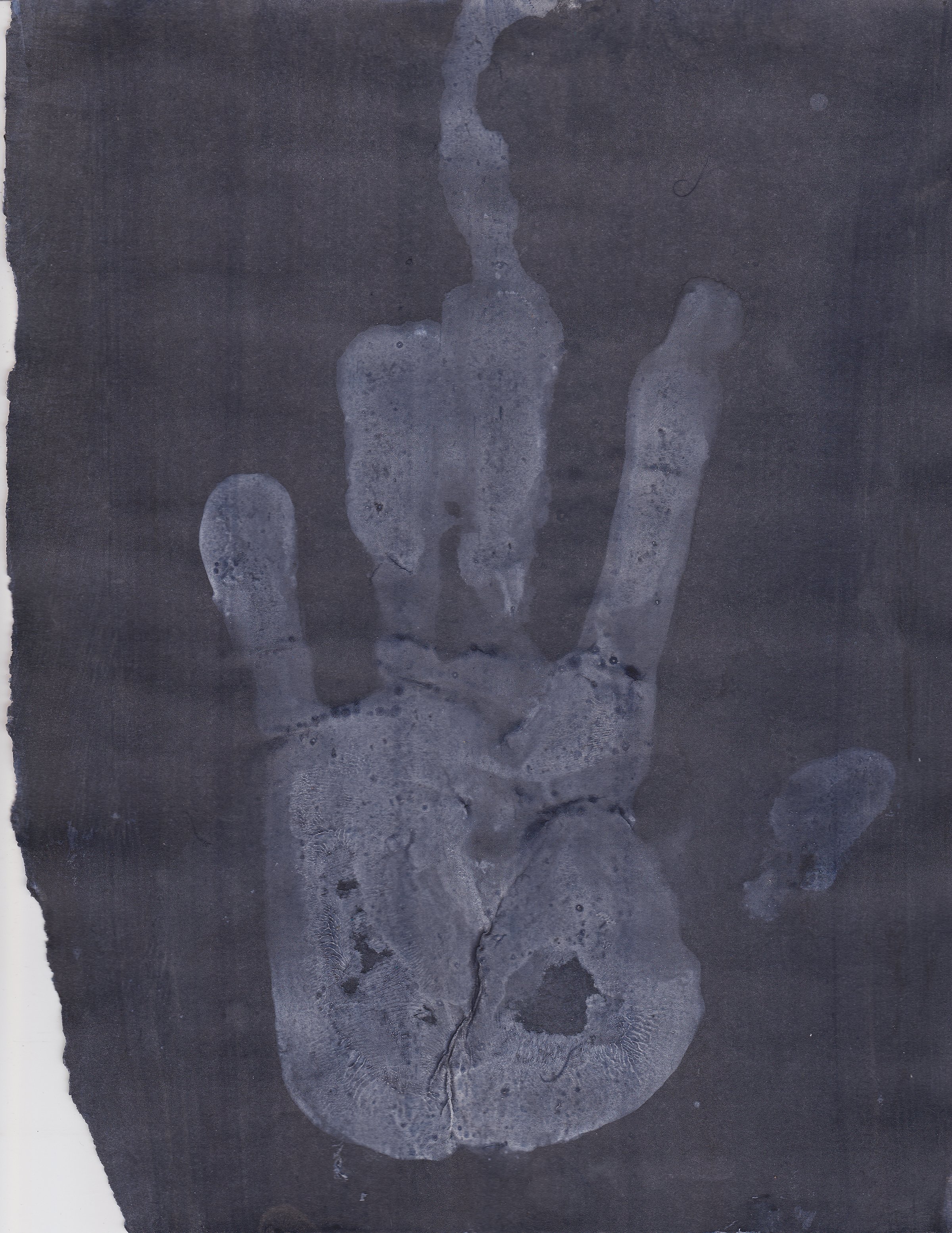
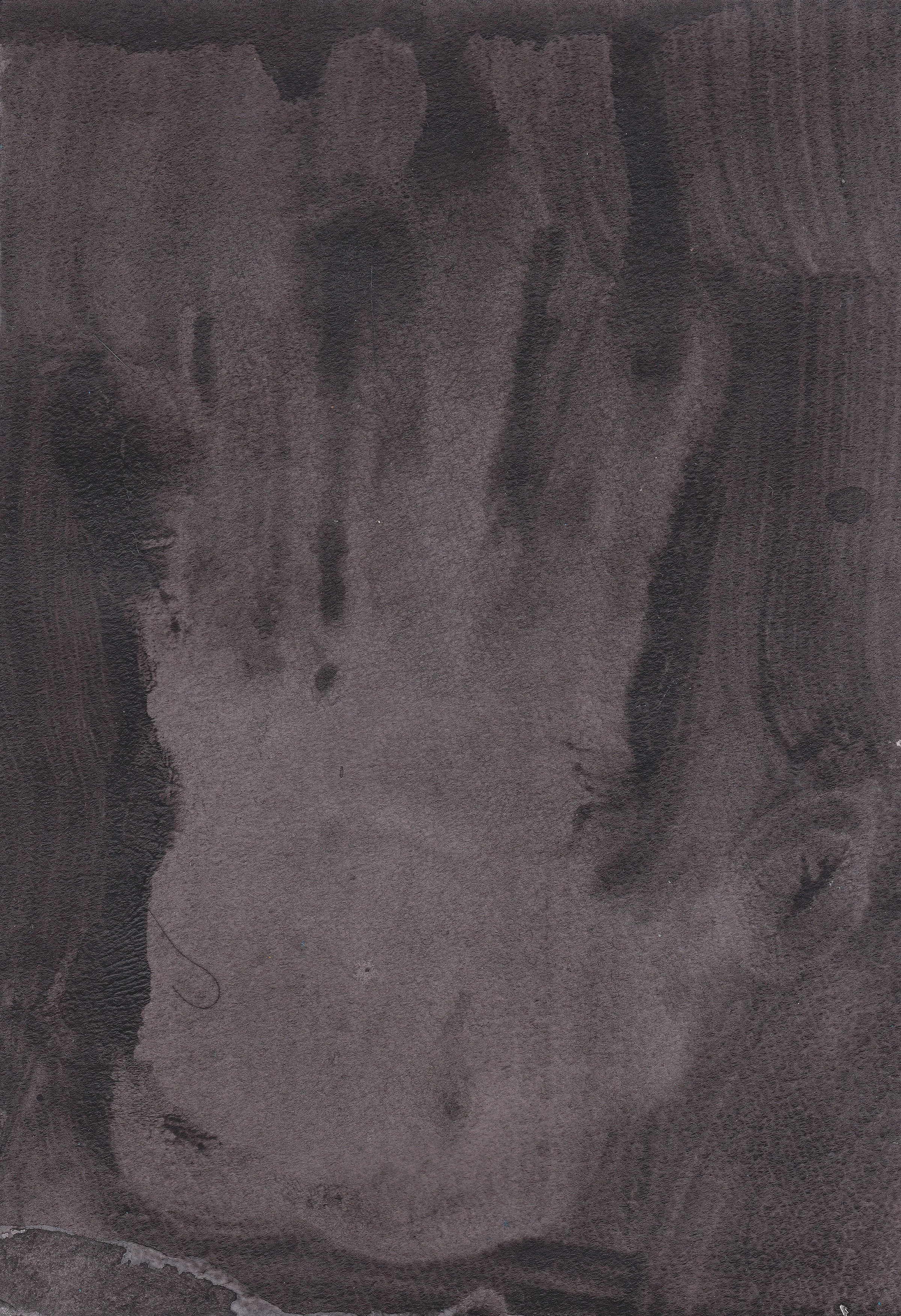
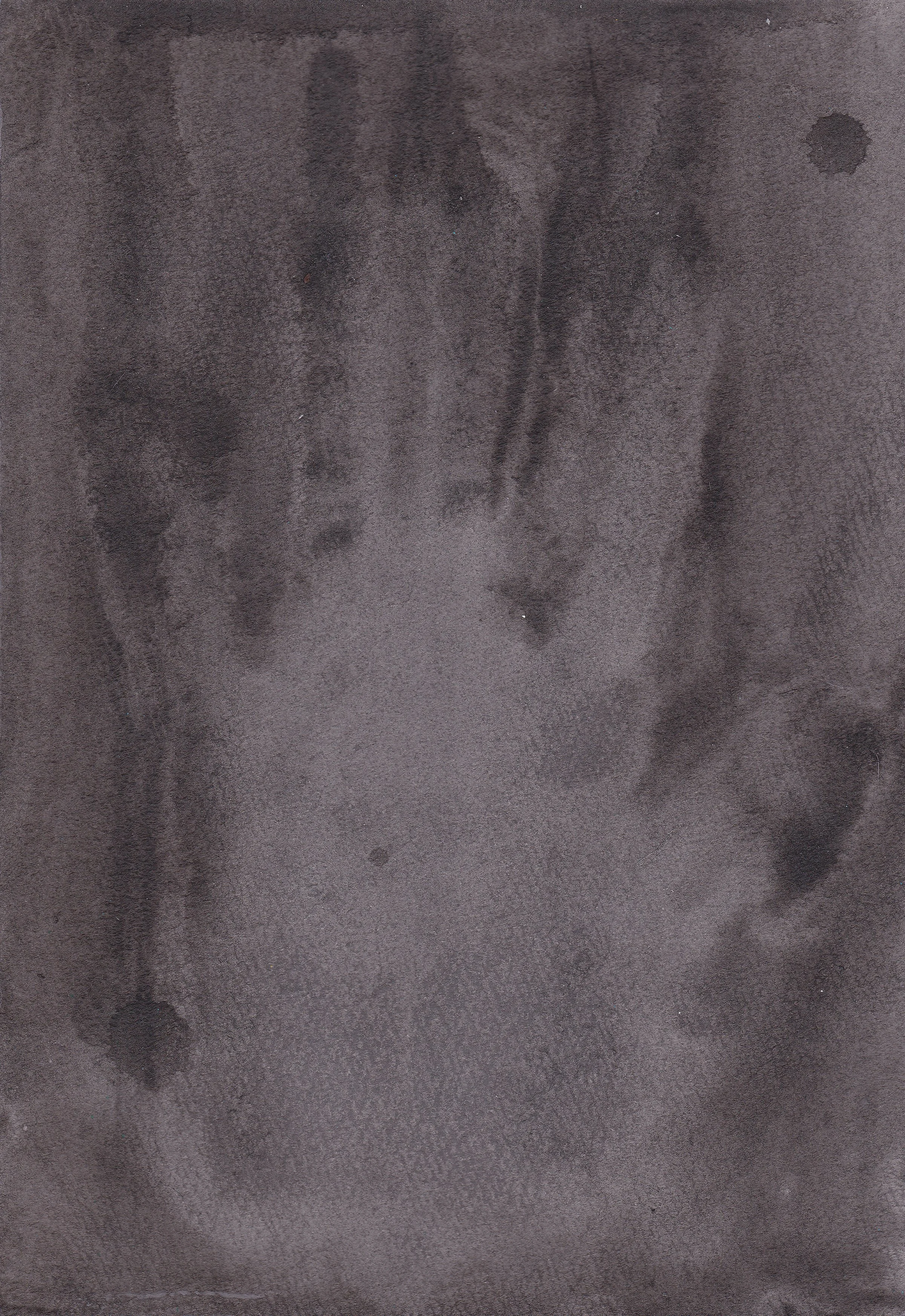
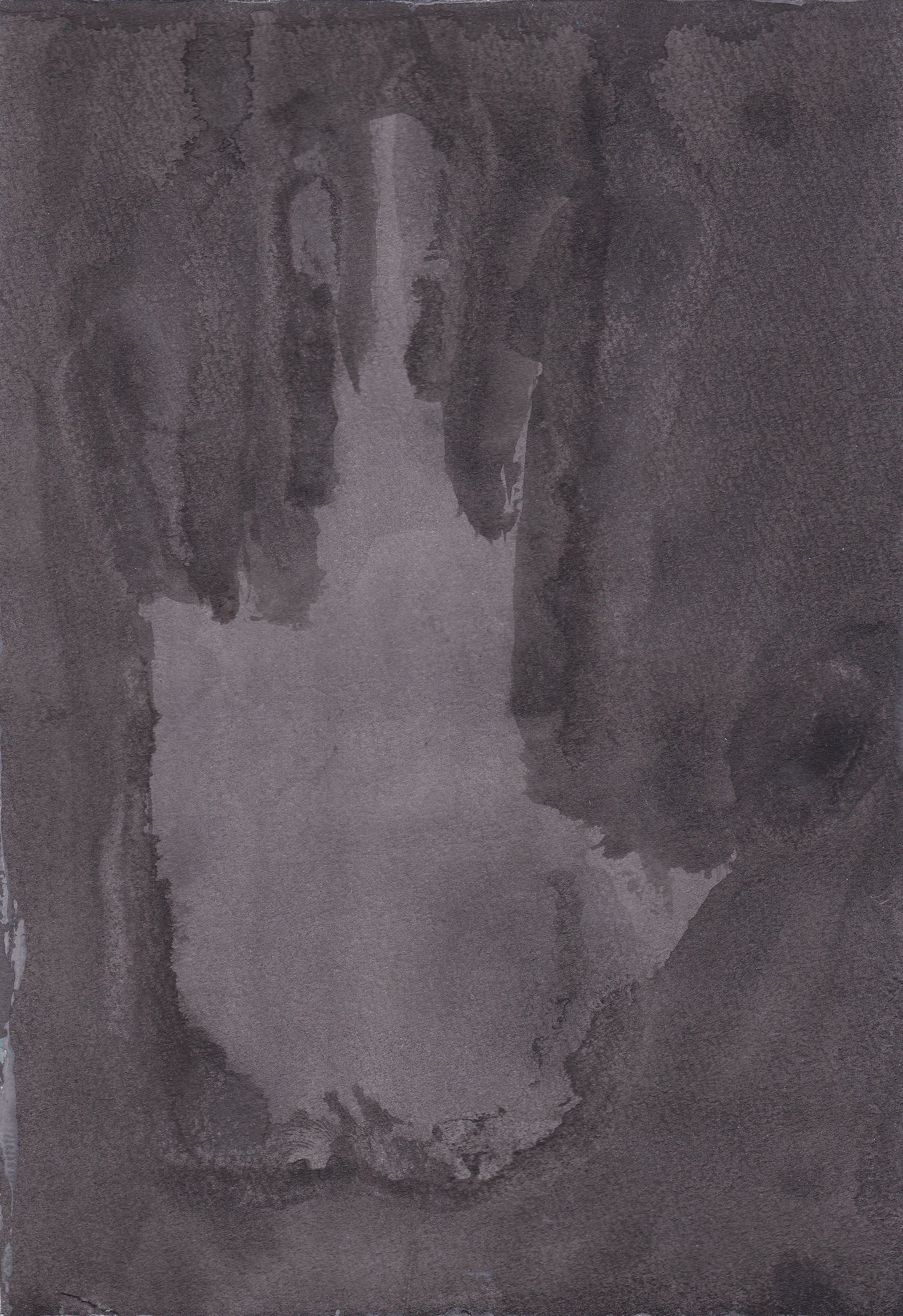
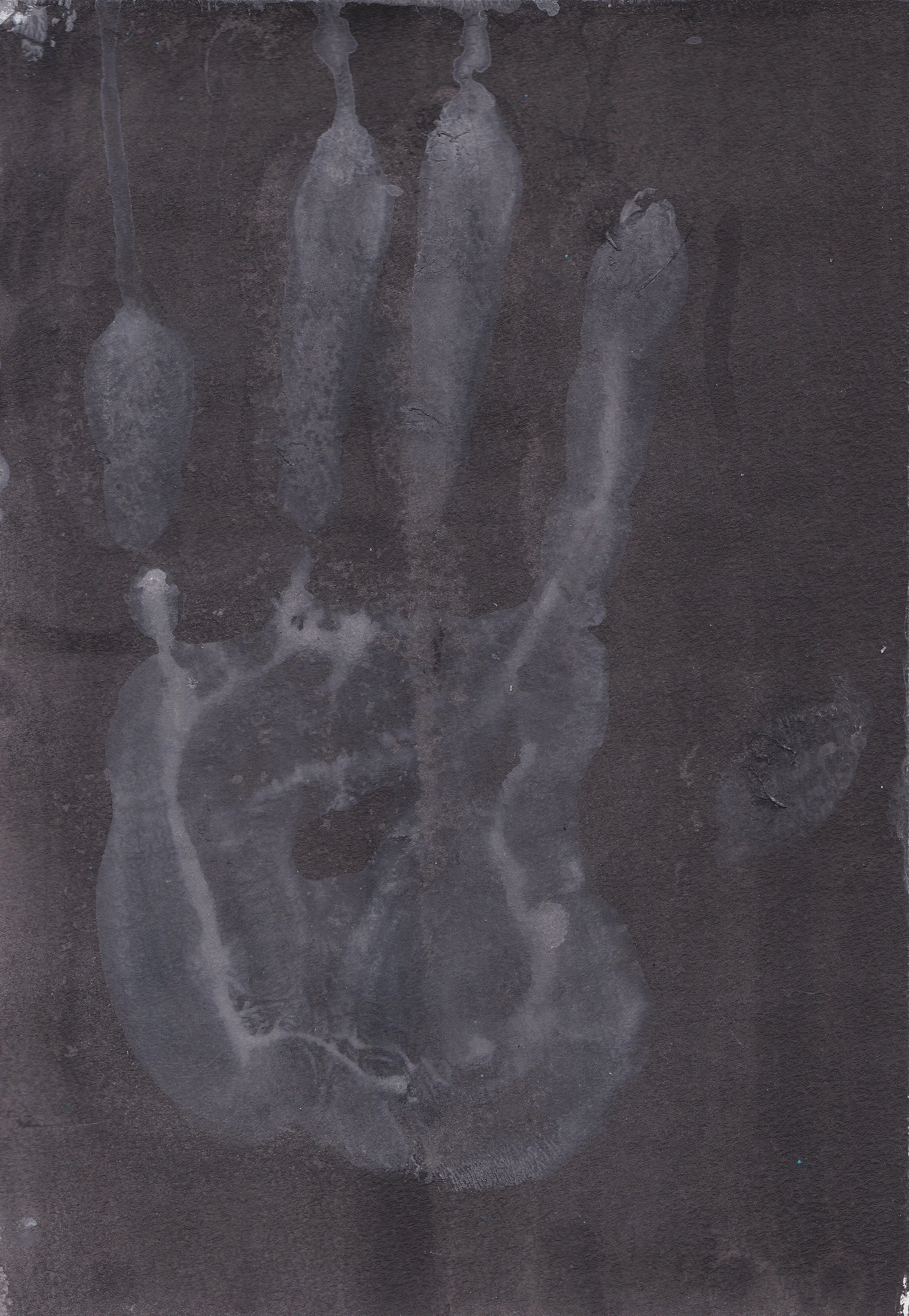
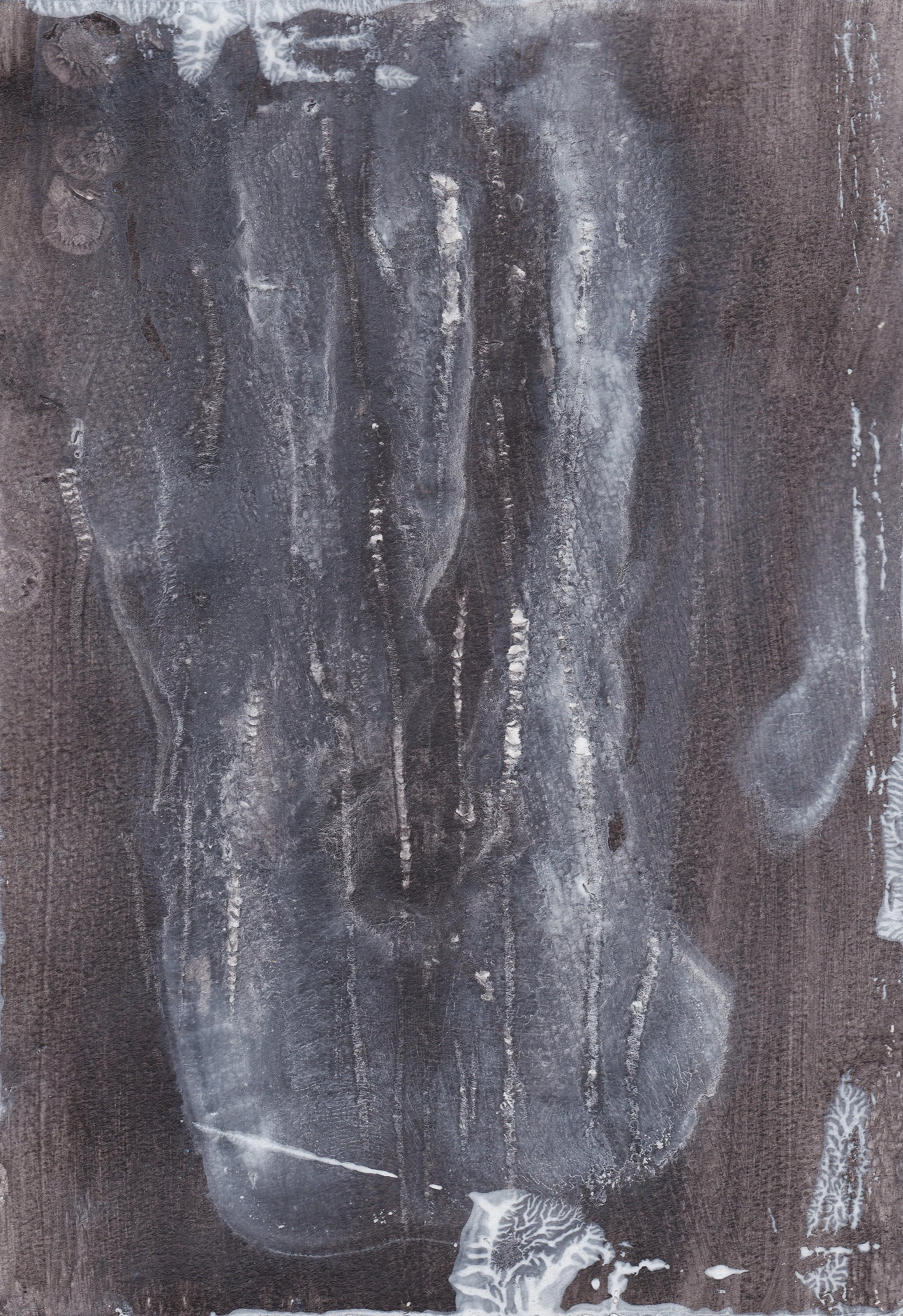
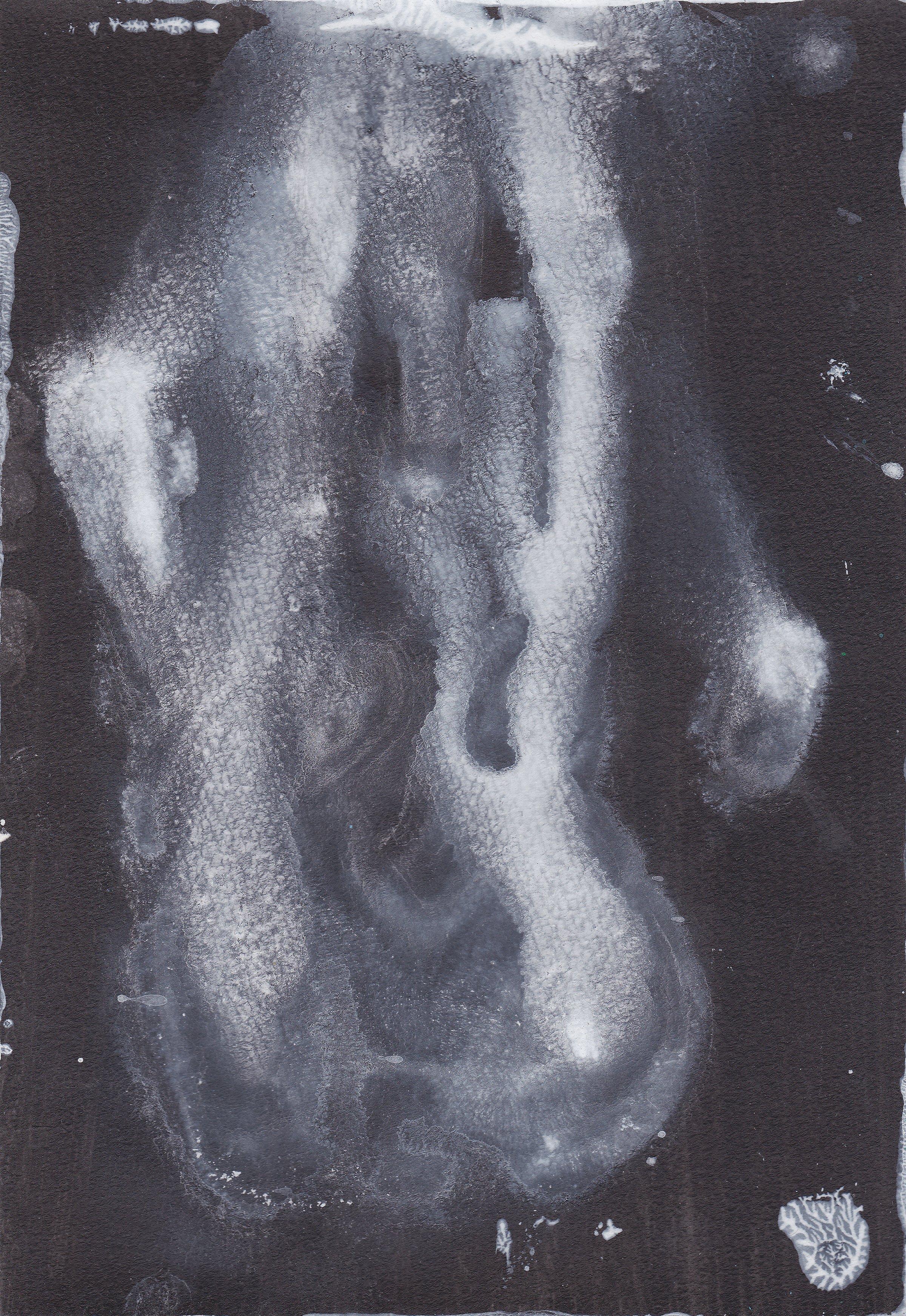
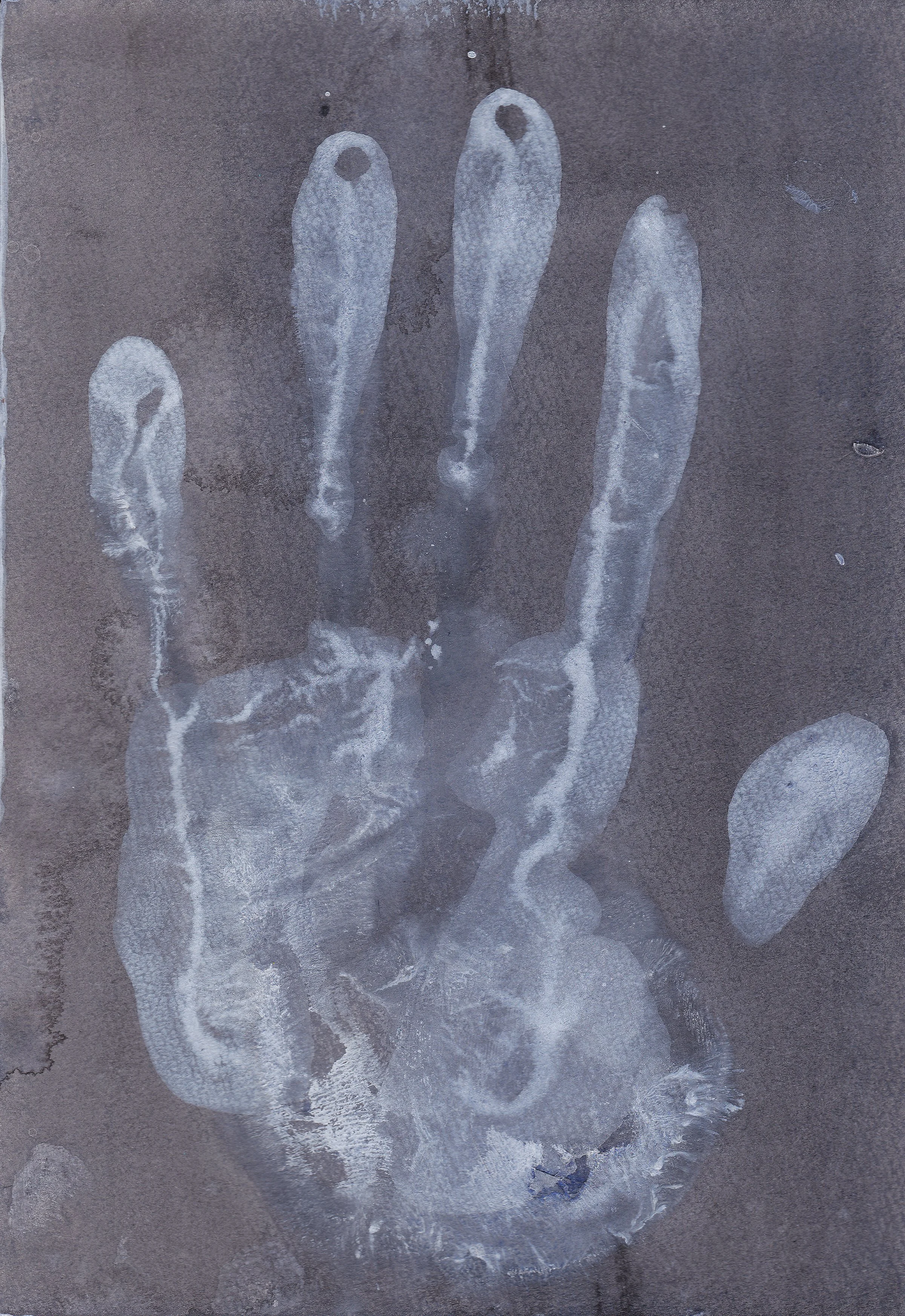
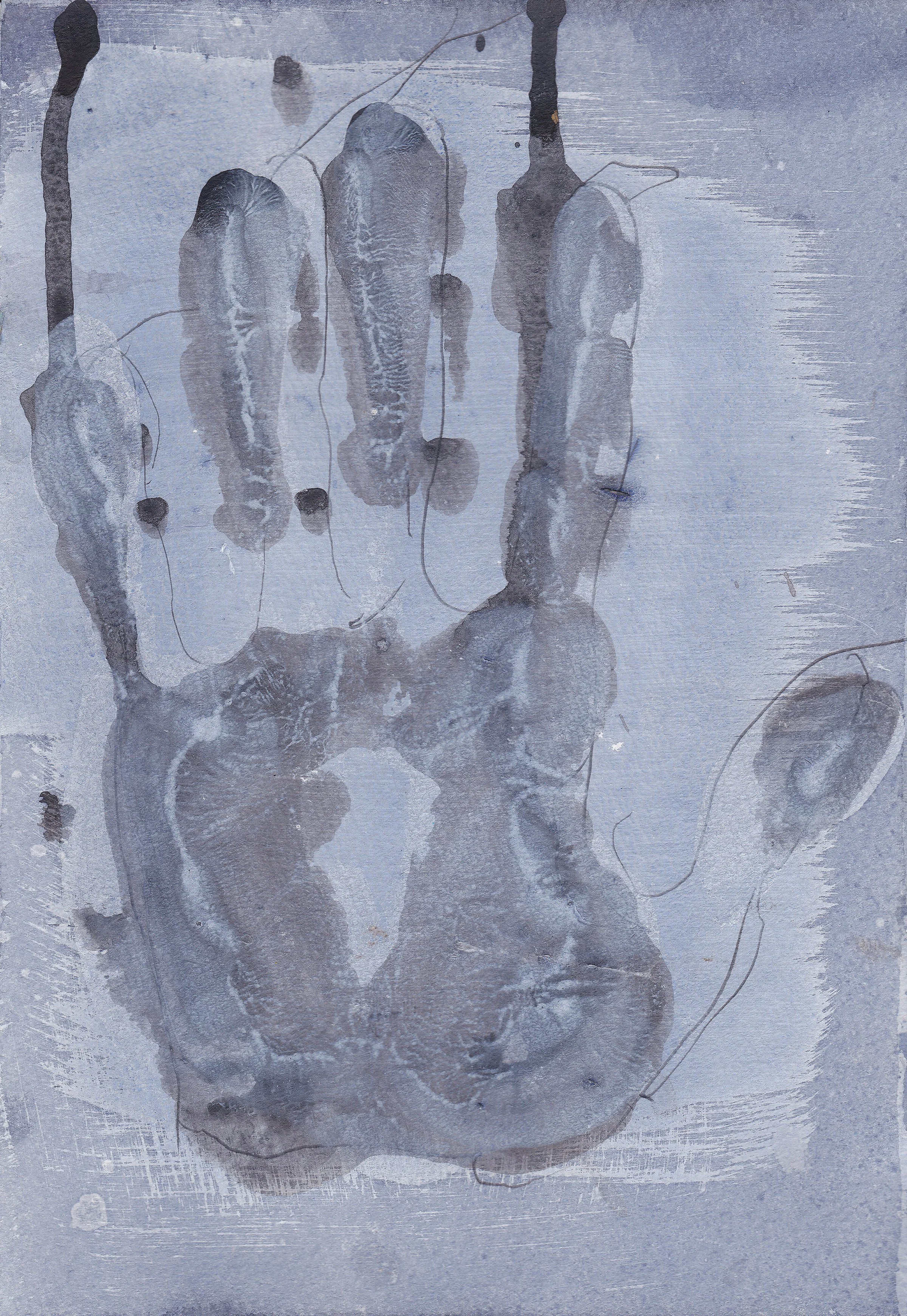
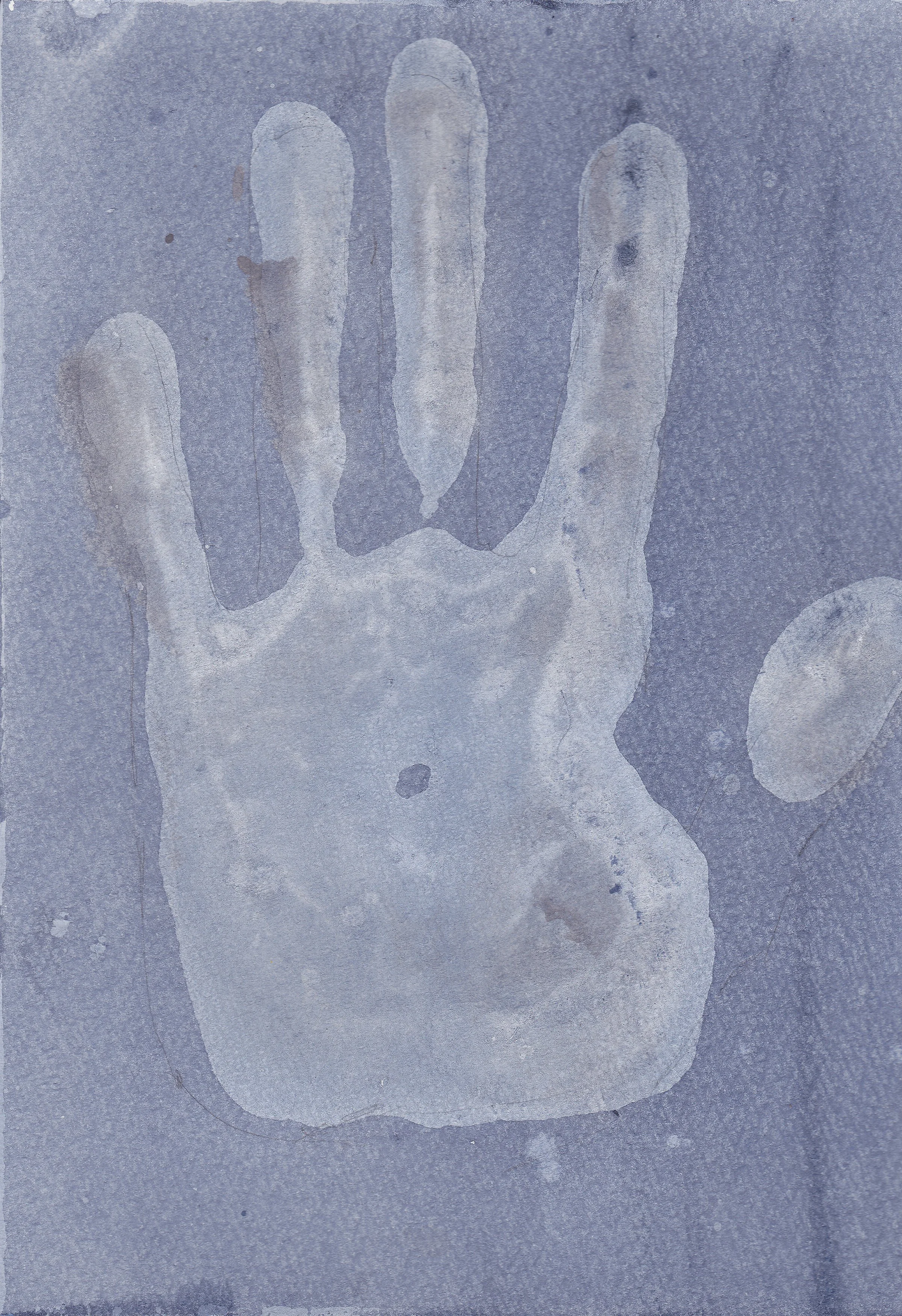
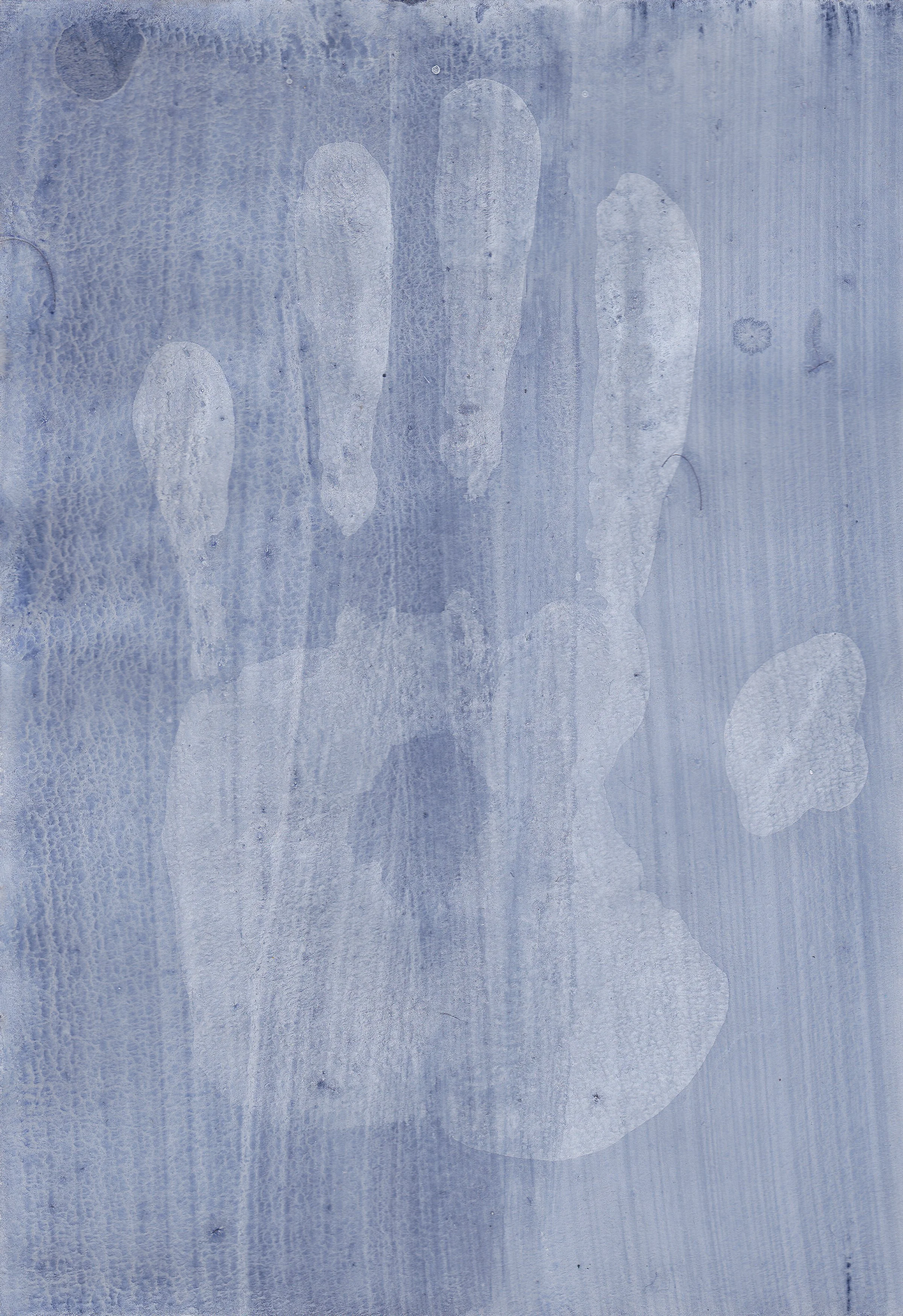
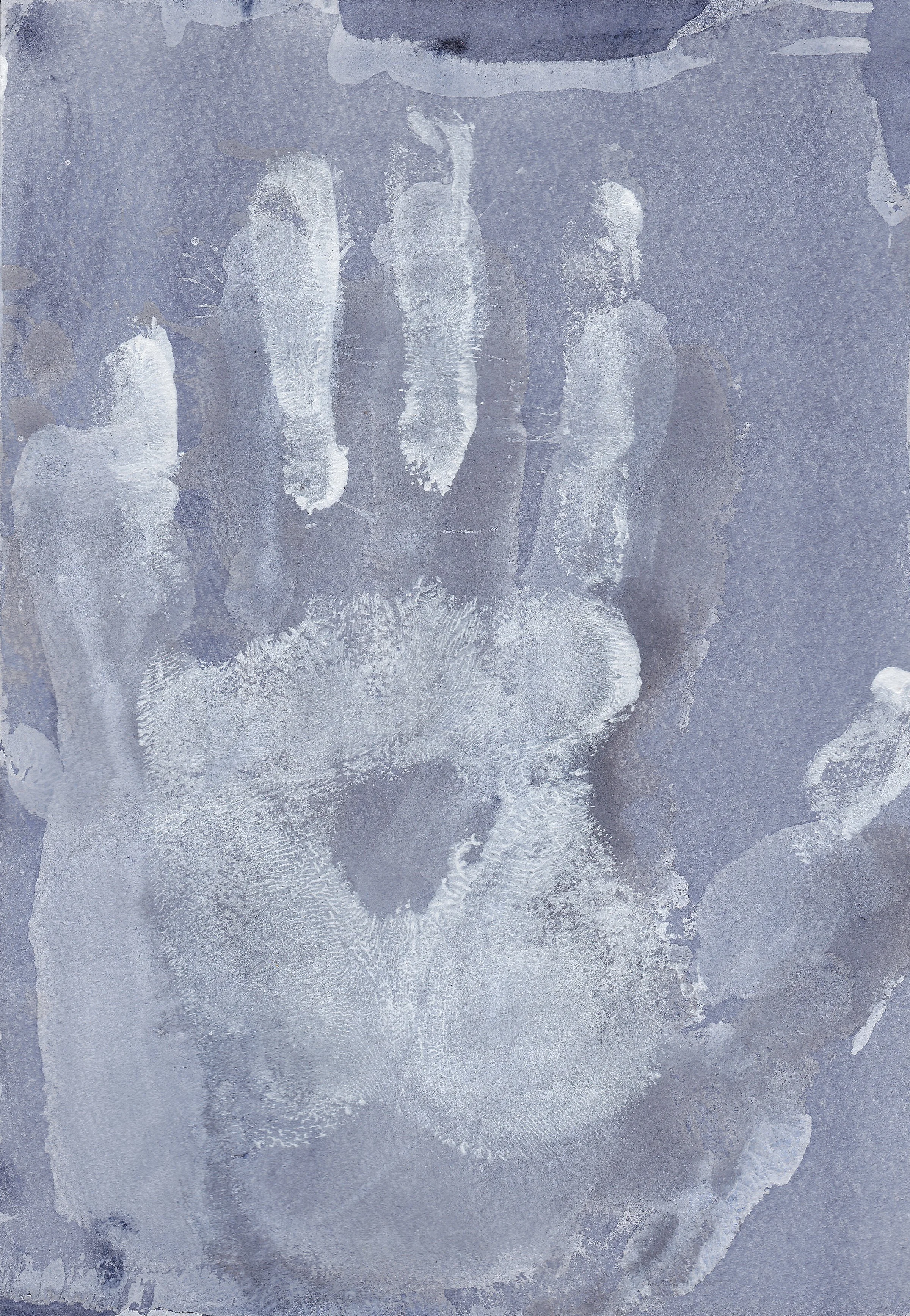
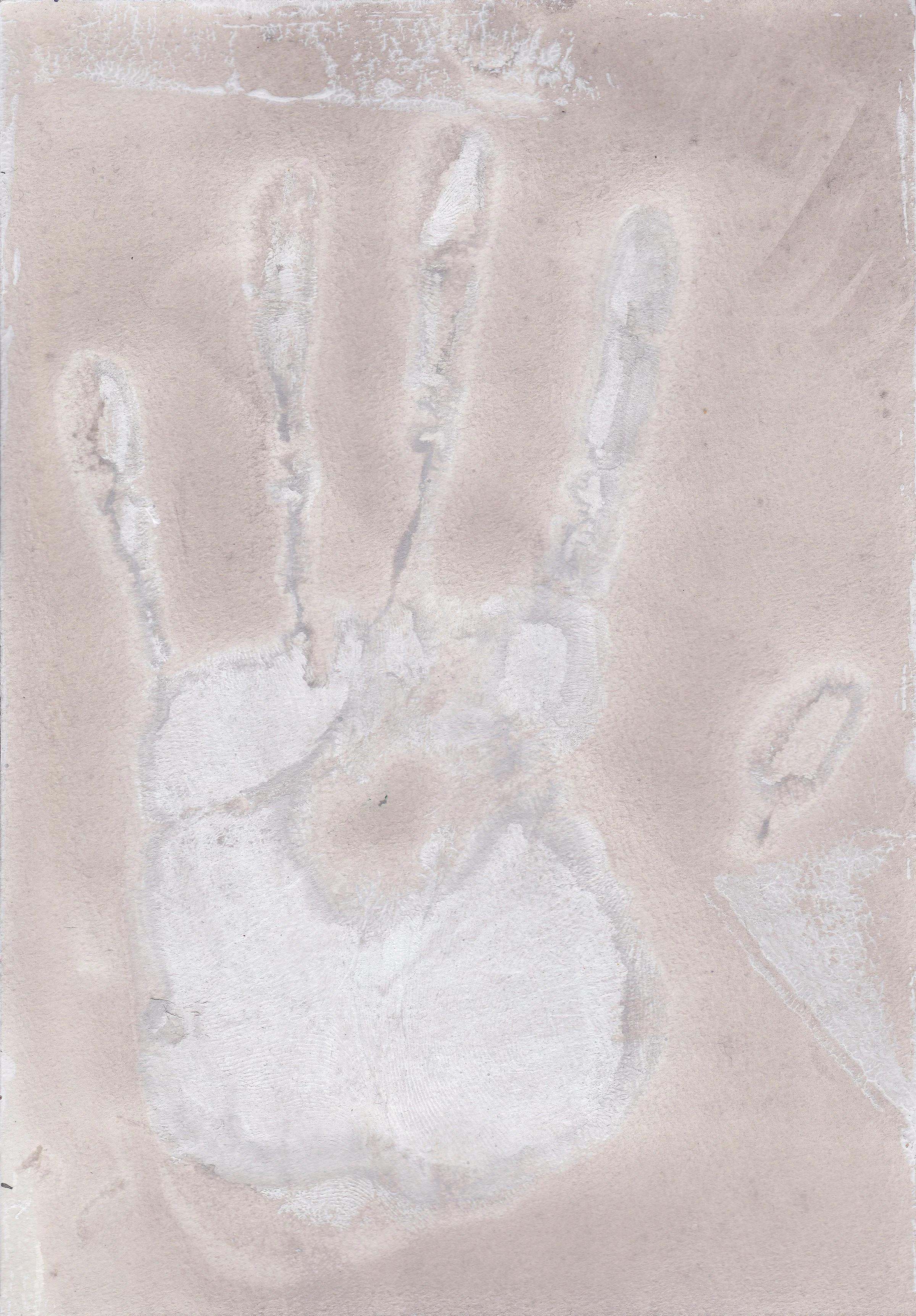
Hands reduces the image to an essential register, where representation is stripped down to gesture, imprint, and trace. Rejecting technical refinement, Leonov deliberately abandons developed painterly skill in favor of a more immediate and unmediated mark, positioning the work as evidence of presence rather than depiction.
Comprising a body of works on paper, the project is defined by a limited palette and a disciplined exploration of surface through shifting material conditions—variations of contact, absorption, and resistance—each producing a distinct register. Methodology evolves from piece to piece, emphasizing process as a means of testing the limits of mark-making, where control is continually negotiated against the behavior of the medium.
Drawing from the logic of cave painting, the hand becomes both subject and instrument—an index of the self. The works establish a methodological origin for later conceptual systems, including the development of a broader “human disease” framework, where image-making functions as inscription tied directly to the body. Rather than constructing form, they register a darker, introspective condition, where mark, surface, and identity collapse into a singular act of assertion.