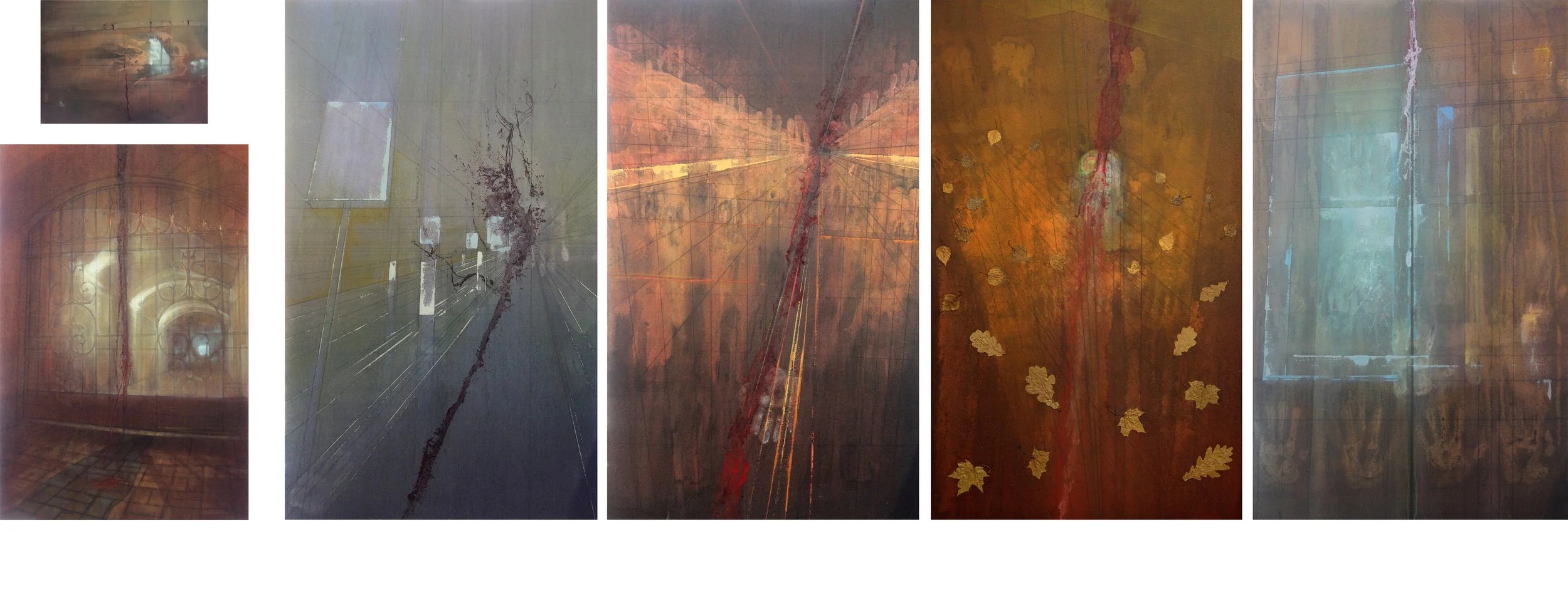
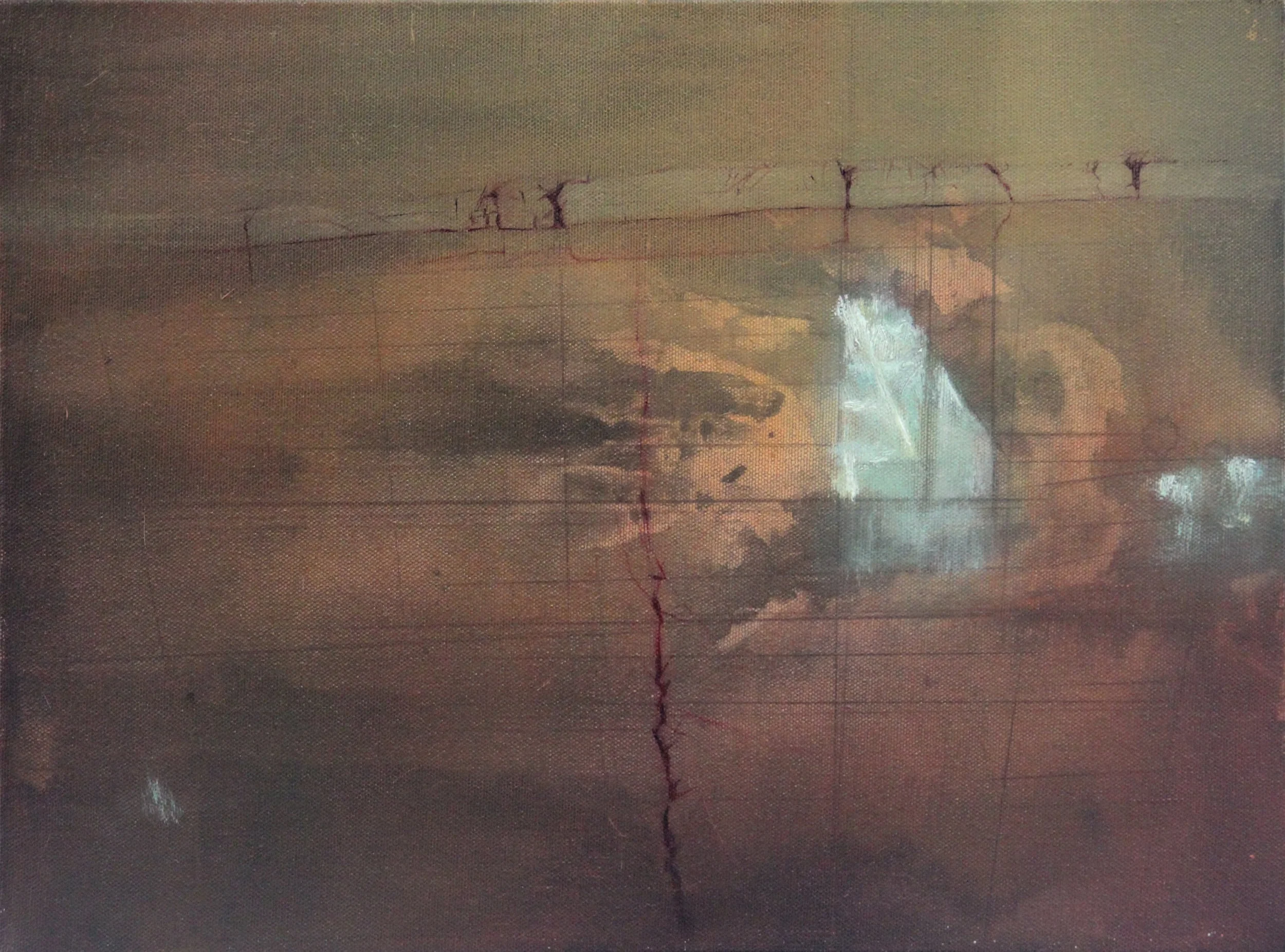
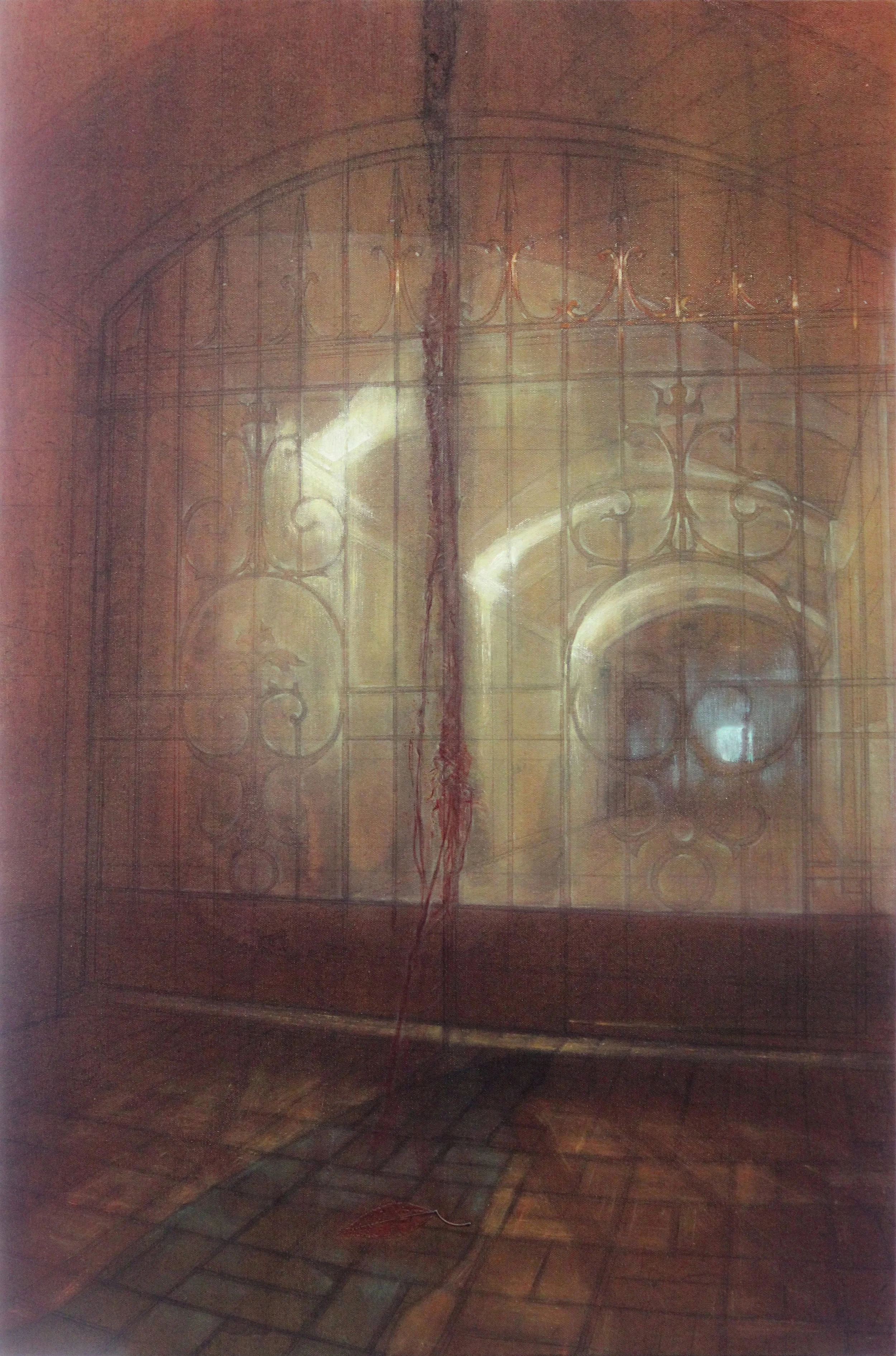
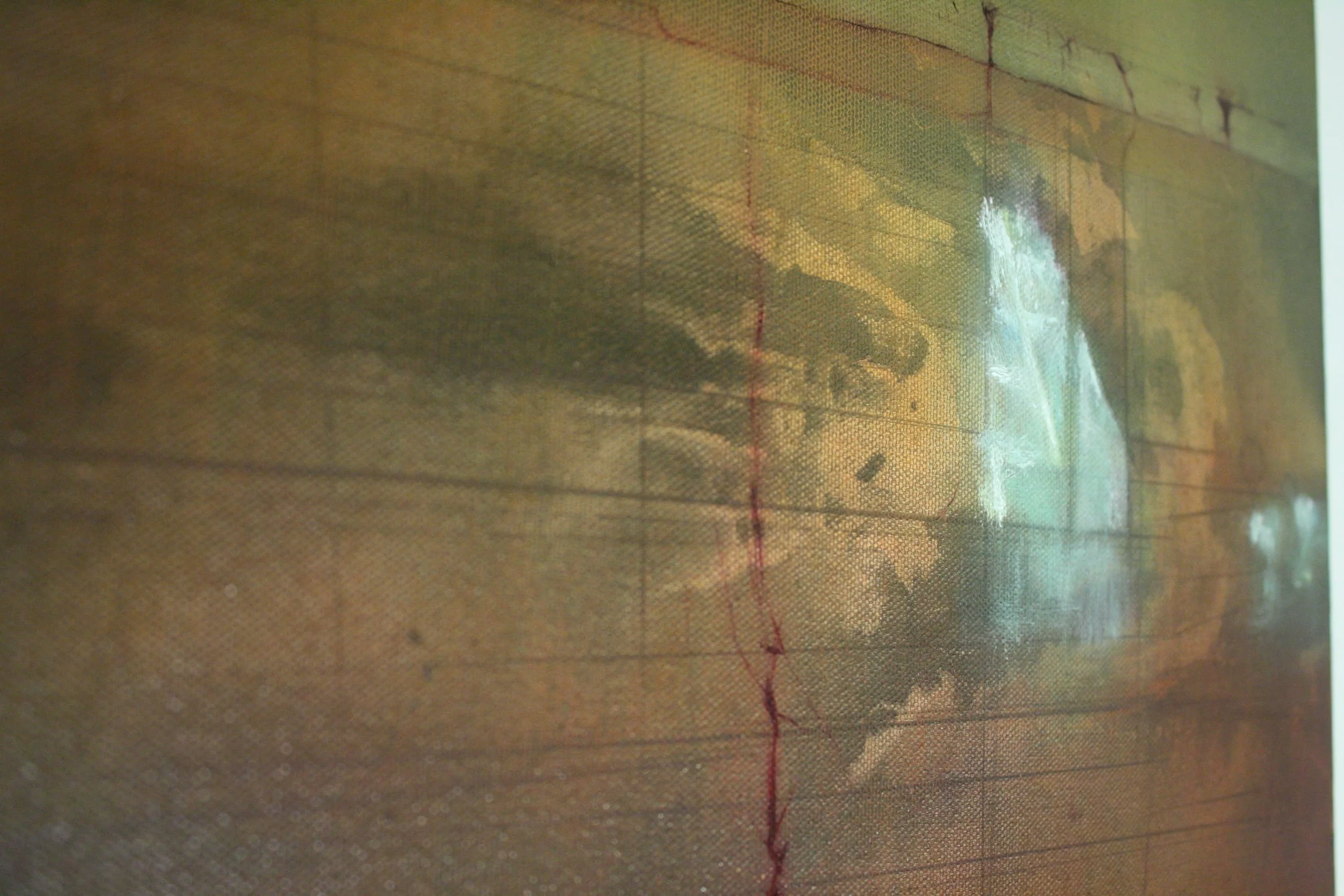
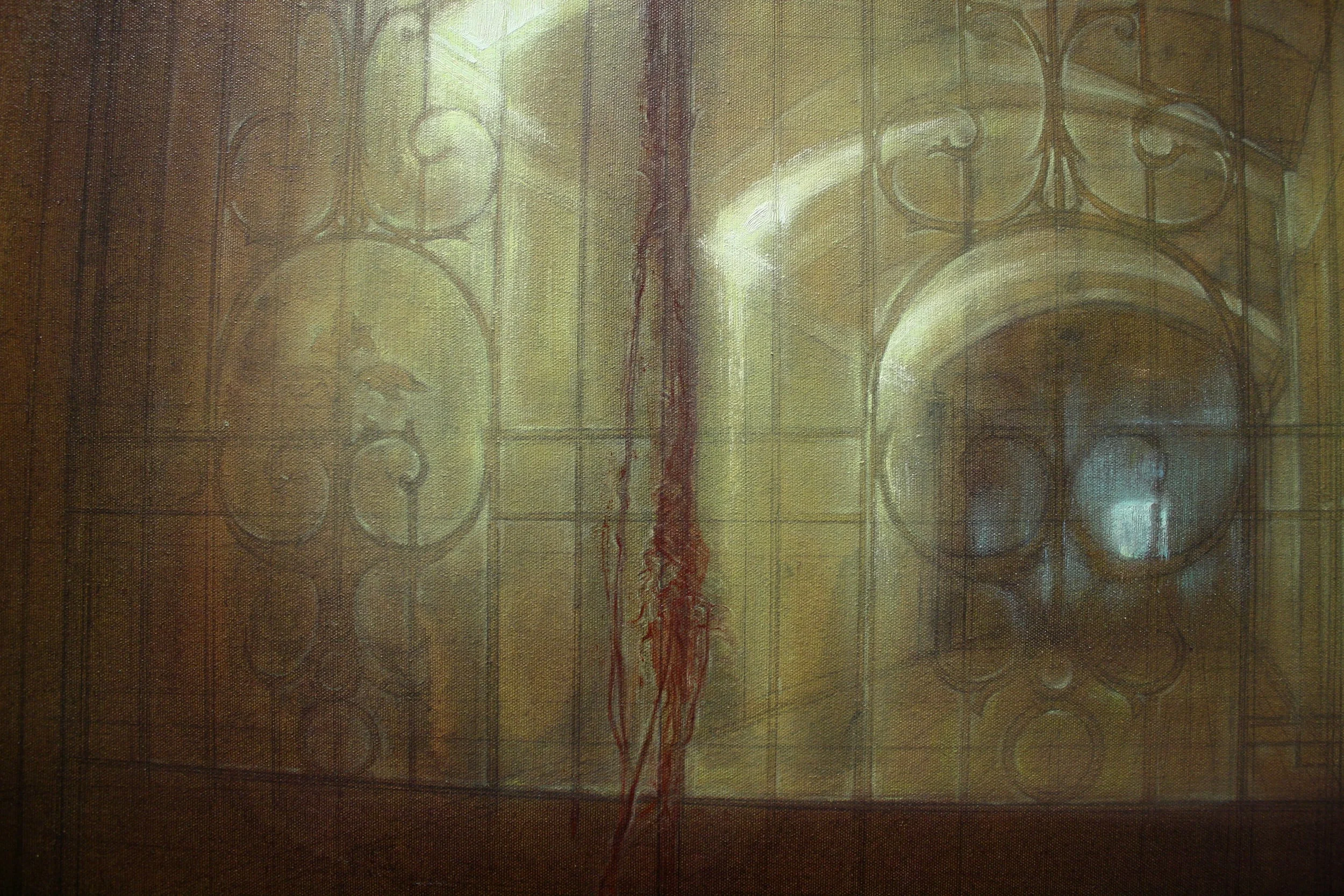
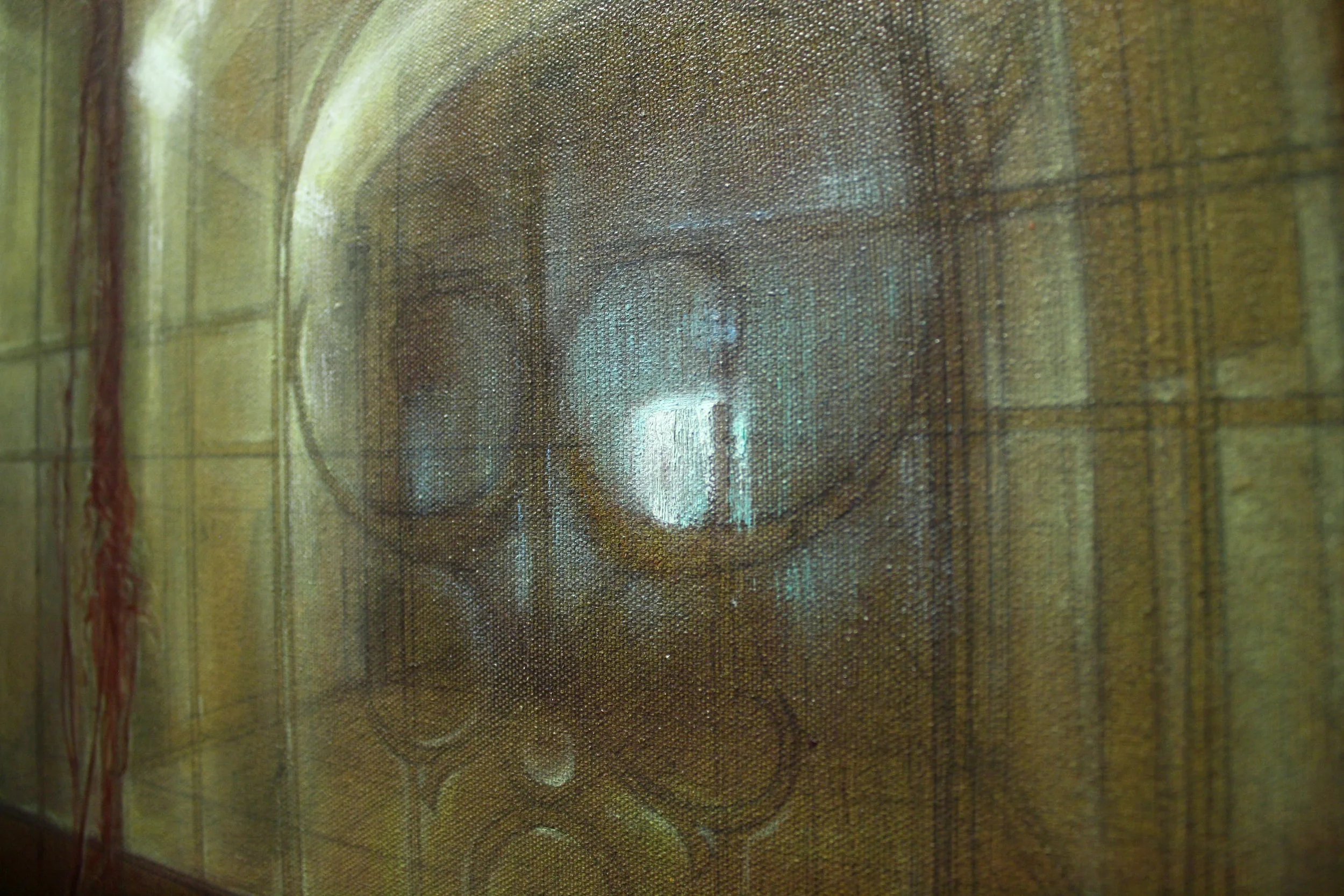
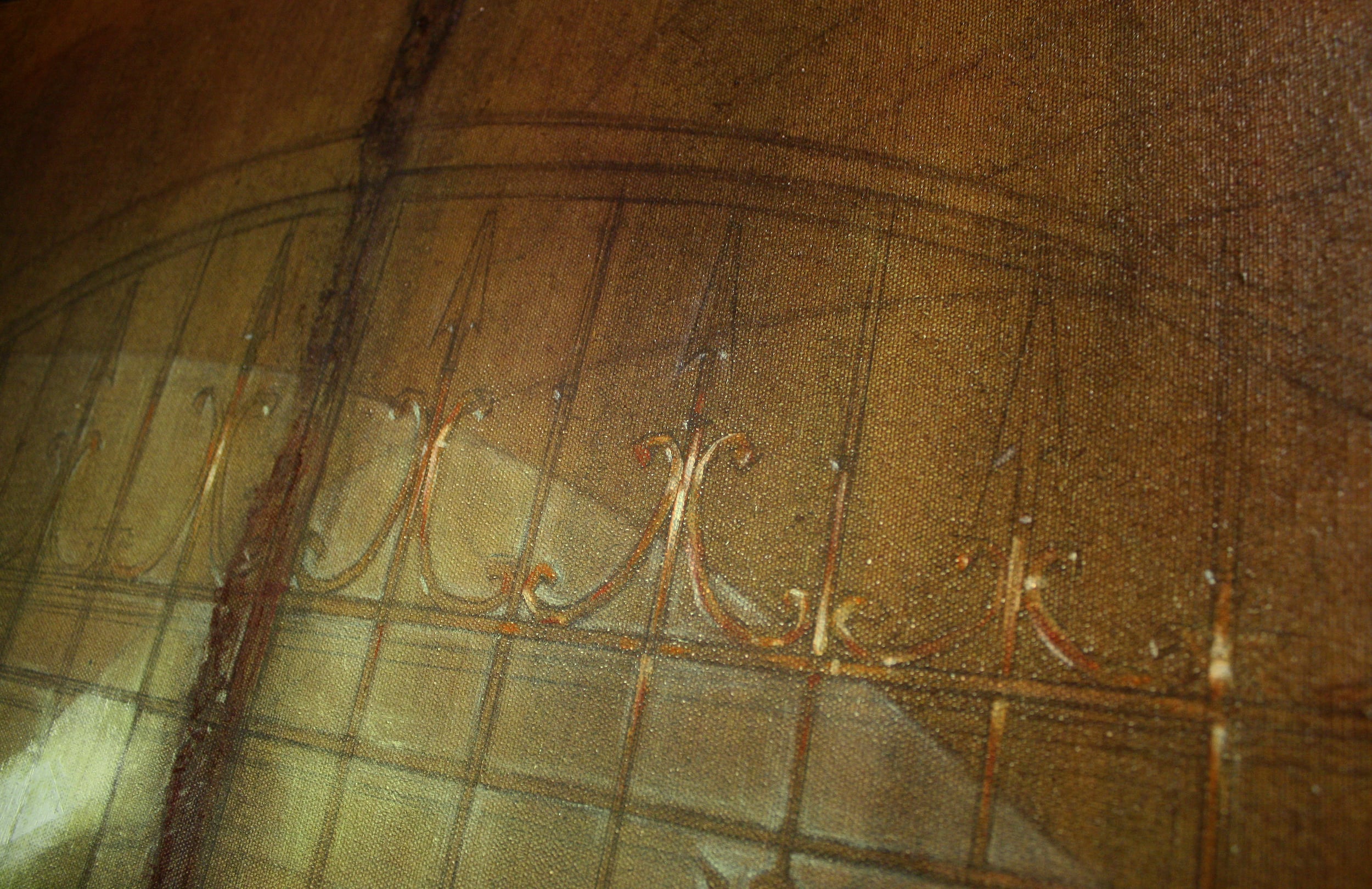
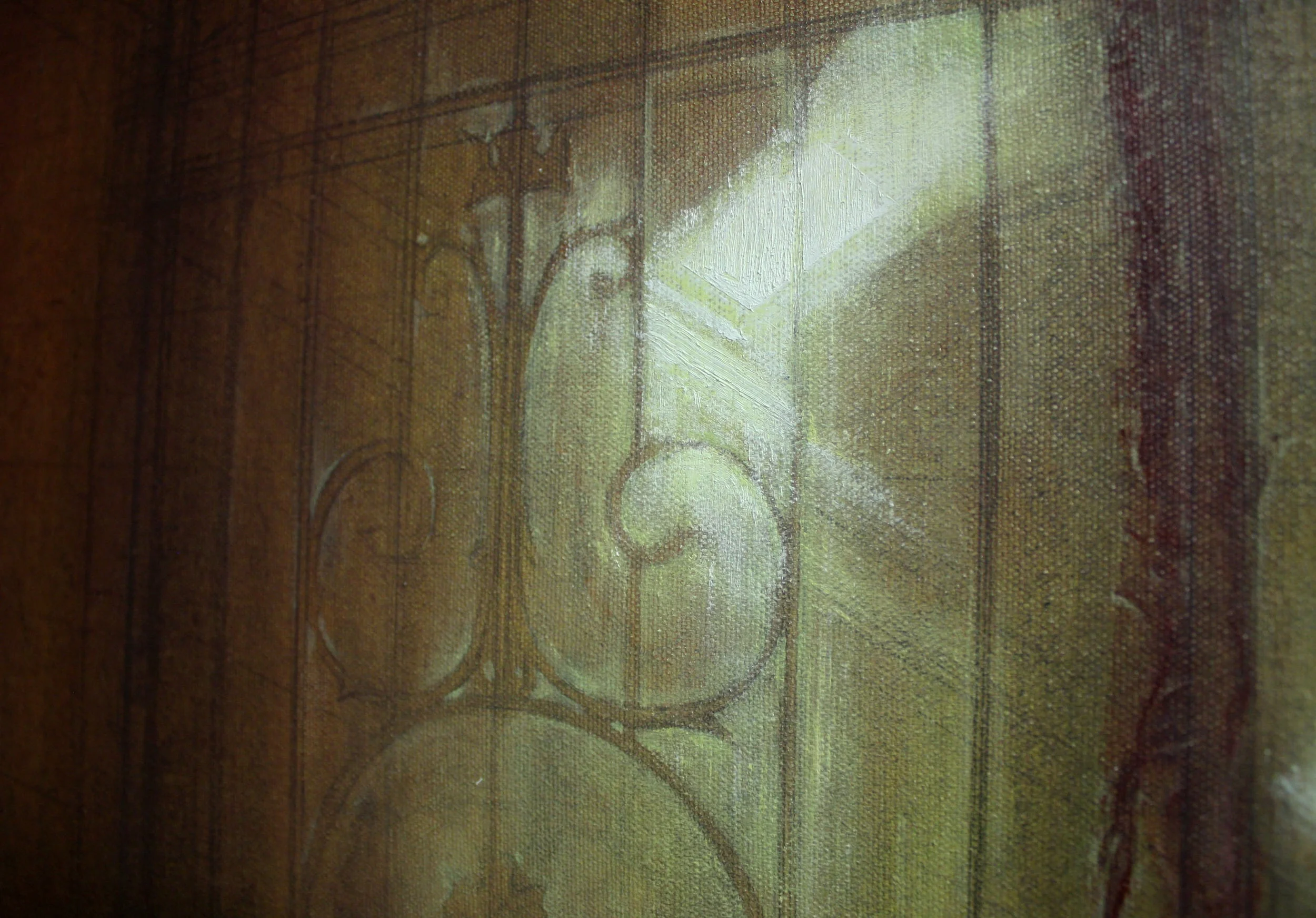
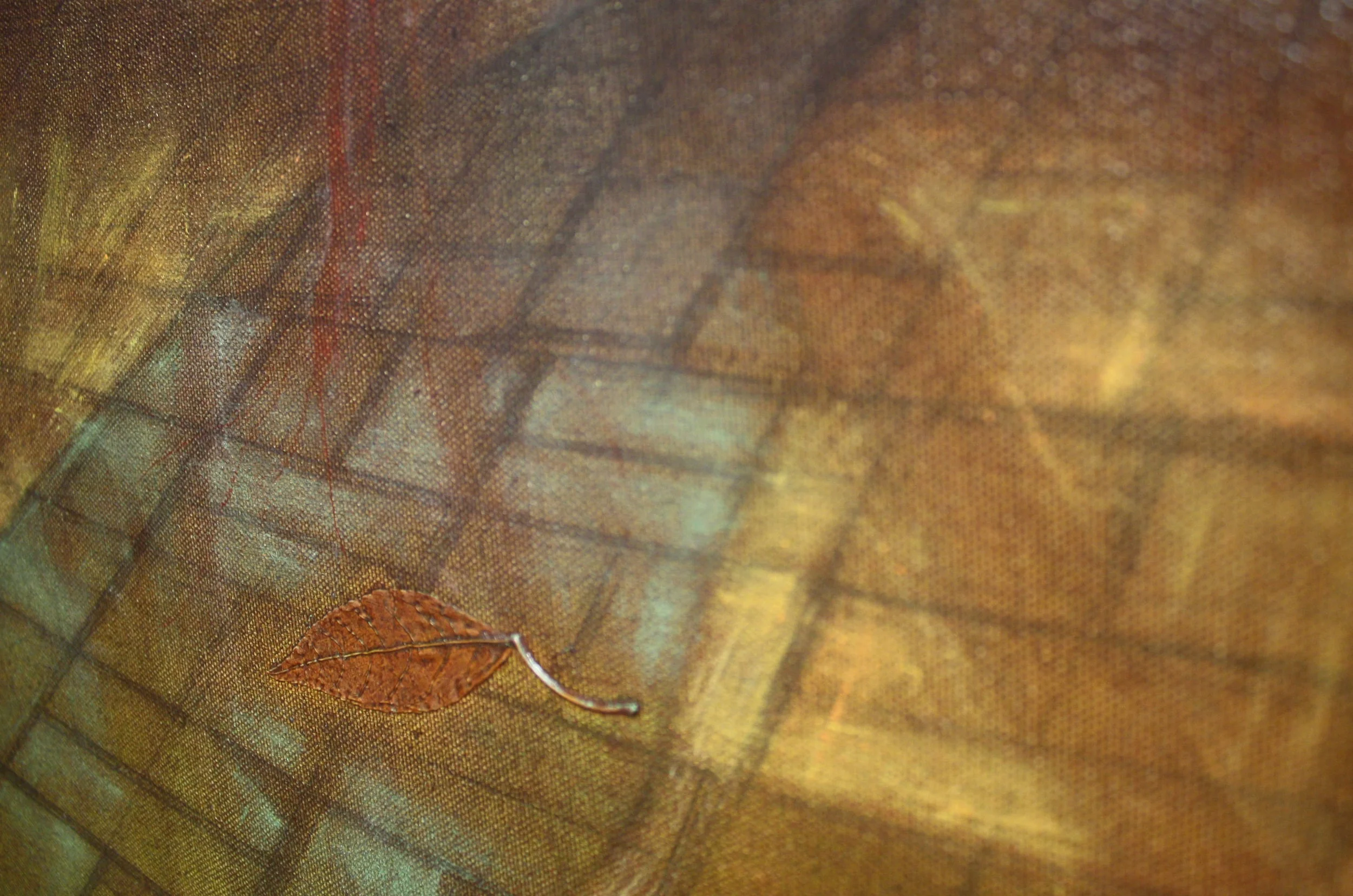
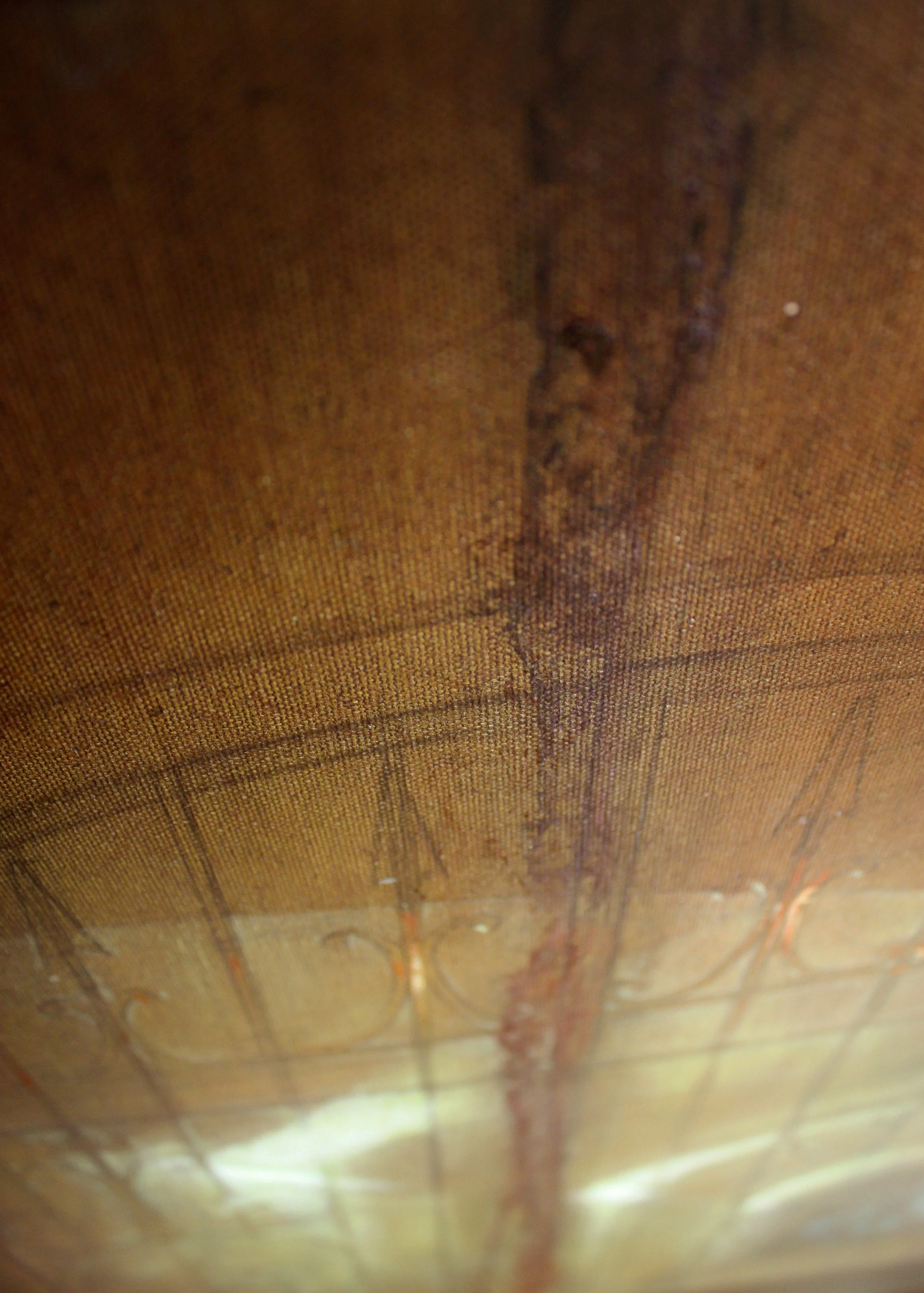
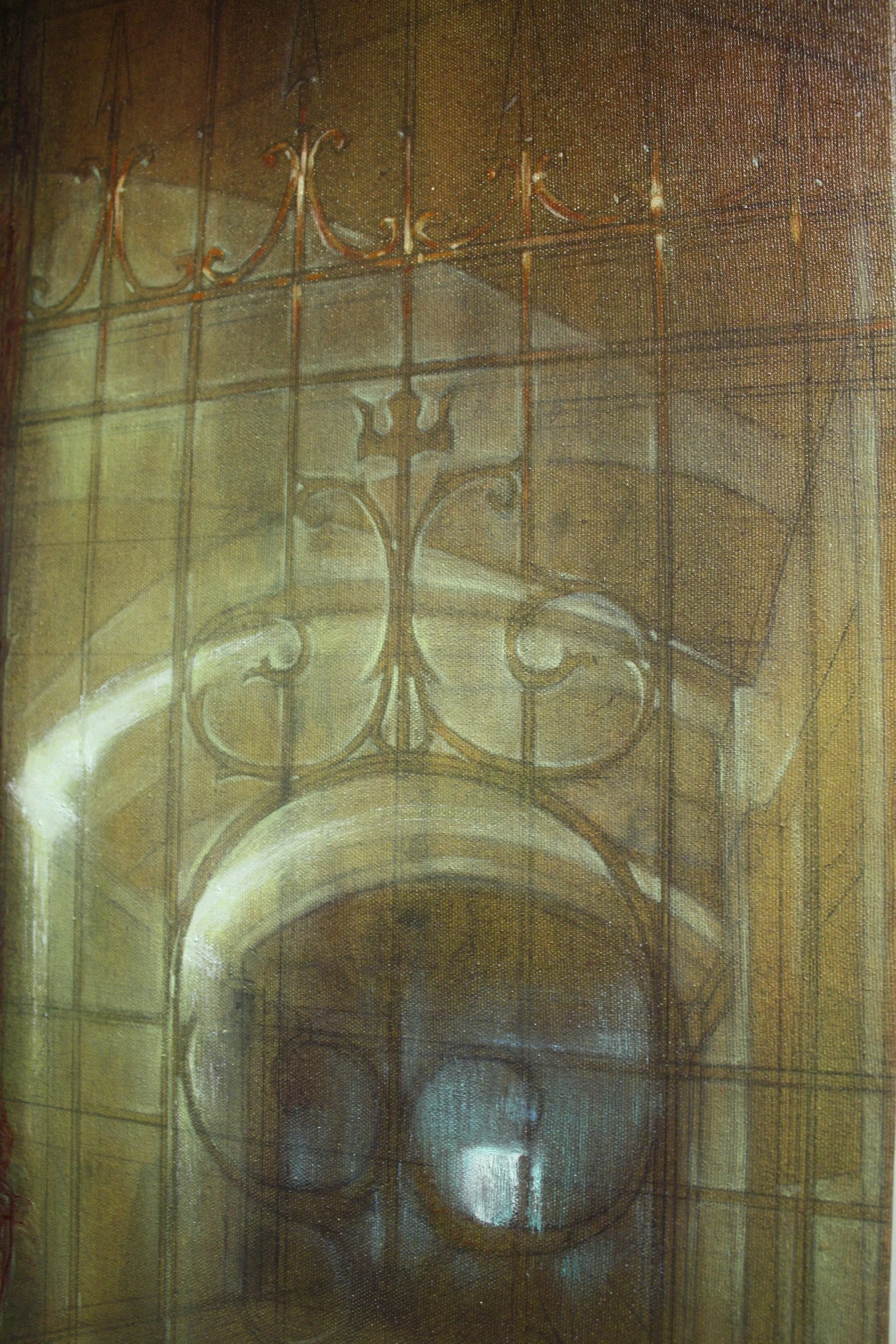
The two introductory paintings establish the conceptual and methodological foundation for Divided Line. Rather than functioning as preliminary sketches in a traditional sense, they operate as testing grounds where narrative, material process, and philosophical structure begin to merge into a unified visual language. Here Leonov’s emerging notion of the “human disease” first becomes materially embedded: surface treatment, spatial construction, and symbolic imagery are inseparable from the psychological and existential conditions the works investigate.
Architectural fragments, dim passages, reflected light, and suspended linear elements appear as both remembered spaces and states of mind. The paintings explore how methodology itself can carry meaning—through layered transparencies, abrasive surface shifts, string interventions, and the tension between illusionistic depth and flattening abstraction. These strategies would become central throughout Leonov’s later practice, where formal systems no longer illustrate ideas, but actively generate them.