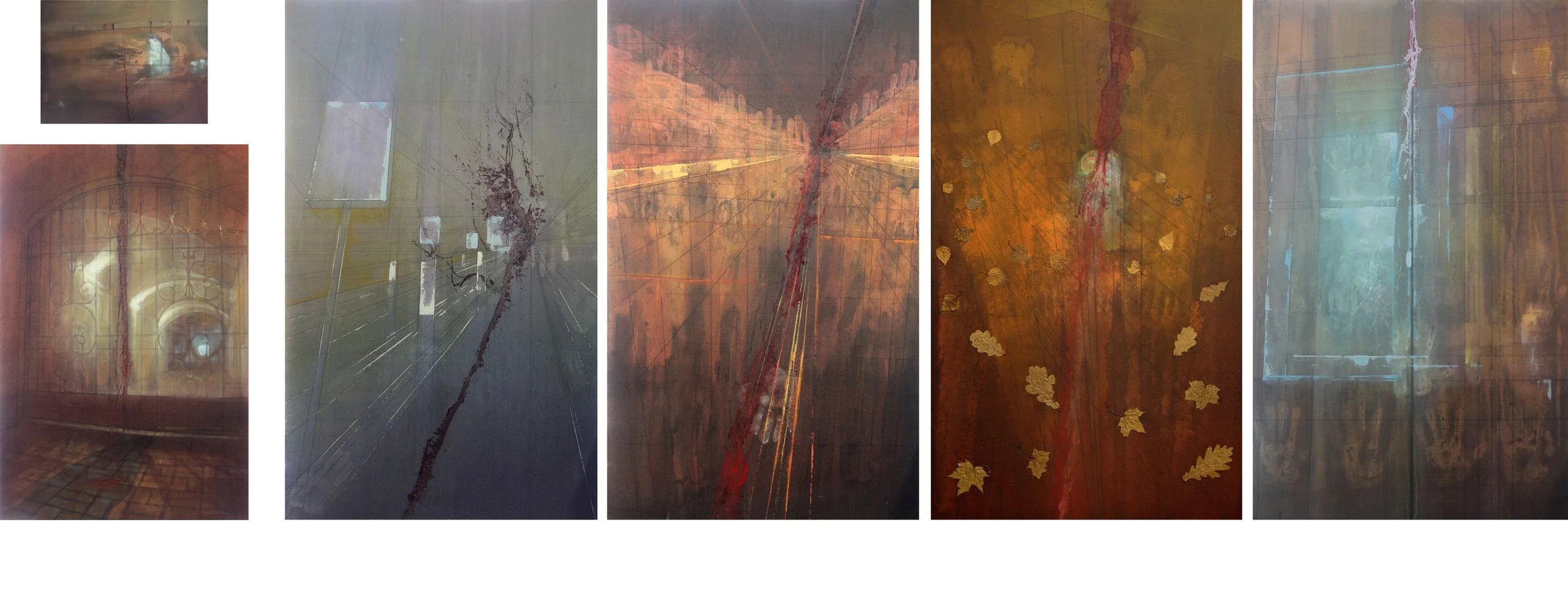
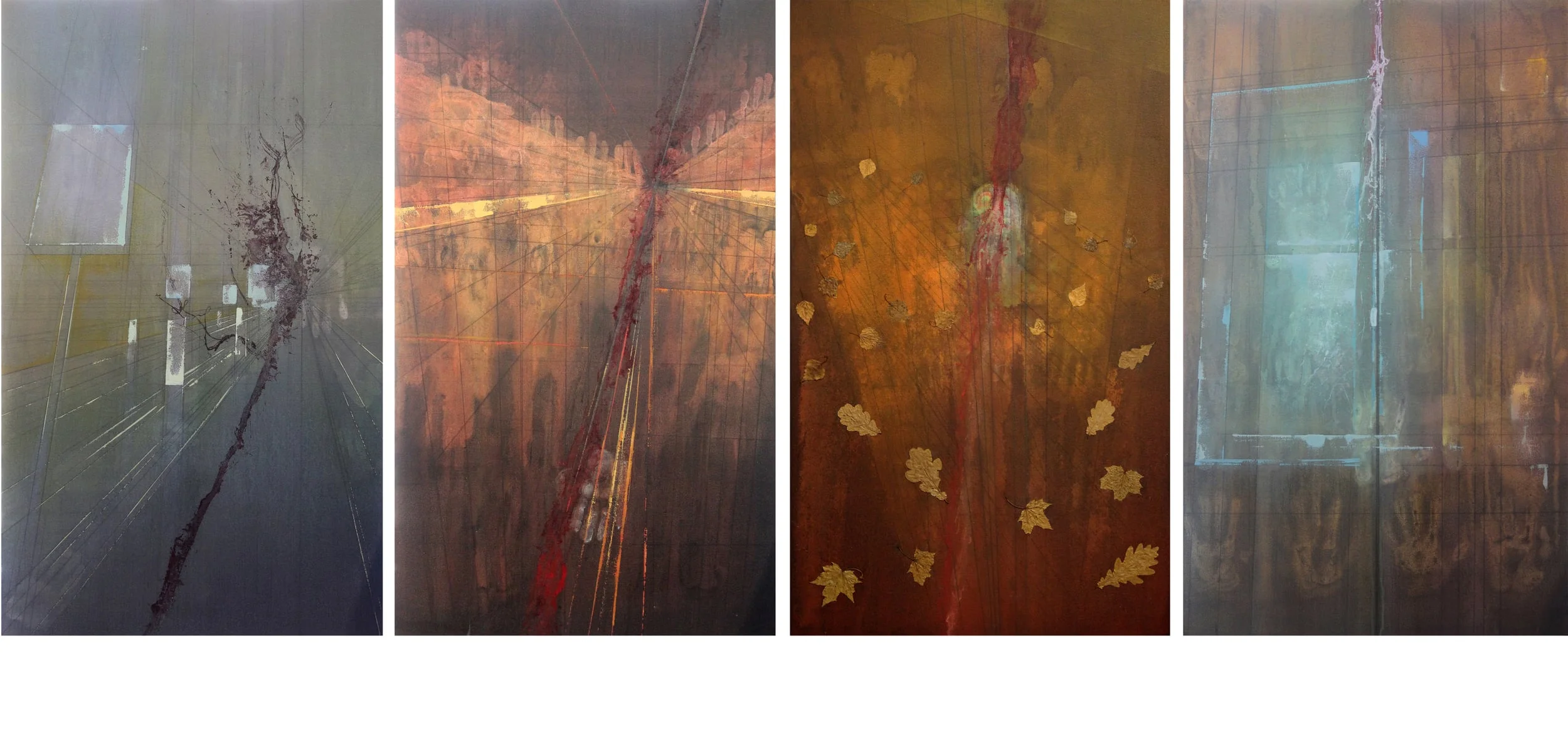
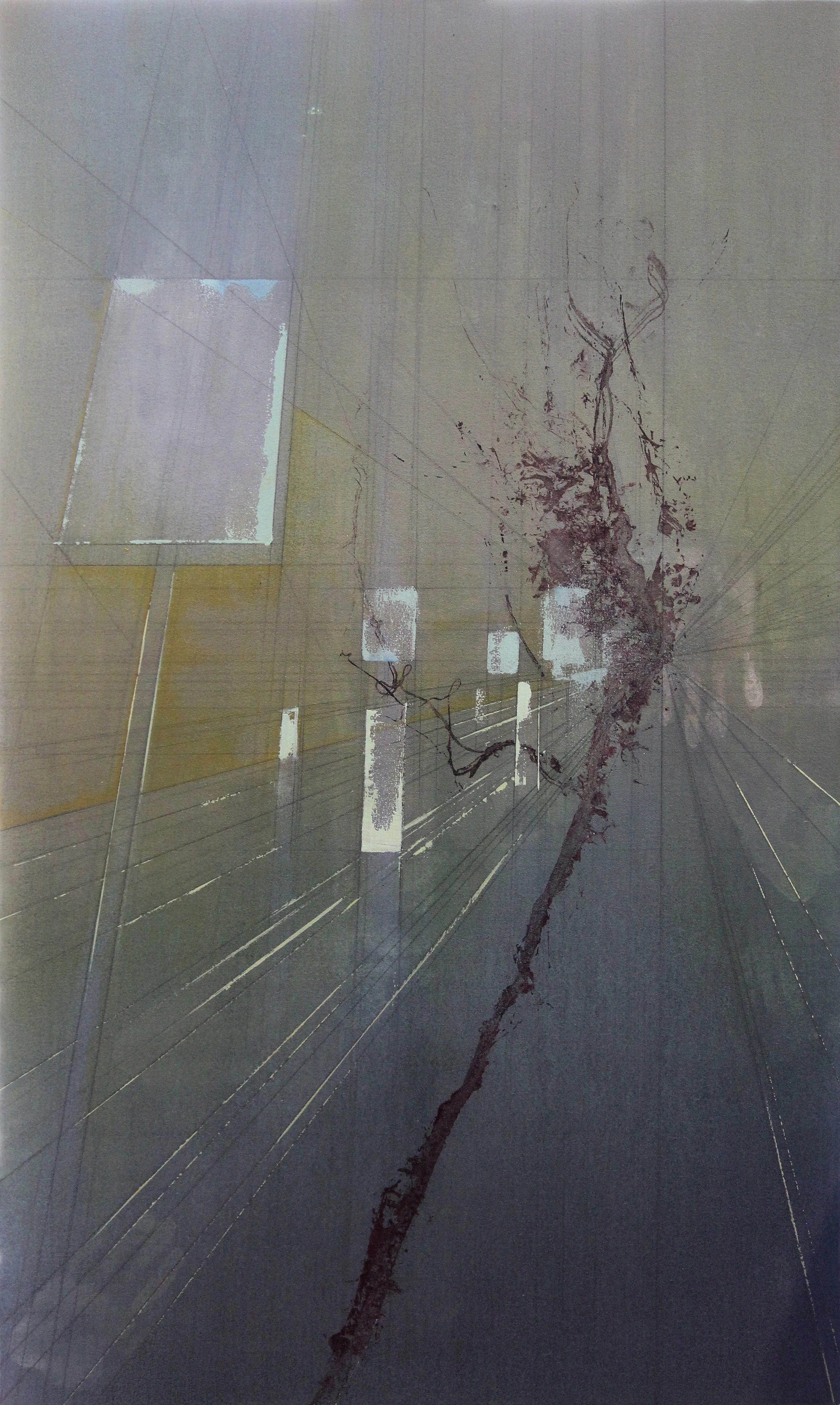
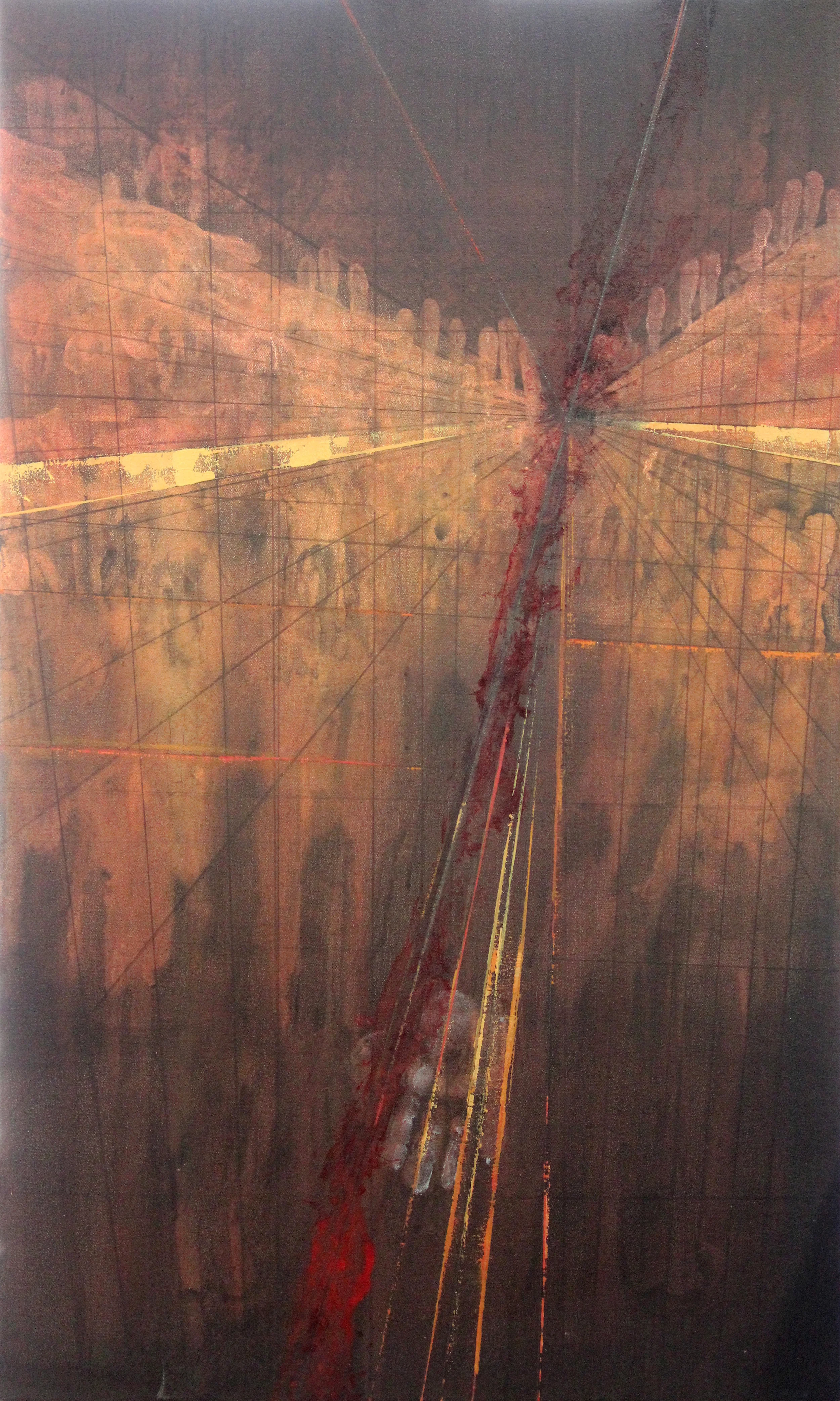
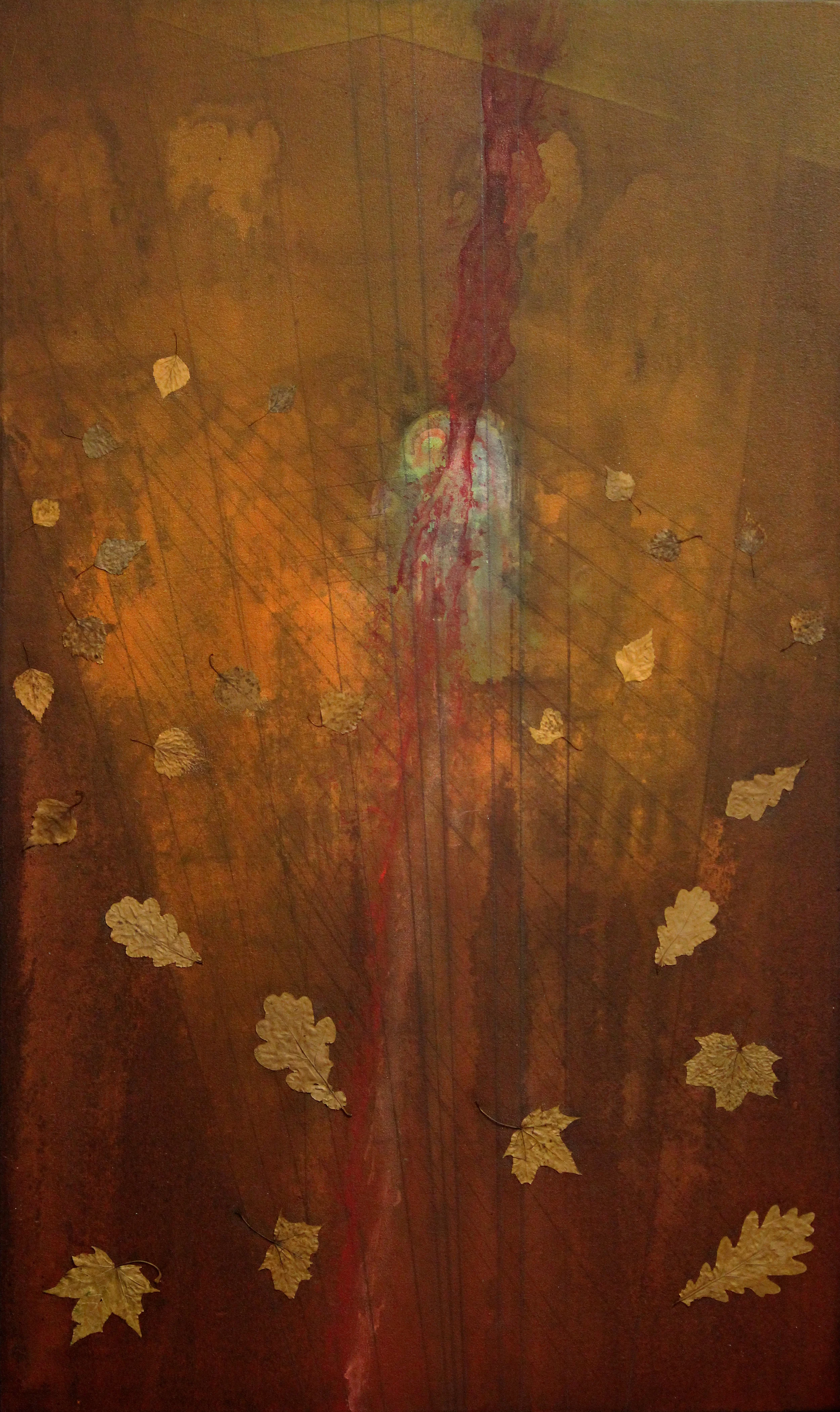
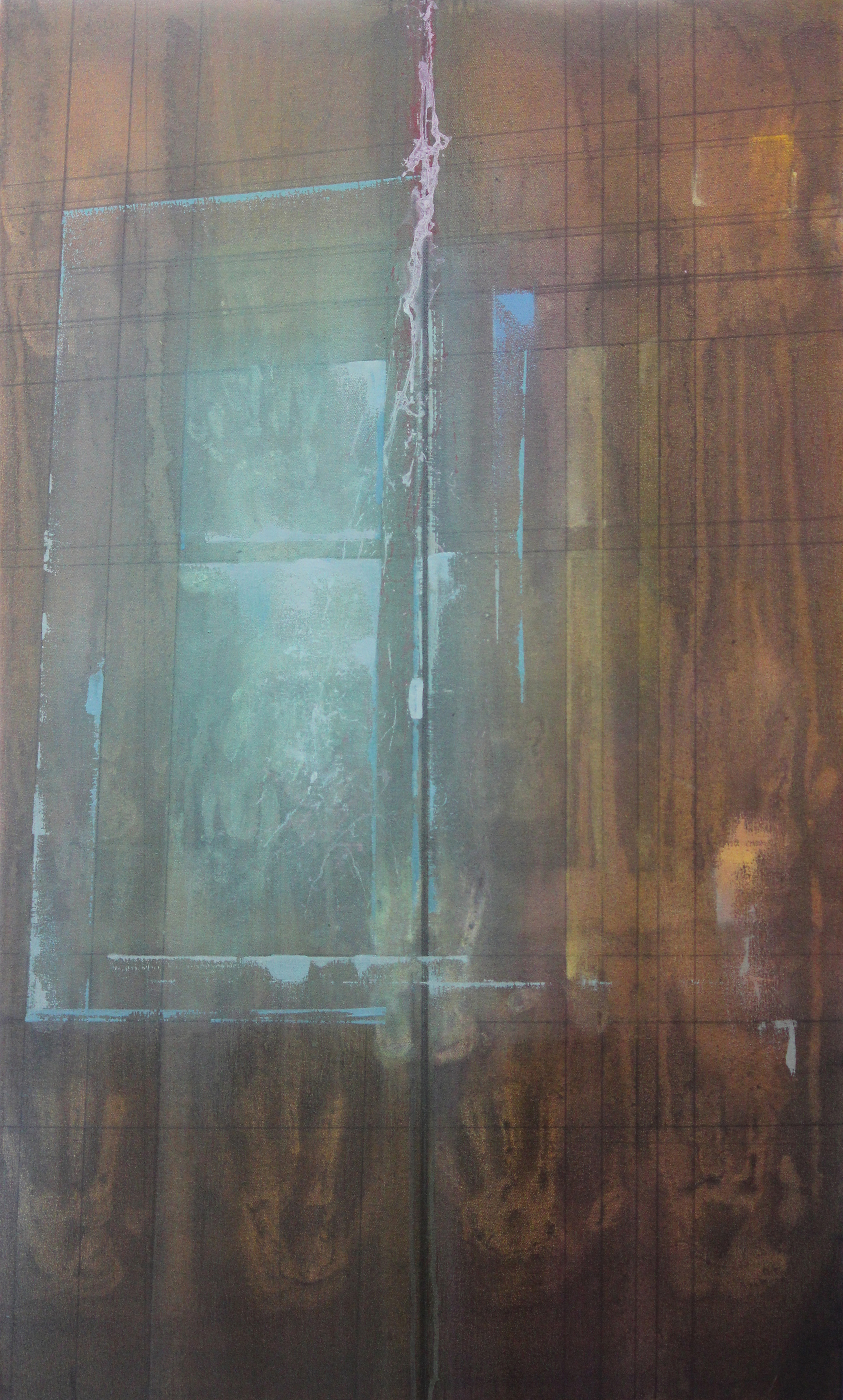
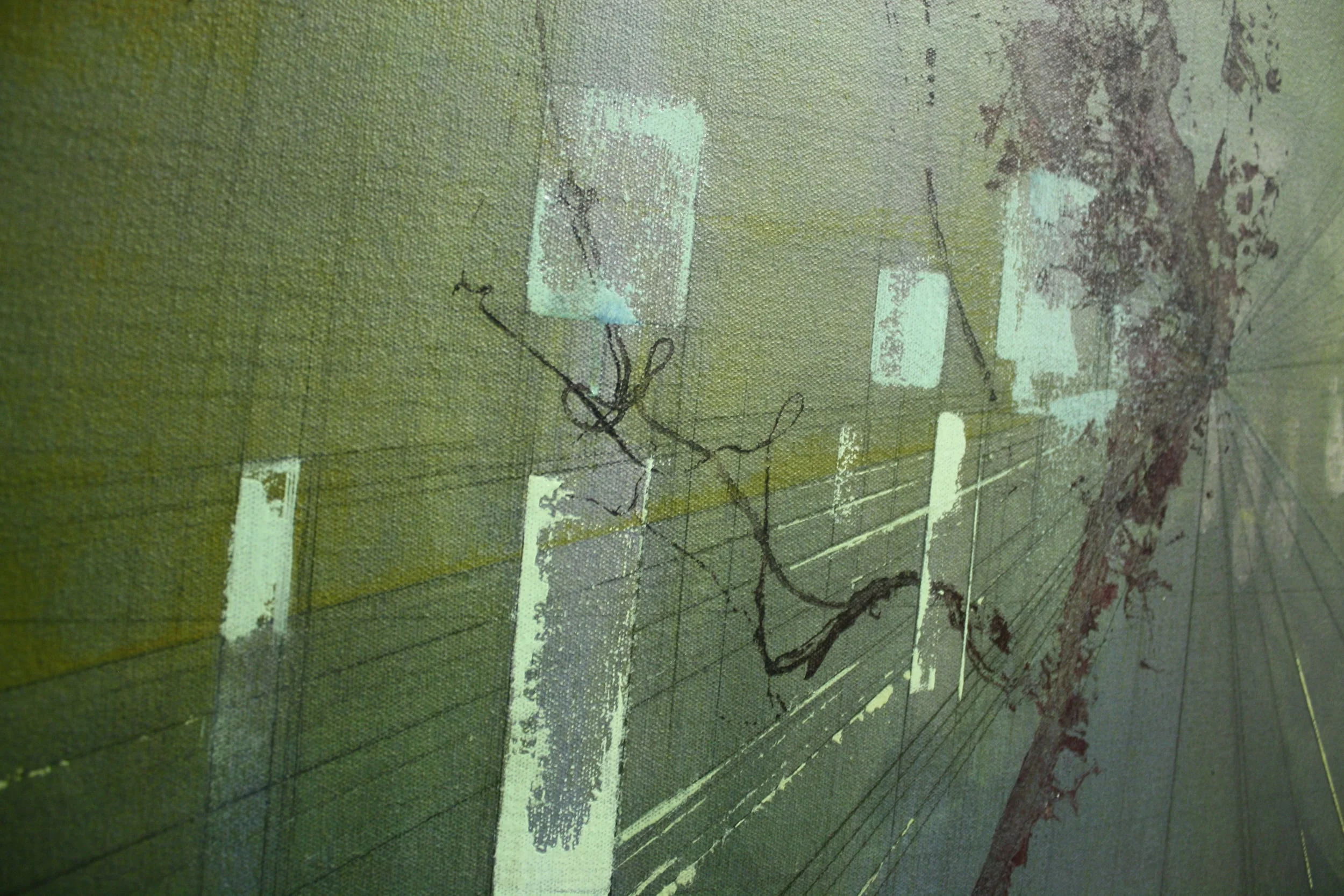
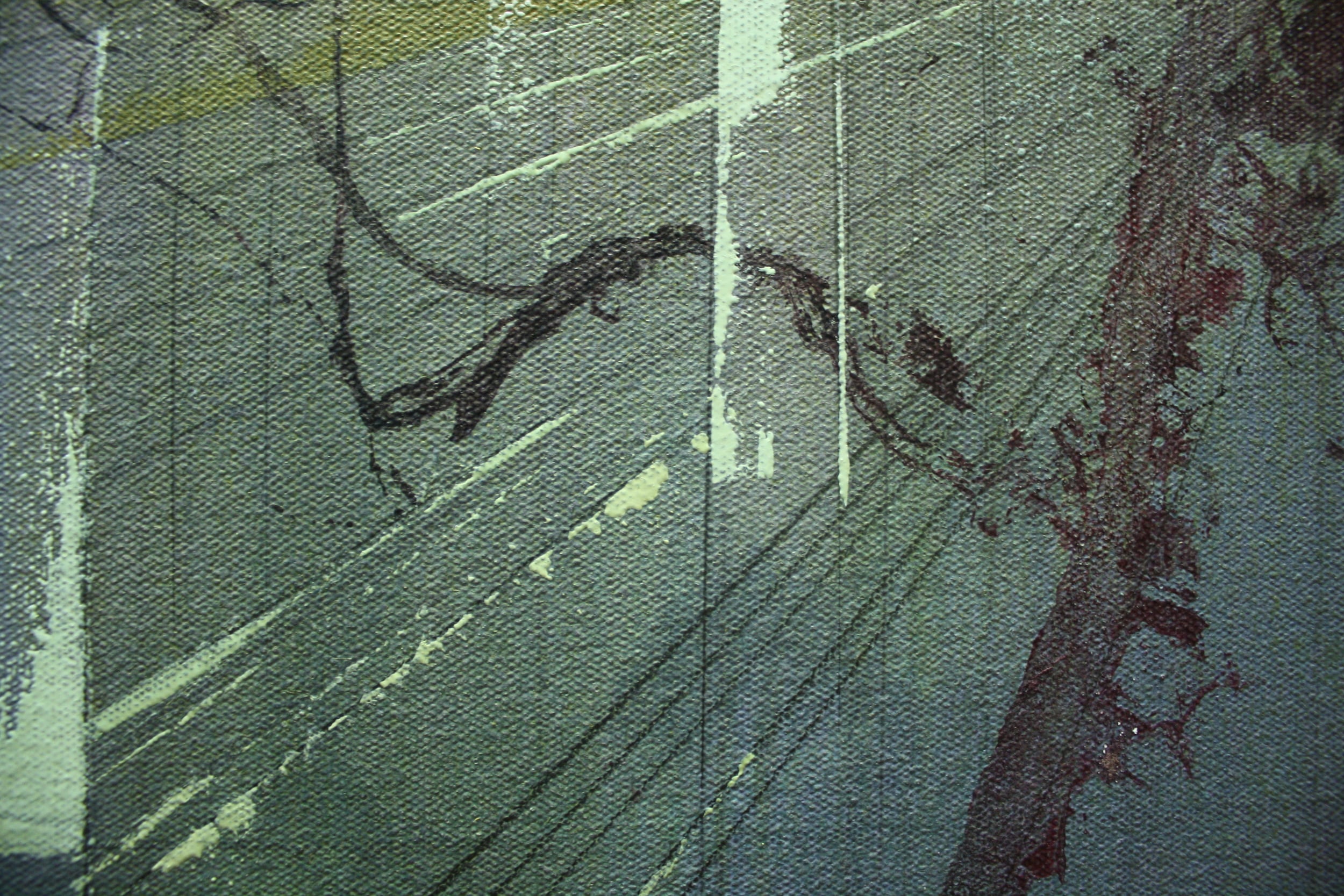
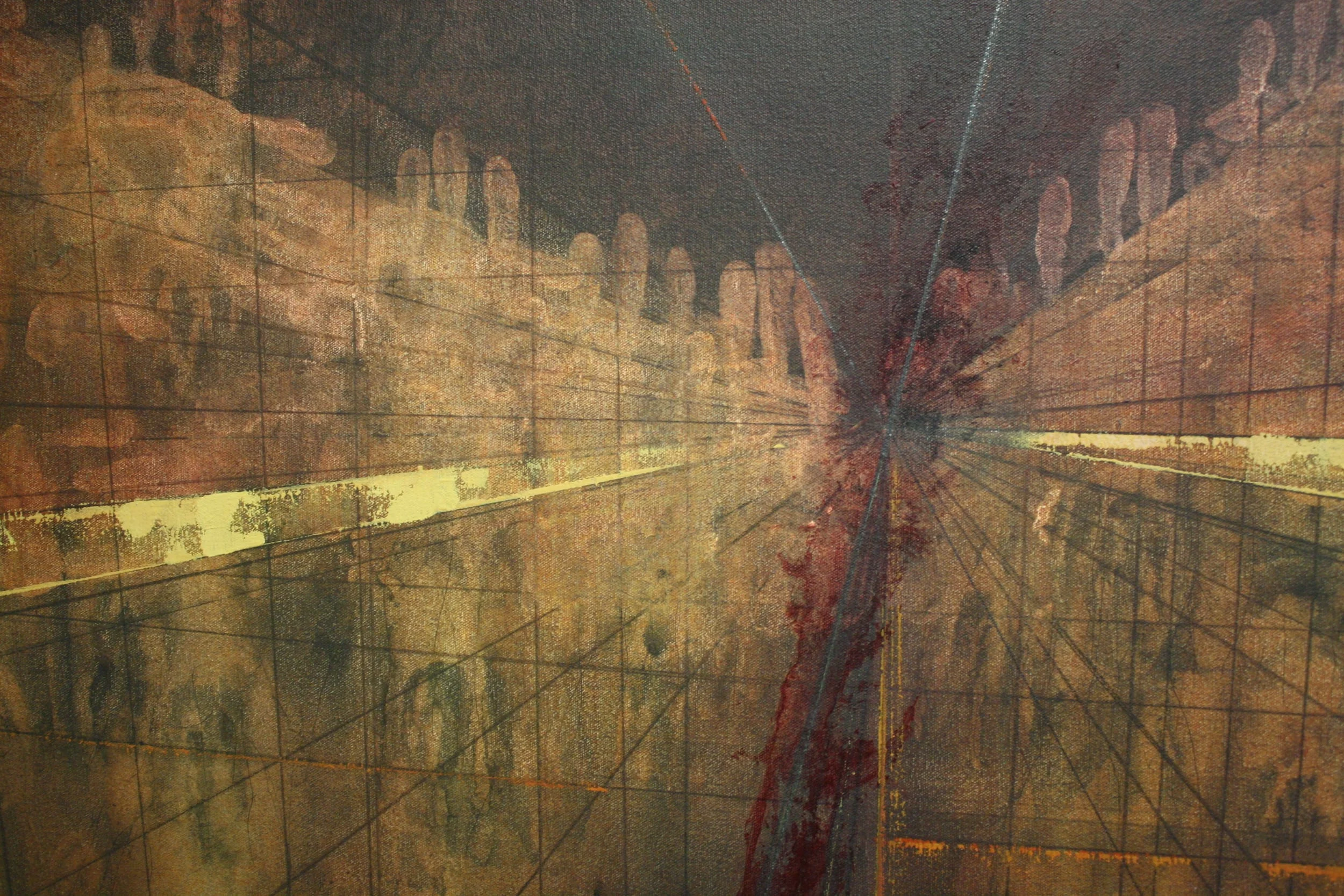
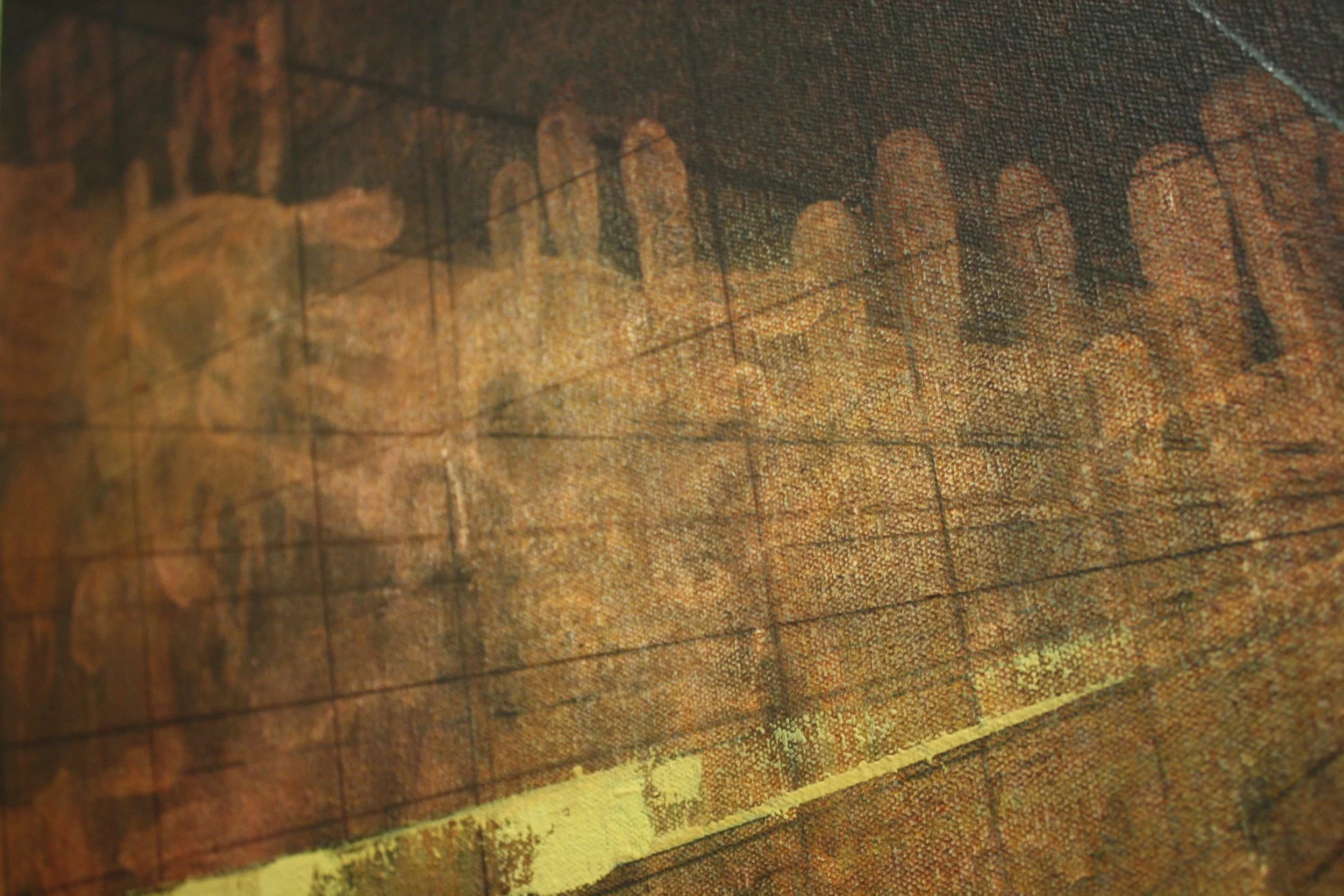
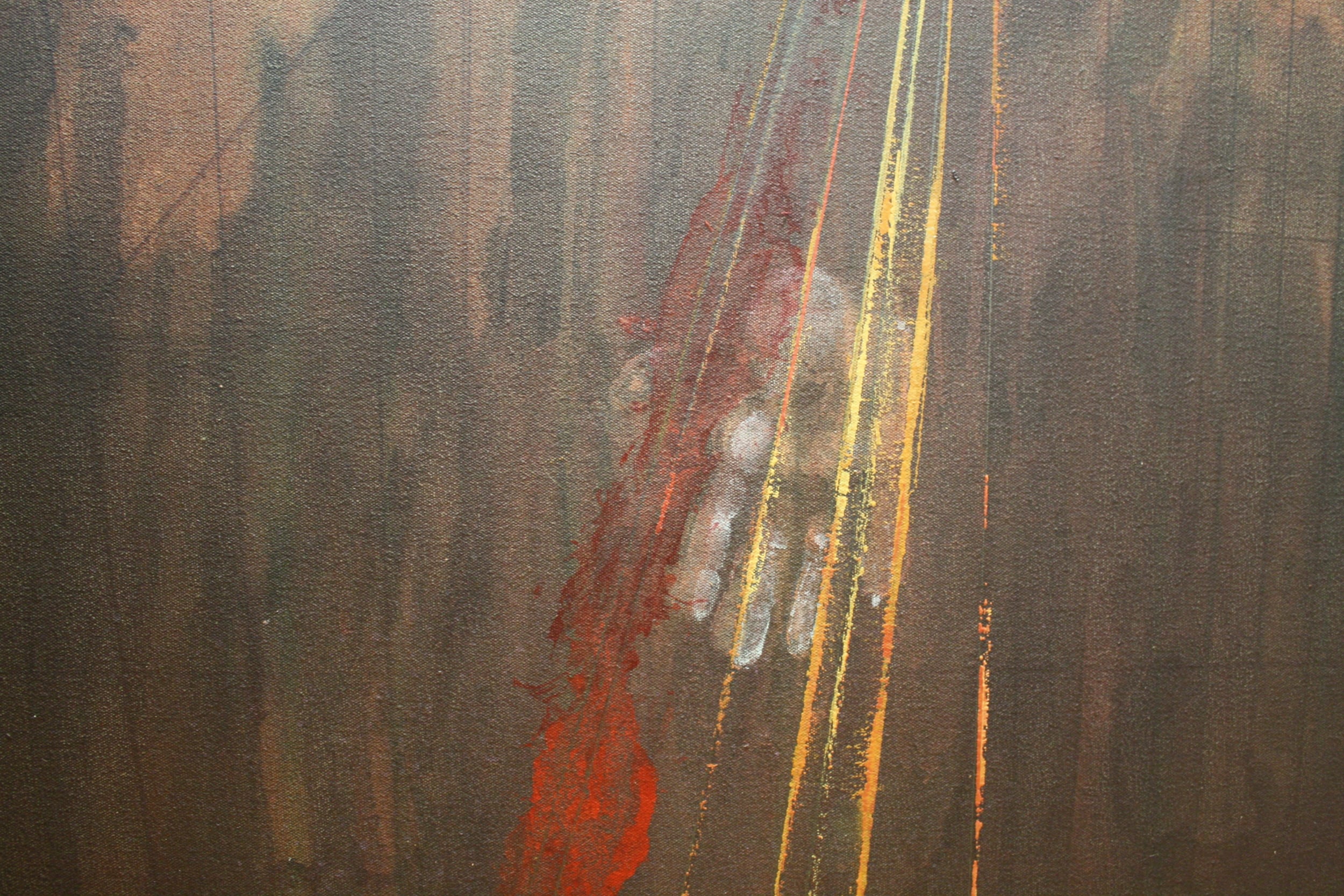
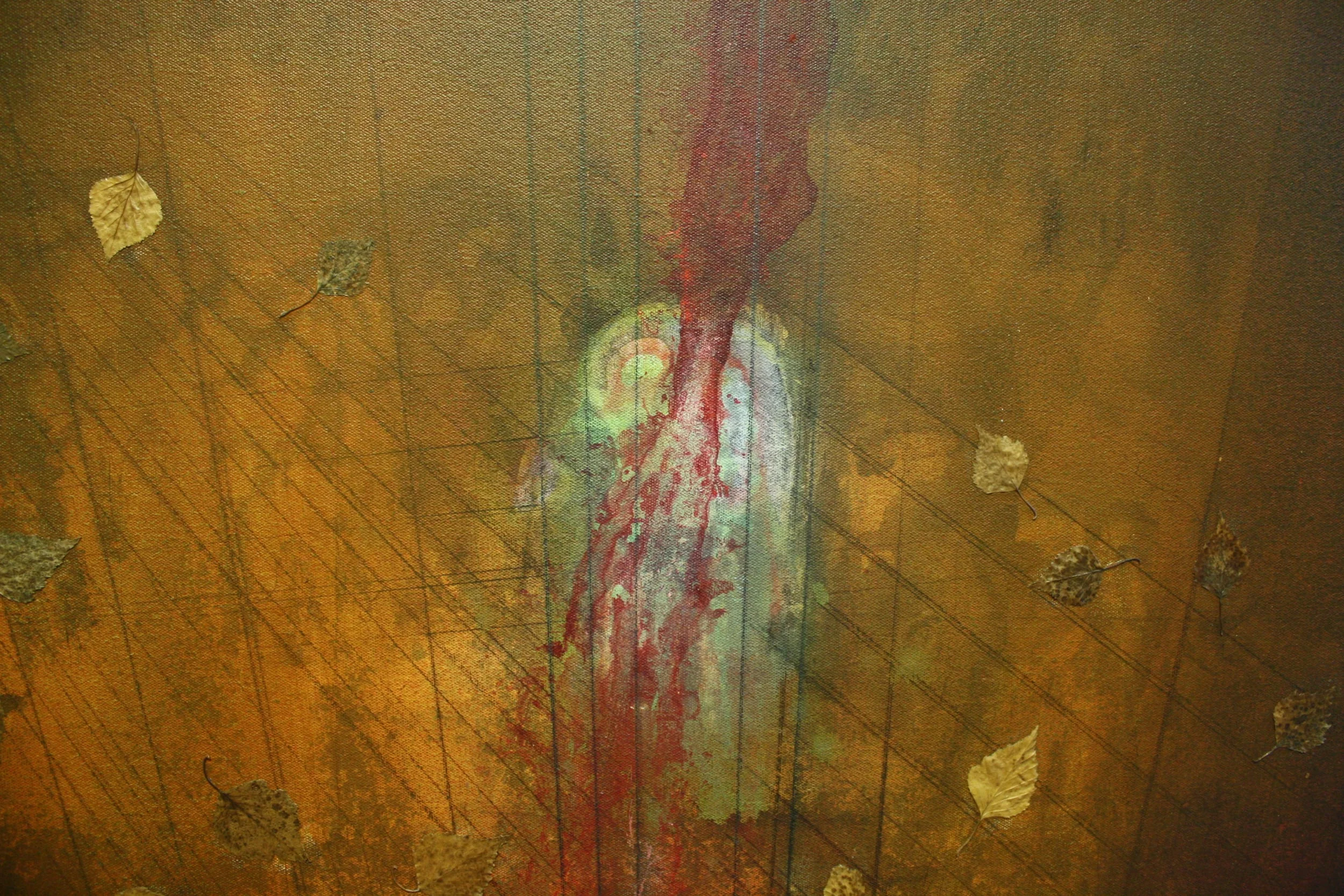
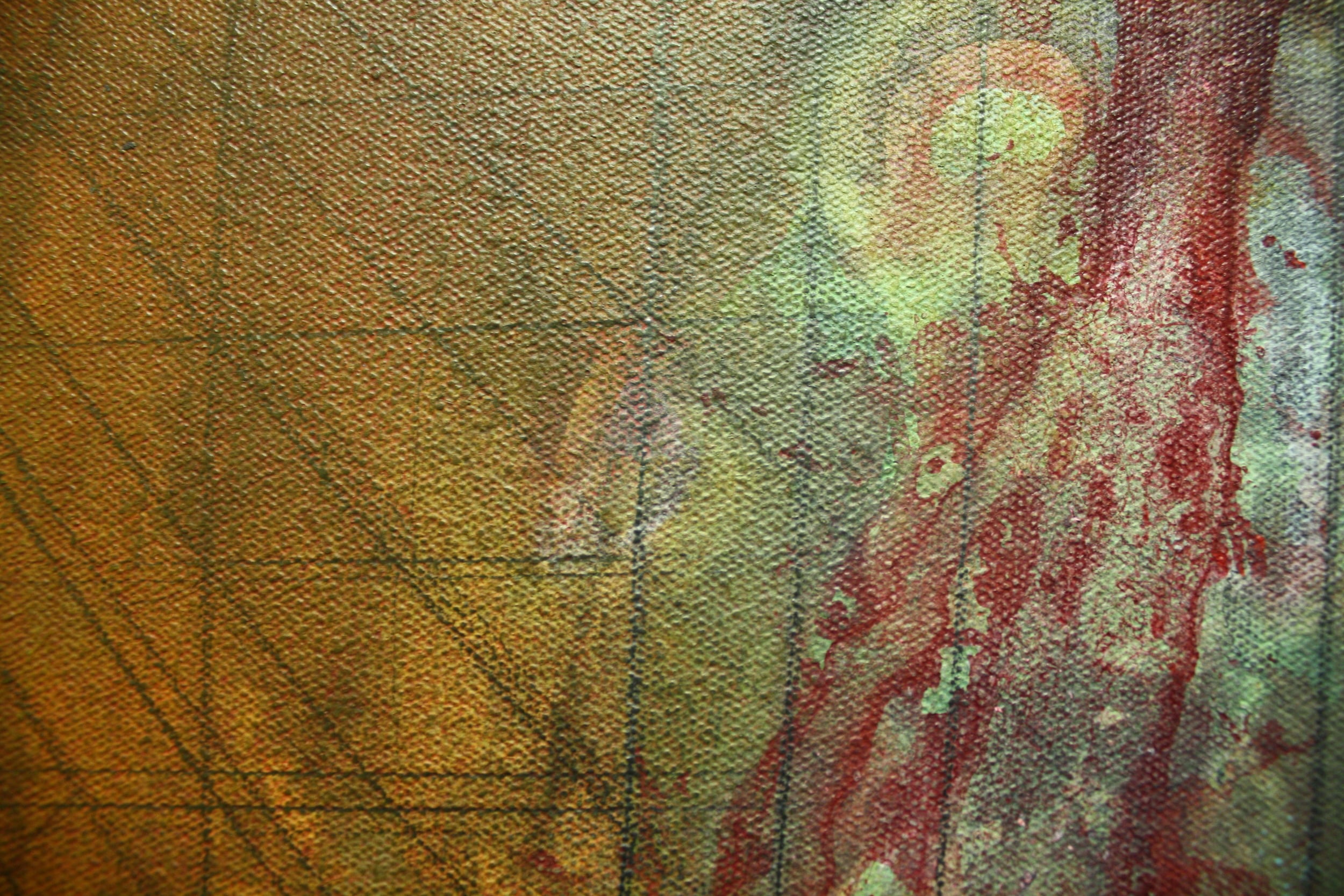
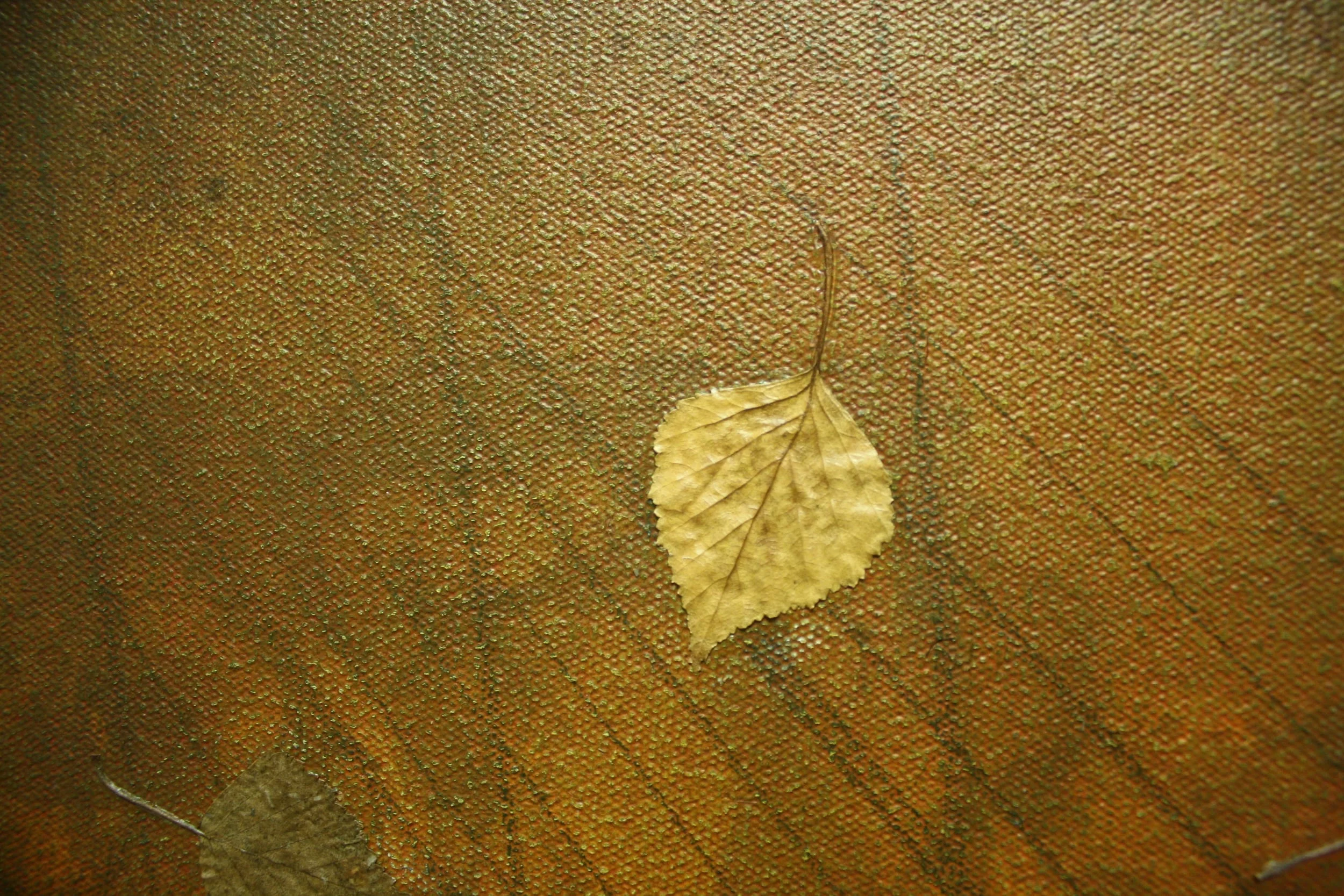
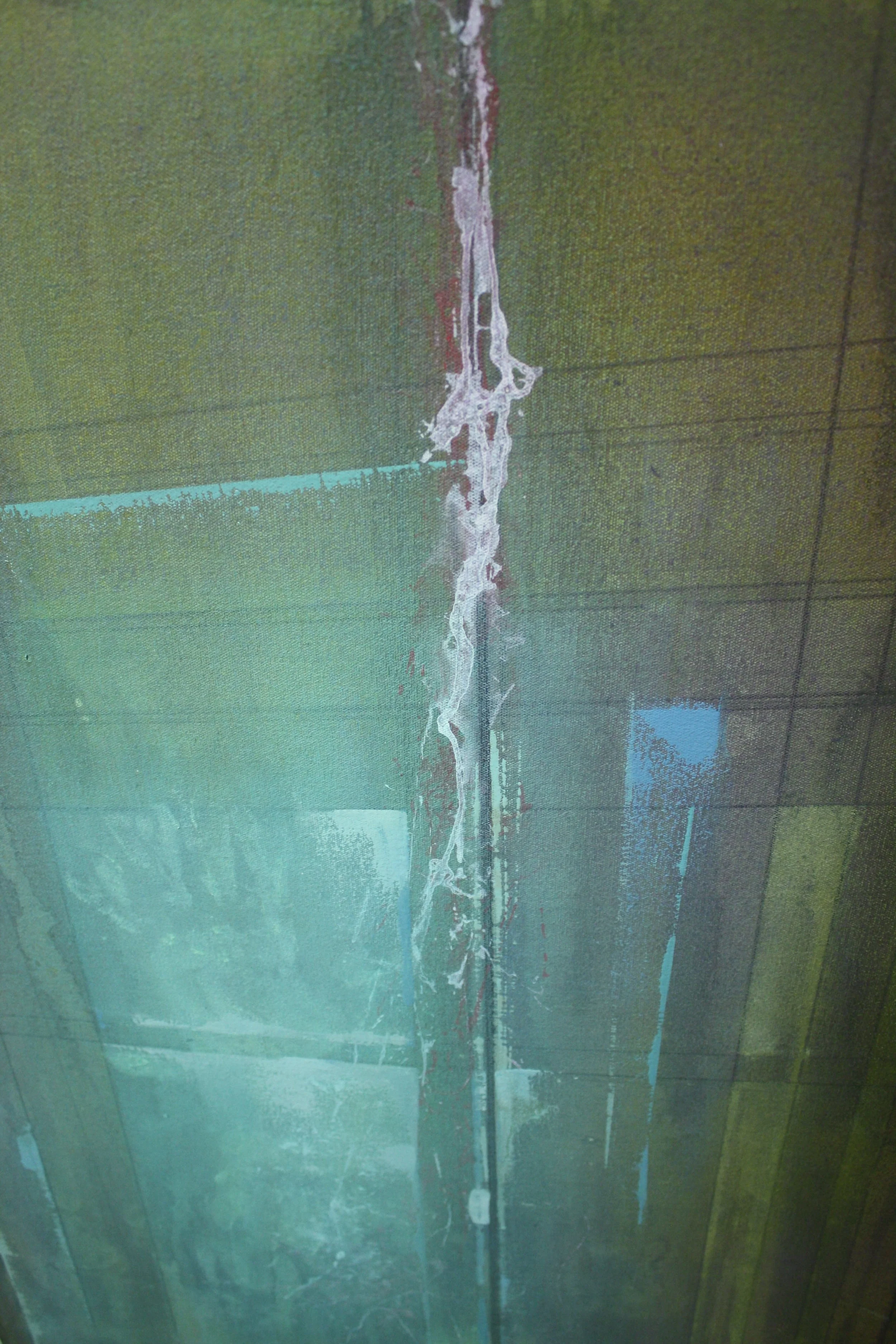
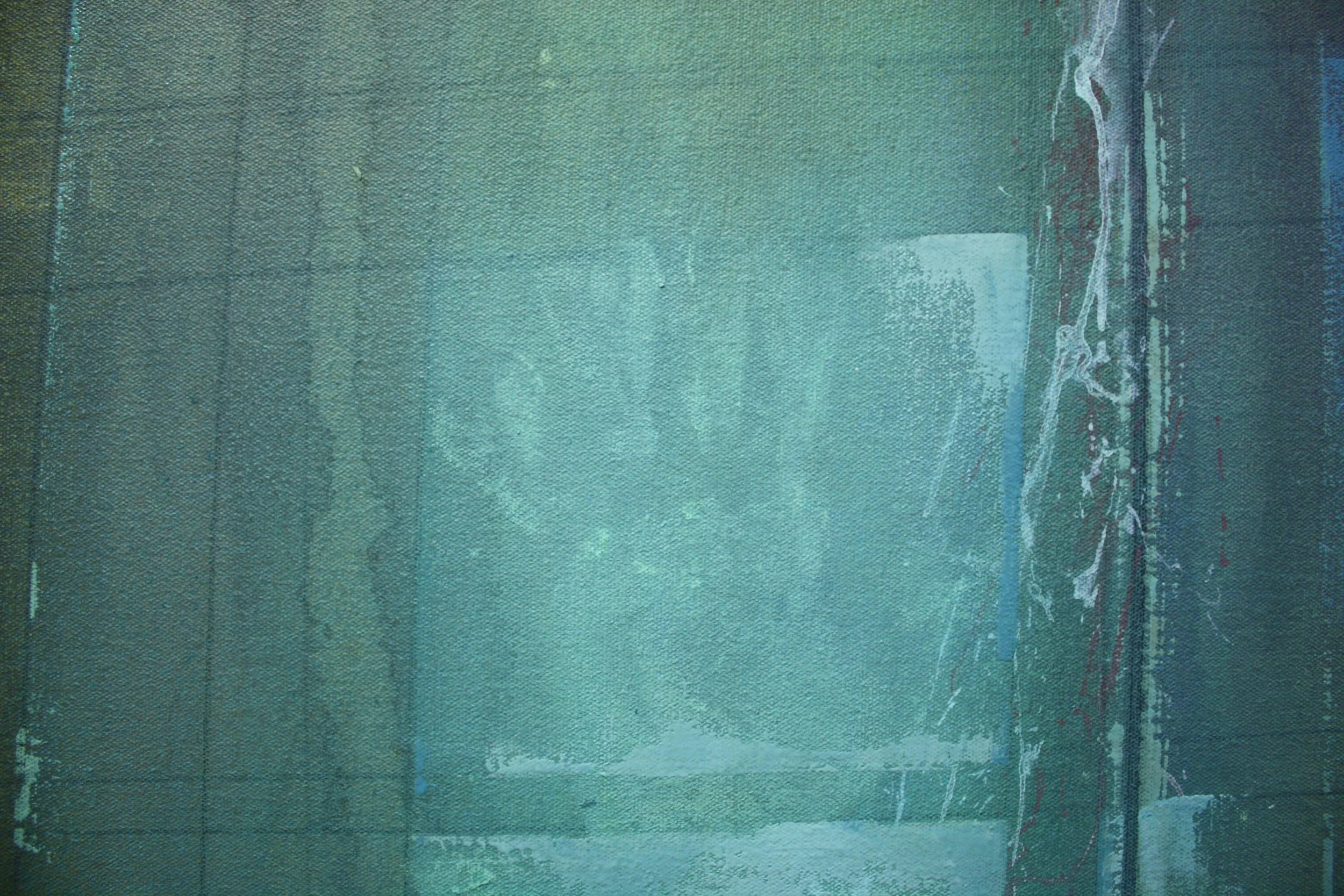
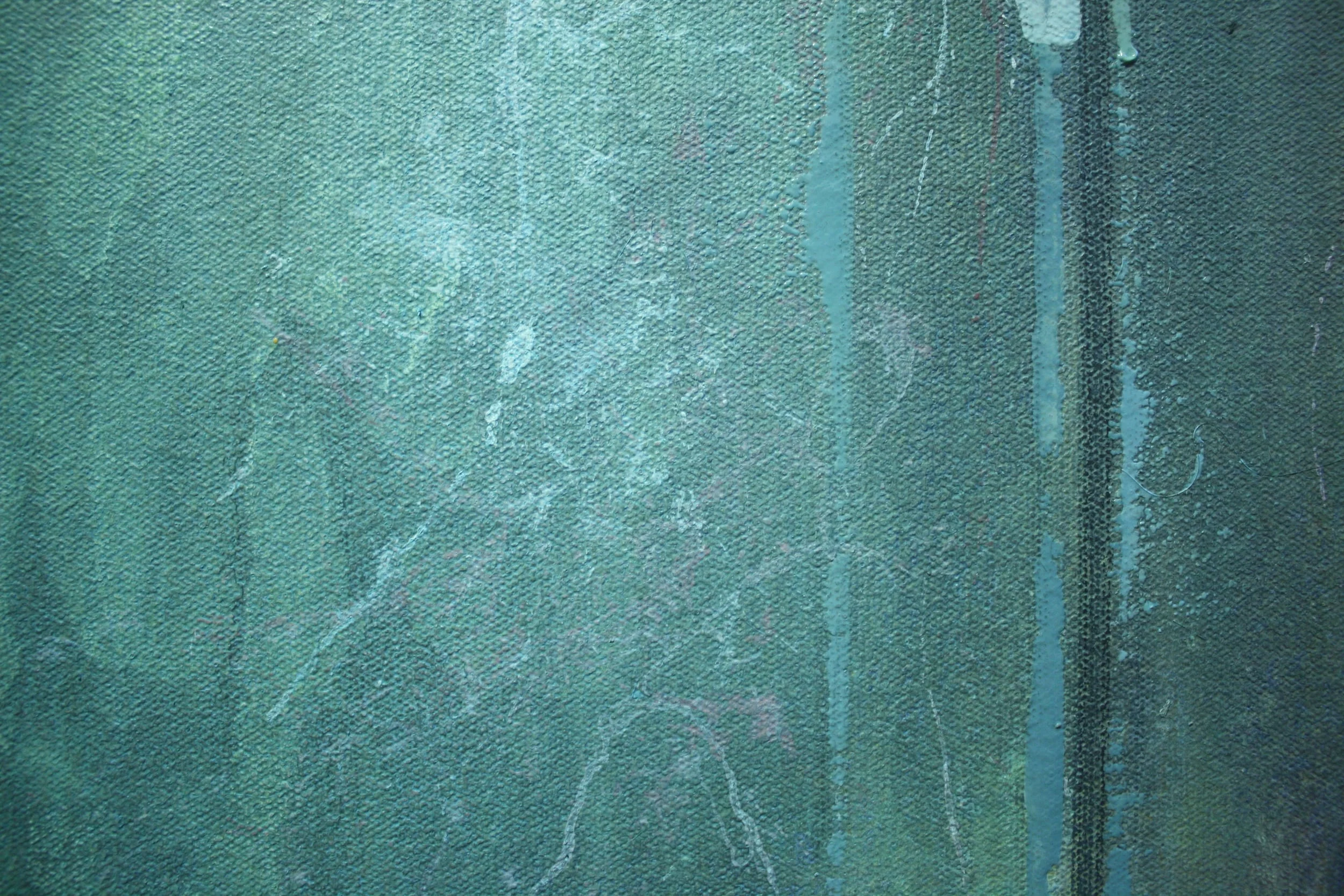
Divided Line is a meditation on memory, perception, and philosophical ascent, rooted in Leonov’s repeated passage from the St. Petersburg subway station to his childhood apartment—a route revisited so persistently through memory, dreams, and lived experience that it became both psychological landscape and metaphysical structure. The series draws directly from Plato’s Allegory of the Cave and Divided Line, transforming ordinary urban movement into a progression through states of consciousness. Escalators, tunnels, railings, wires, and corridors operate not simply as architectural motifs, but as symbols of entrapment within the sensory and material realm.
Across the four paintings, multiple progressions unfold simultaneously. Spatially, the works shift from atmospheric depth toward increasing flatness and structural compression. Visually, indistinct environments gradually resolve into traces of human presence: reflections, shadows, and ultimately the apparition of the figure itself. The string embedded into the canvases acts as a literal manifestation of Plato’s divided line—a physical threshold separating illusion from understanding, sensation from knowledge. Light becomes equally symbolic: natural illumination falling across industrial surfaces reveals the tension between organic existence and artificial systems constructed to contain, direct, and regulate human movement.
At the core of the series lies Leonov’s developing conception of the “human disease”: the condition of alienation produced by mistaking material appearances for reality itself. The paintings suggest a civilization increasingly enclosed within its own structures—psychological, architectural, and ideological—constructing systems meant to liberate while ultimately inhabiting them as cages. Yet Divided Line does not propose enlightenment as resolution. Instead, realization emerges as painful self-awareness: the recognition of one’s place within broader systems of memory, perception, desire, and collective existence. Through layered surfaces, spatial disorientation, and restrained figuration, Leonov transforms personal recollection into a broader philosophical inquiry into how human beings navigate the unstable boundary between essence and material form.