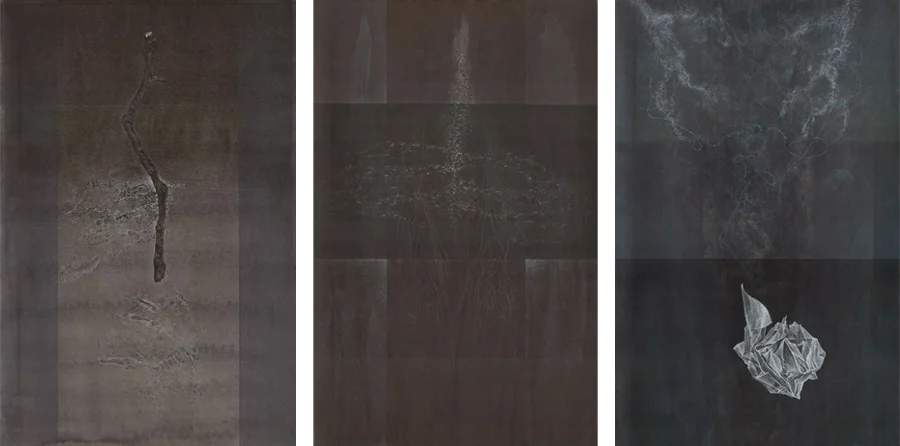
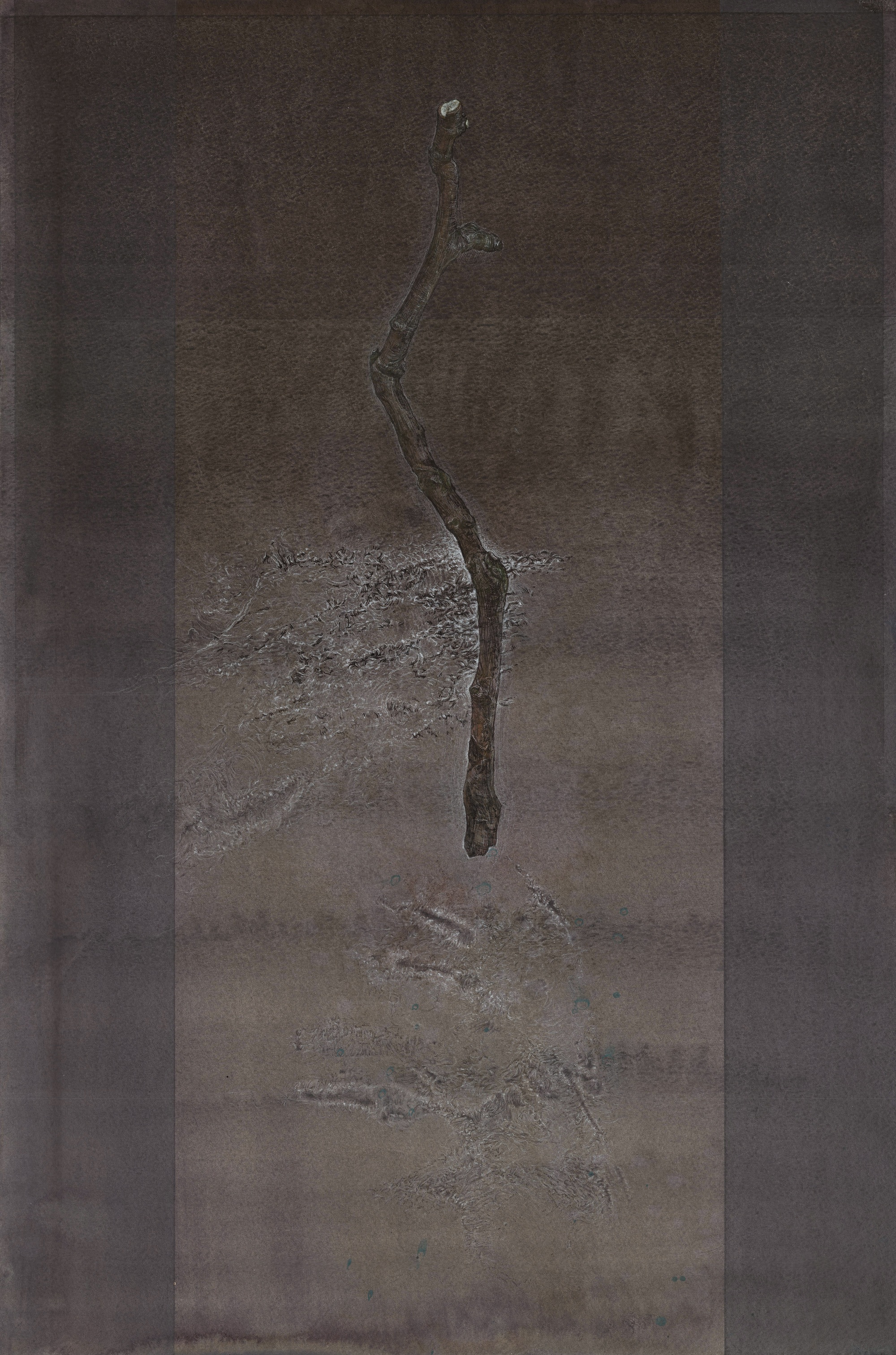
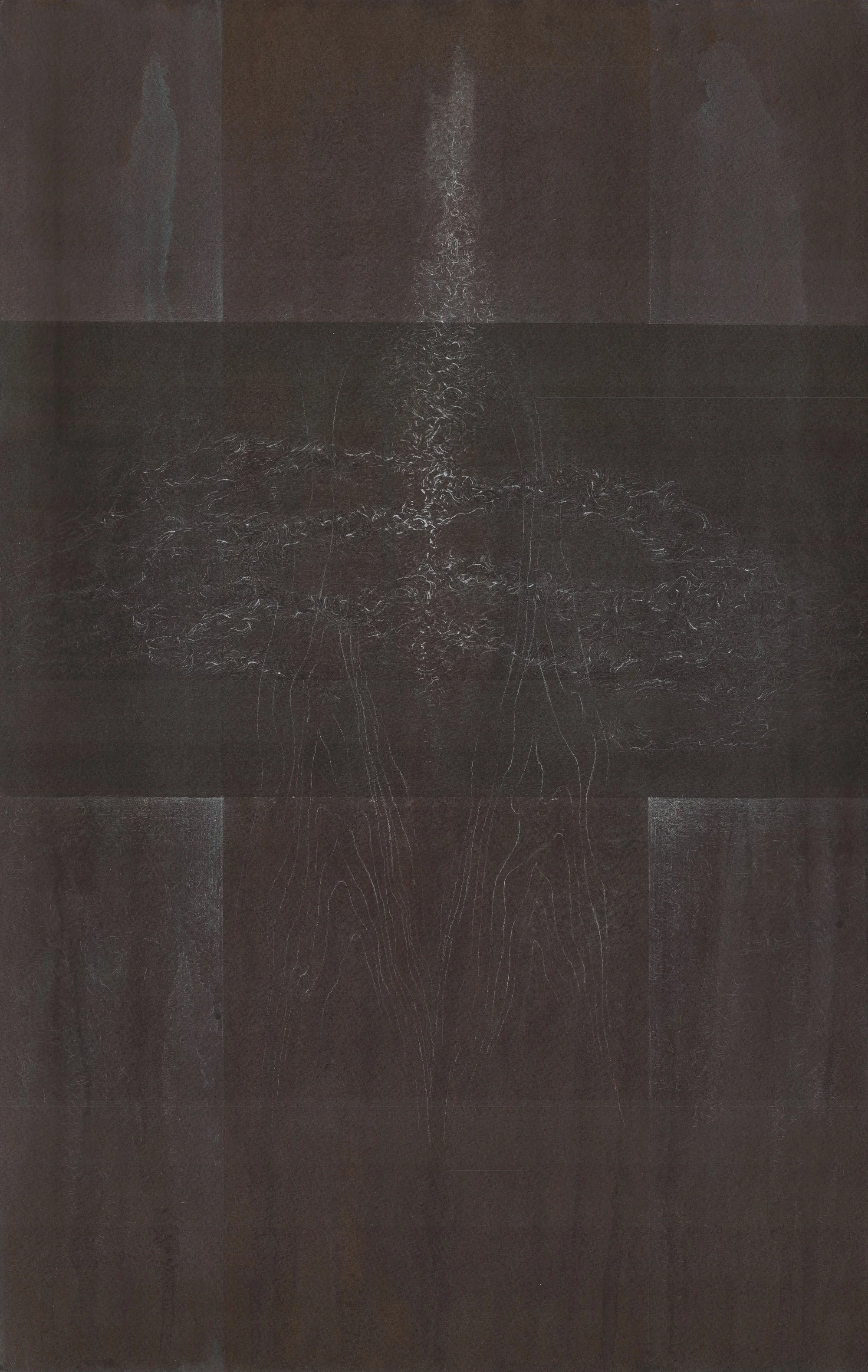
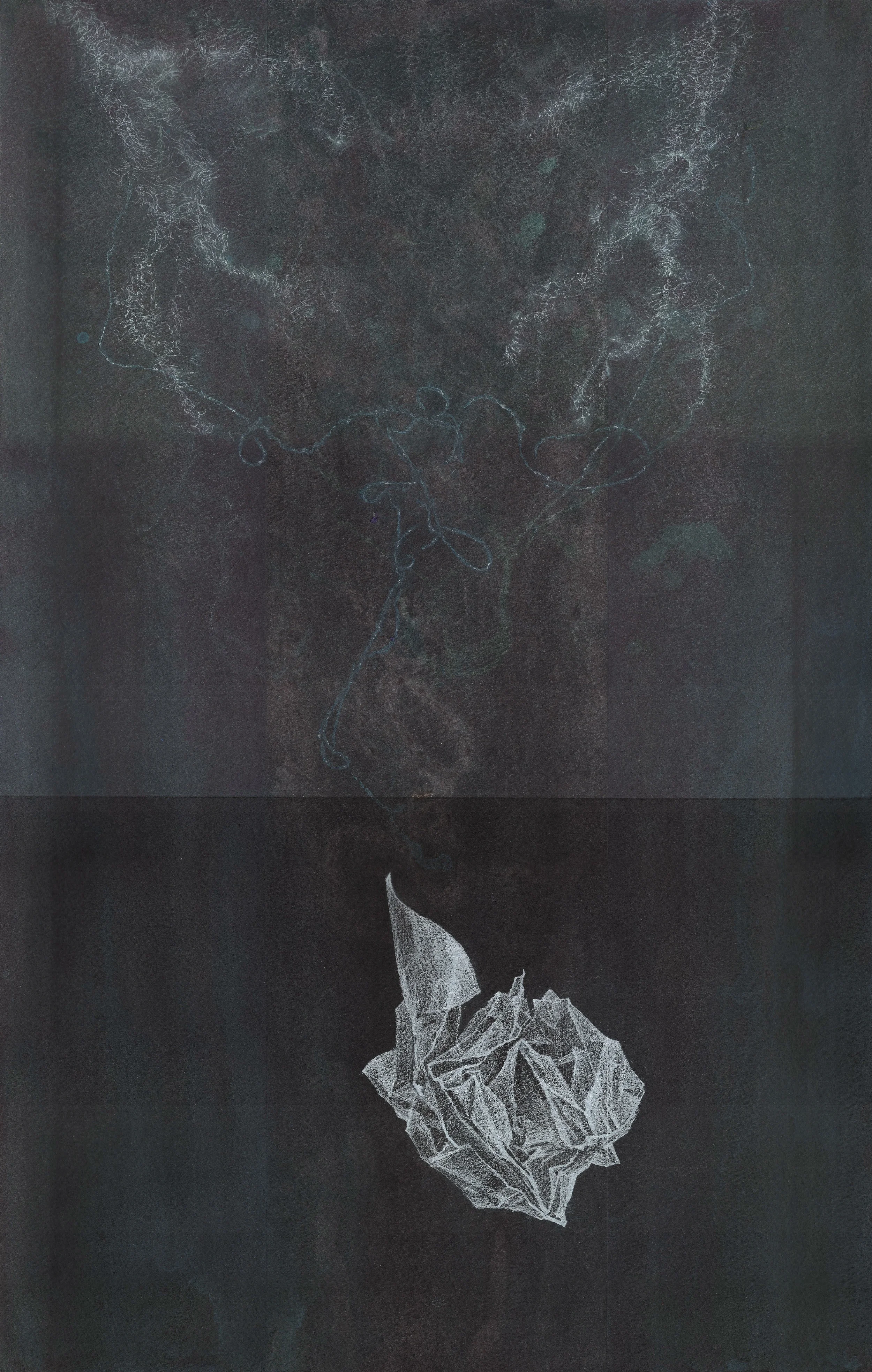
In Possession, Leonov constructs a process-oriented triptych centered on the human impulse to influence, control, and consume the surrounding environment. Across the three panels, organic and constructed systems enter into gradual conflict: the structure of wood is interrupted by bodily trace, abrasion, and accumulations of surface activity that feel both intimate and destructive. The works unfold less as narrative images than as states of transformation, where touch becomes a mechanism of alteration and erosion.
Central to the triptych is the development of “fleshmaps” — Leonov’s use of skin texture and bodily imprint as a connective visual language. These traces link forms across different scales: fingerprints echo wood grain, surface abrasion resembles topographic drift, and the body itself becomes inseparable from the processes acting upon the environment. Through restrained palette, layered surface, and subtle spatial divisions, Possession becomes a meditation on impermanence, self-awareness, and the unstable boundary between human presence and material decay.