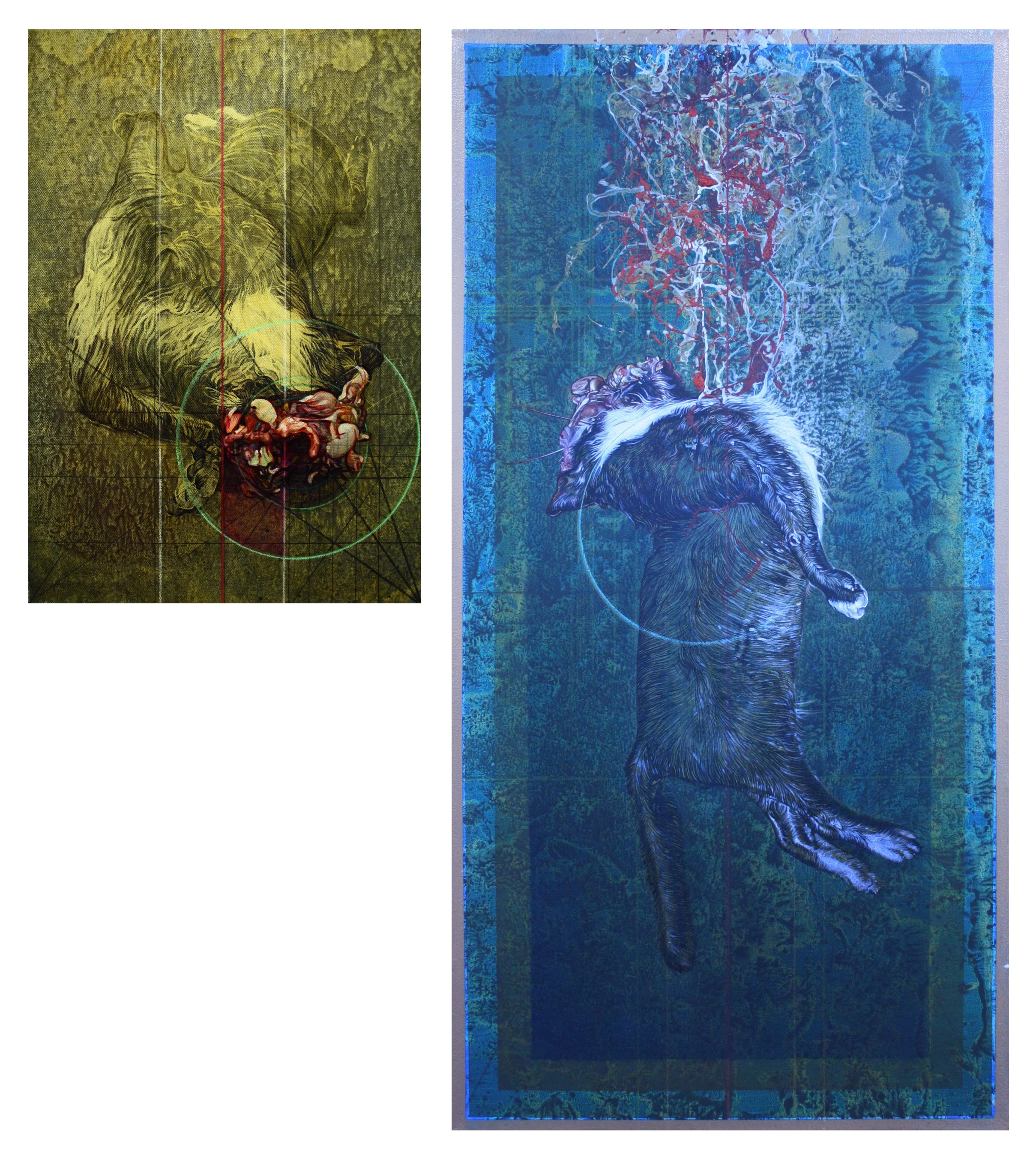
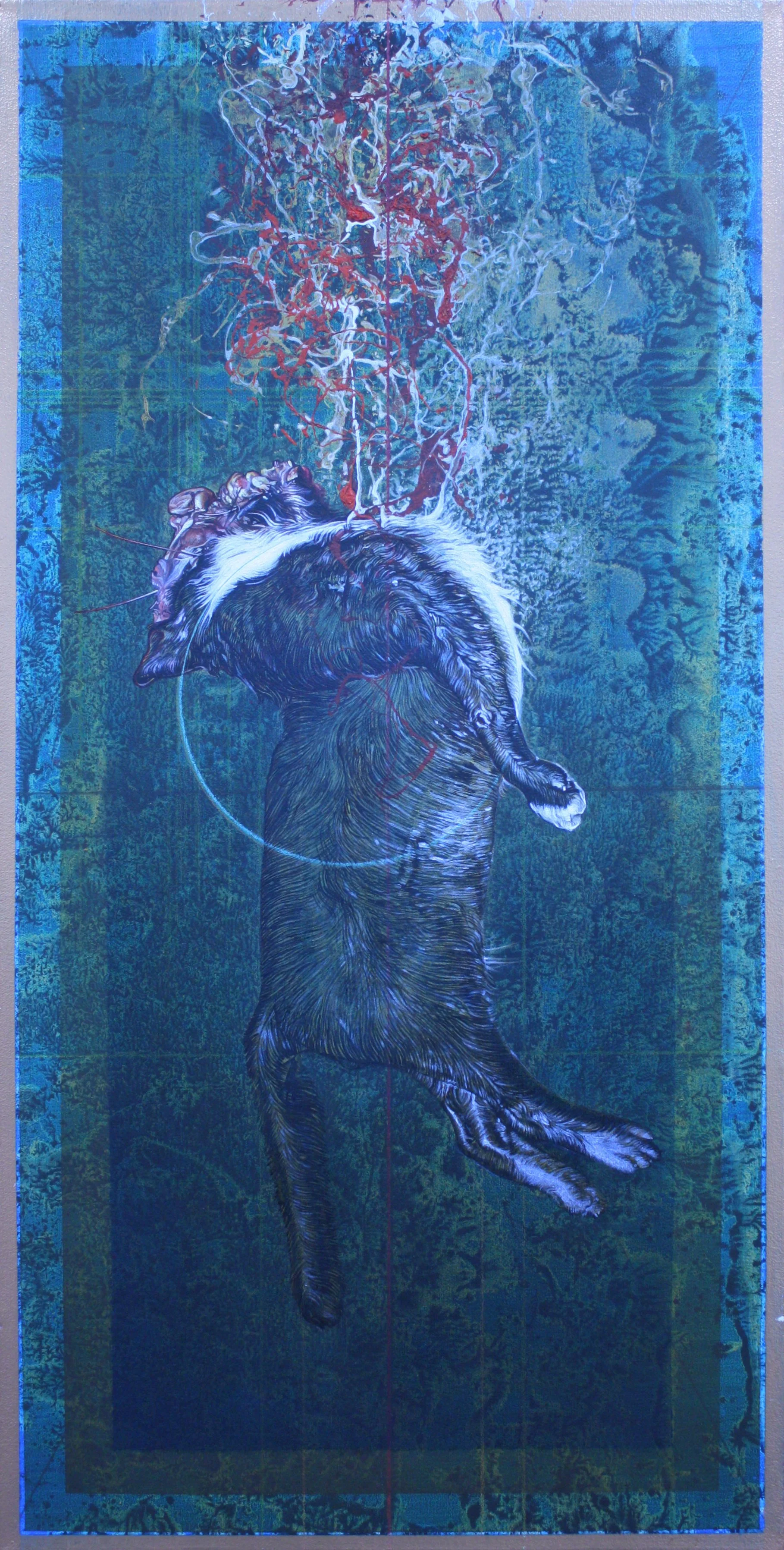
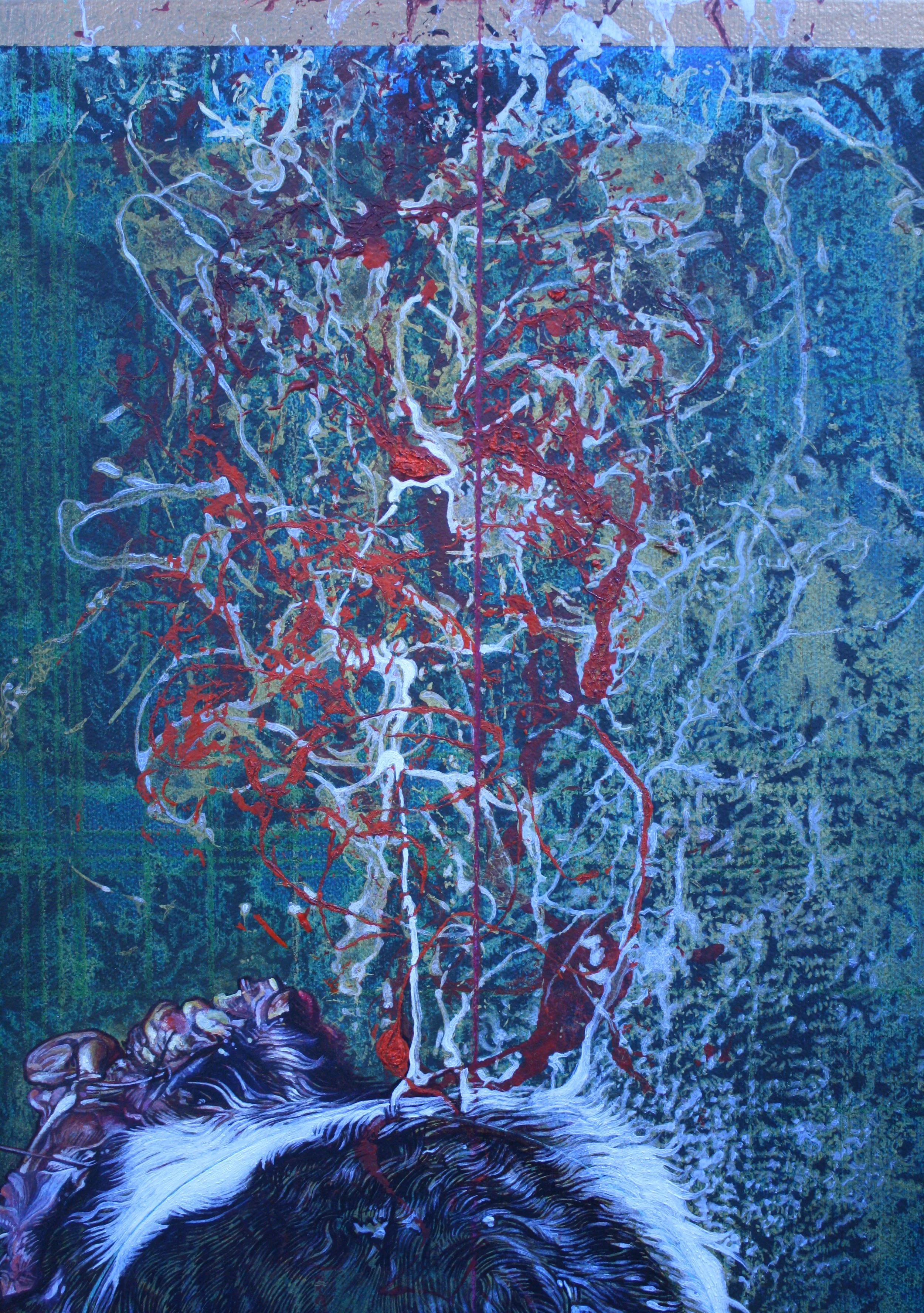
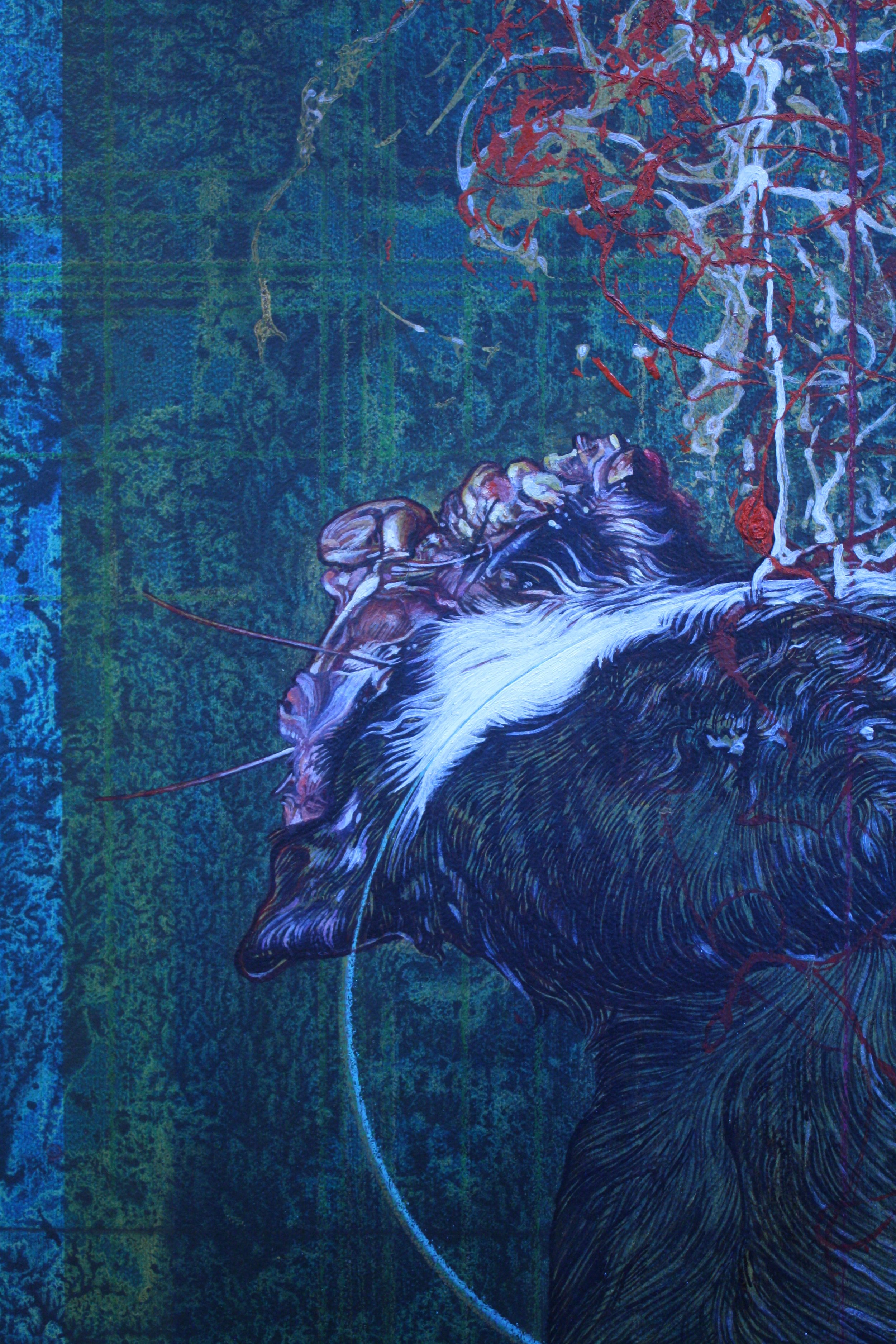
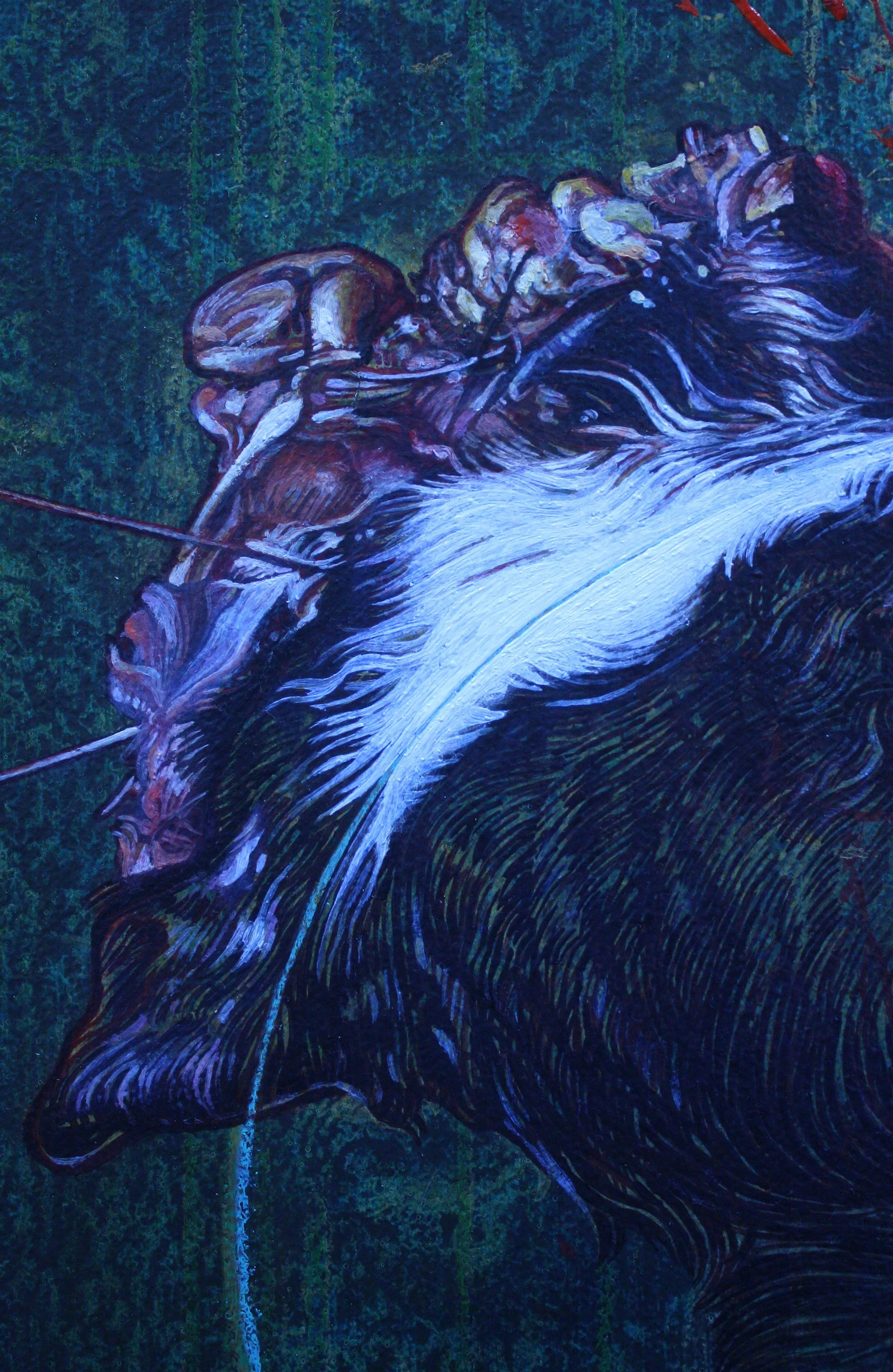
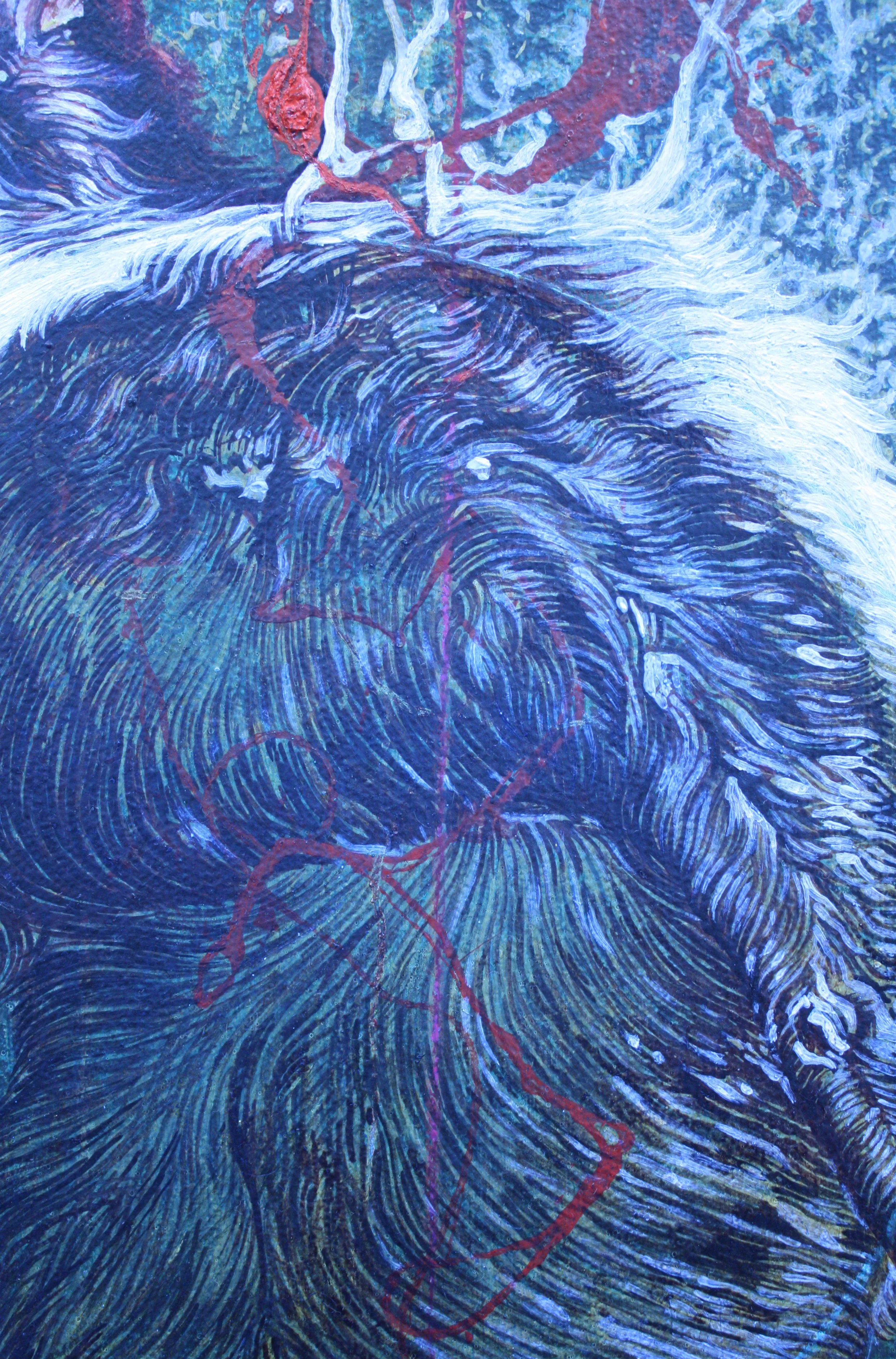
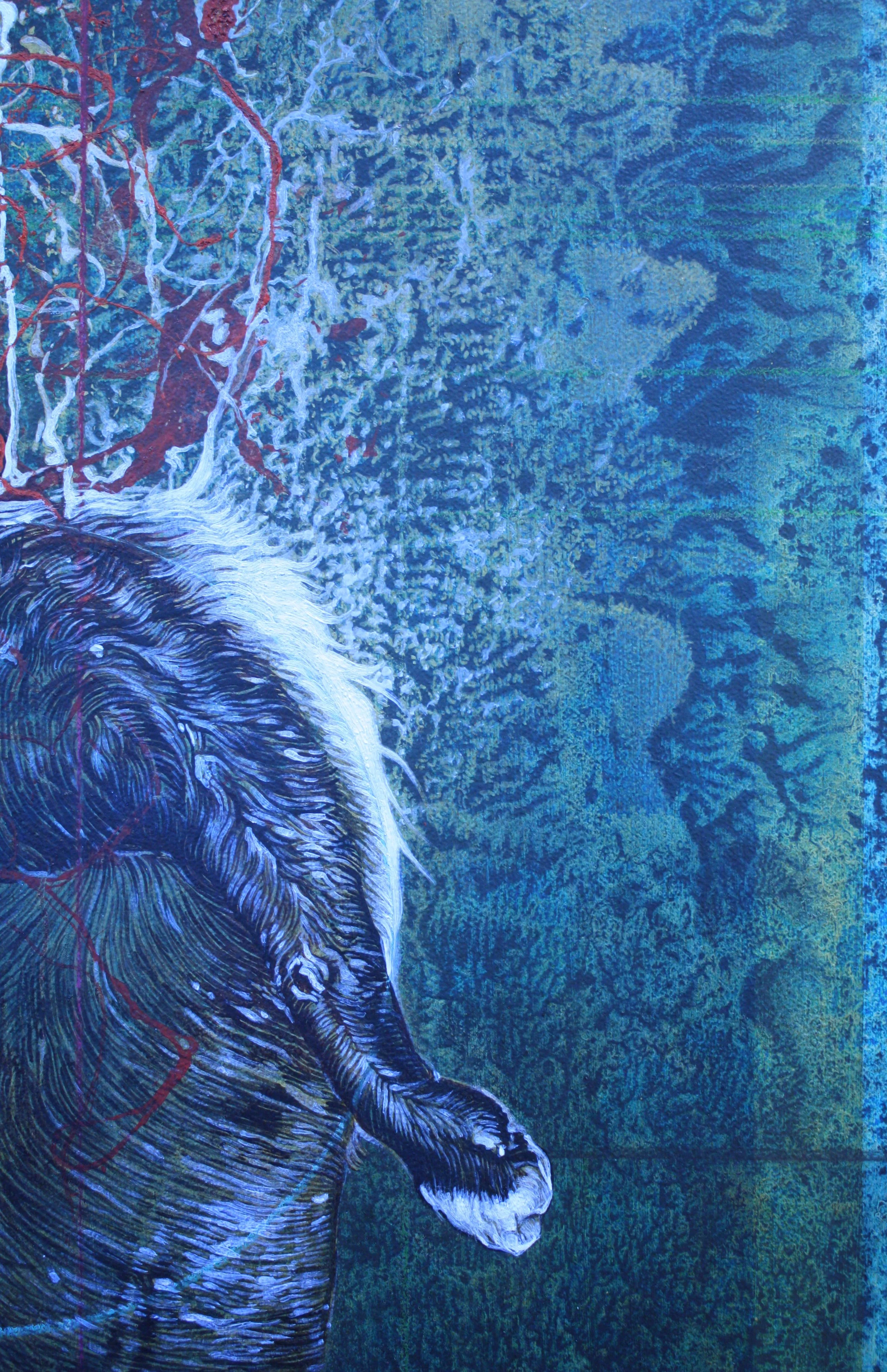
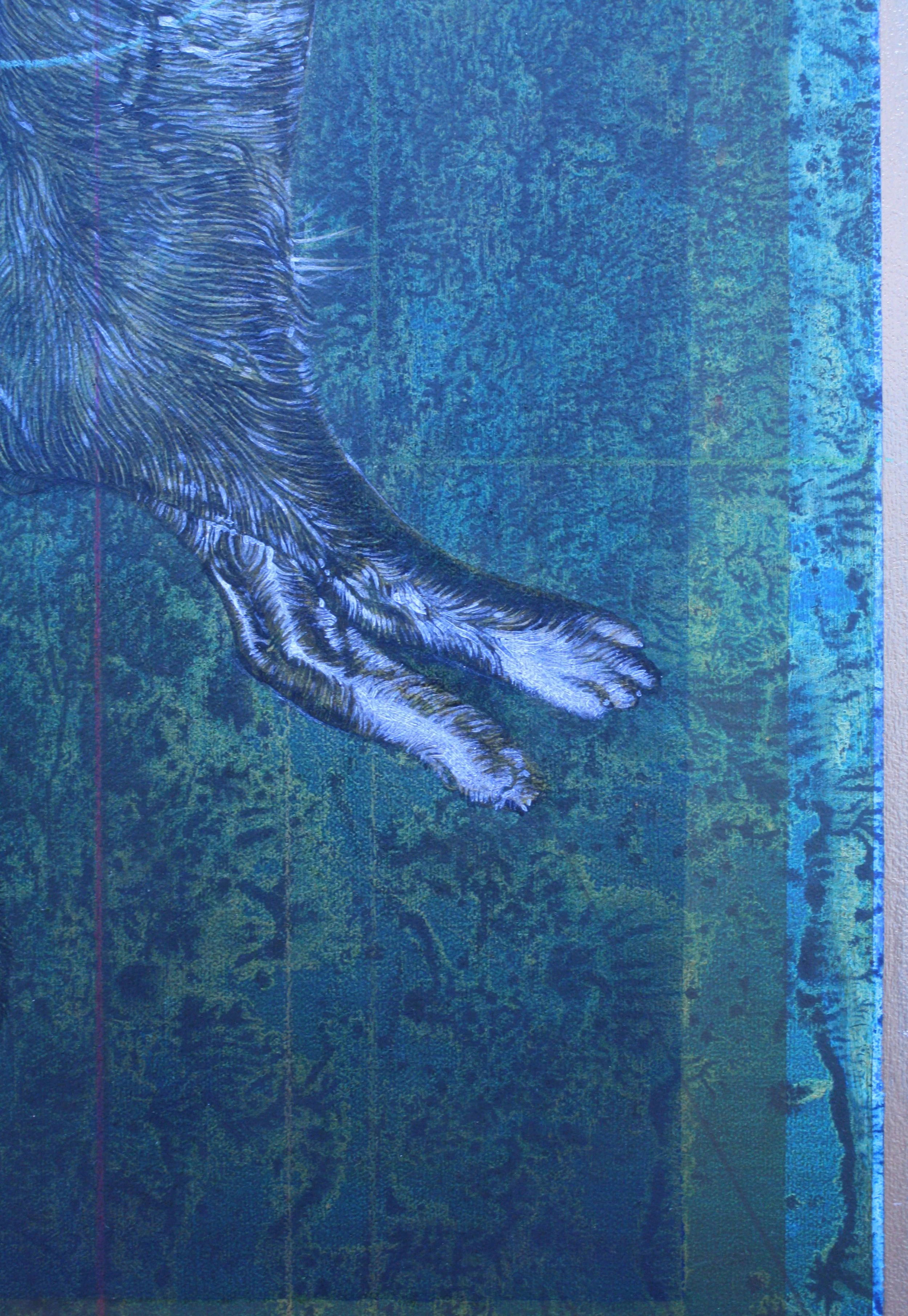
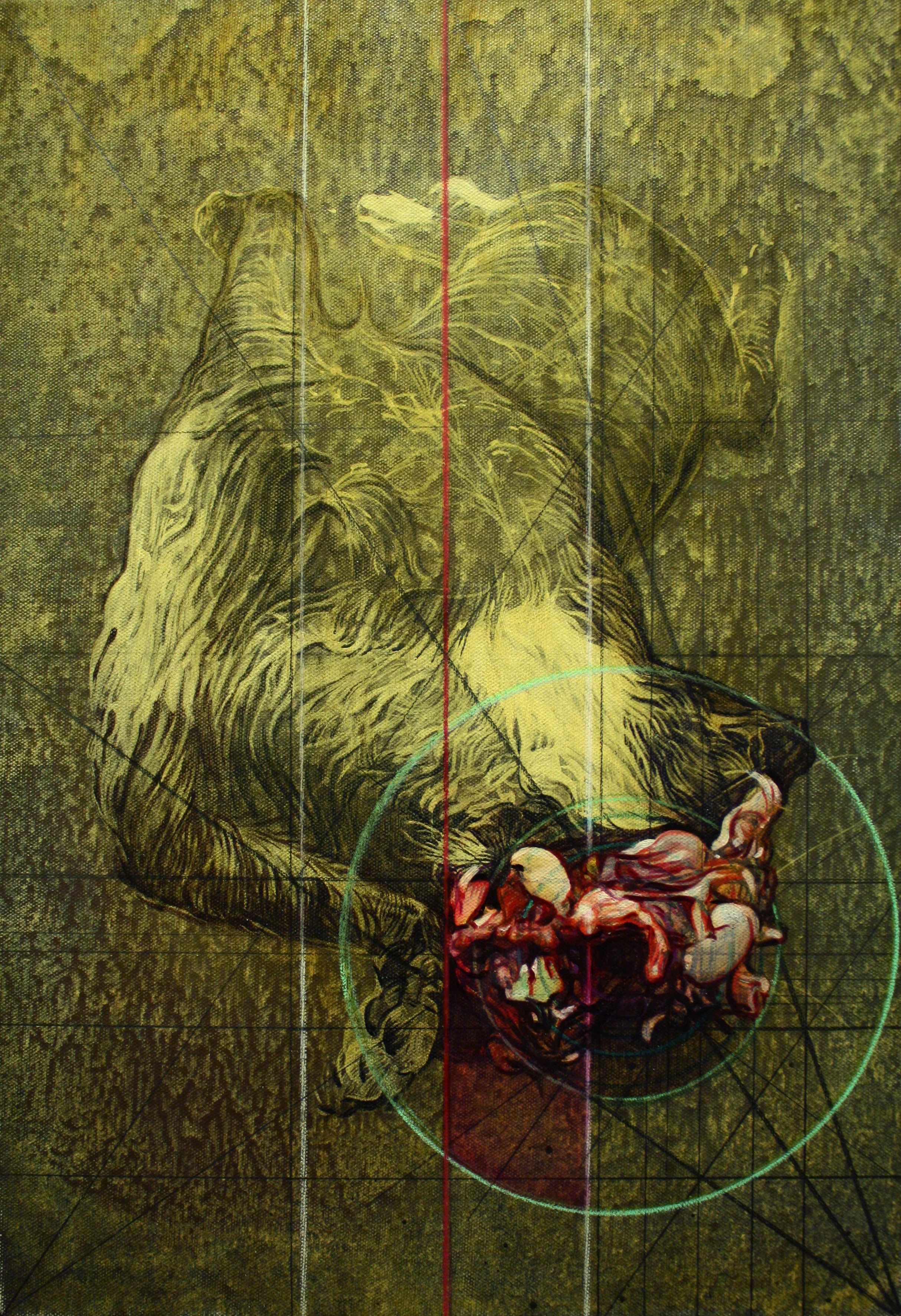
Thought Experiment externalizes the stakes of observation. Centered on a life-sized dead cat suspended within a tightly vertical composition, the painting fixes the viewer in the position of examiner, reinforcing the experimental framework invoked by the title. The overhead perspective evokes the logic of a sealed container or laboratory specimen, transforming the act of looking into an ethical confrontation rather than a neutral encounter. A smaller preparatory study established this structure, condensing the image into its essential tensions before its expansion into the final work.
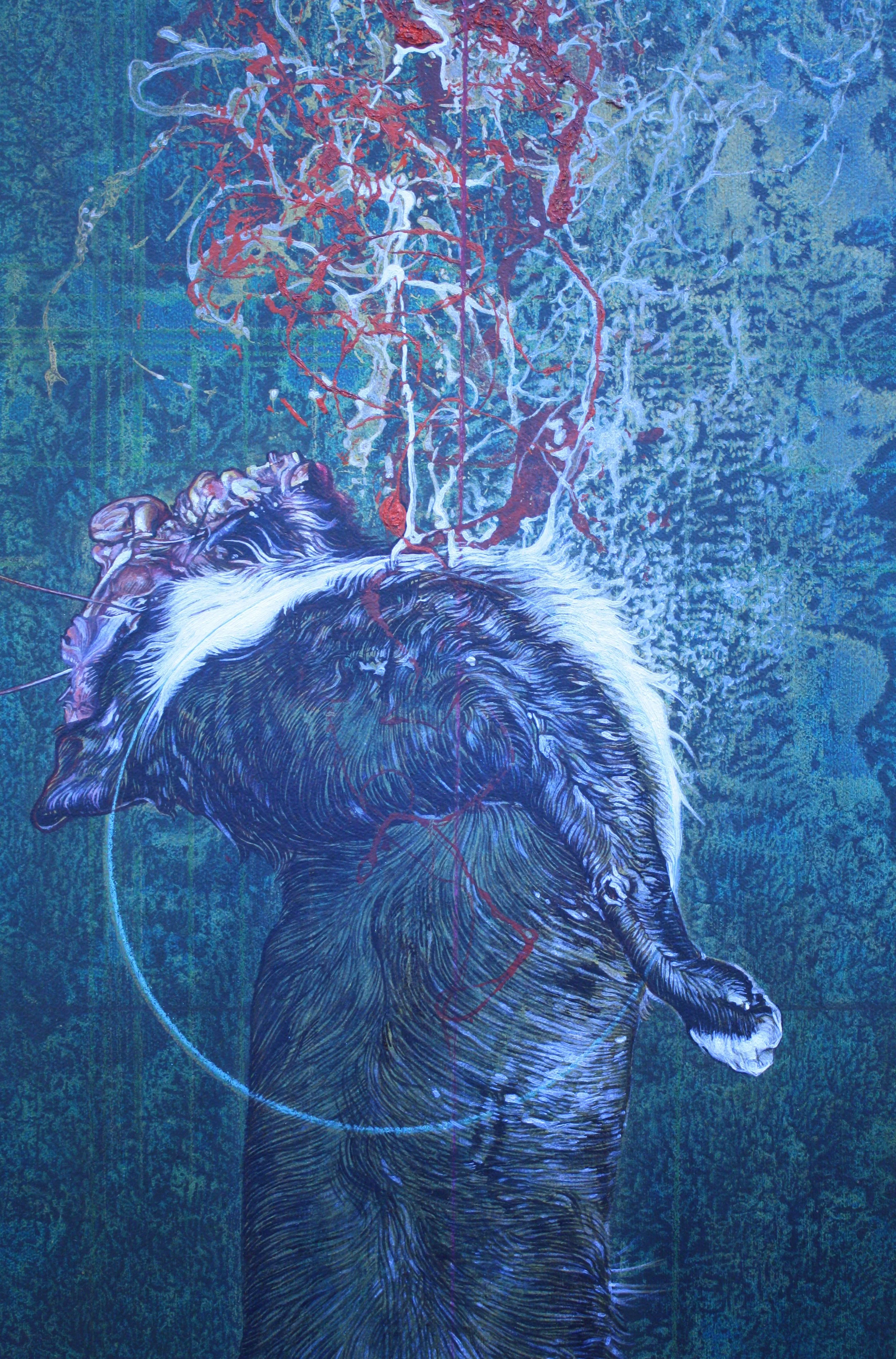
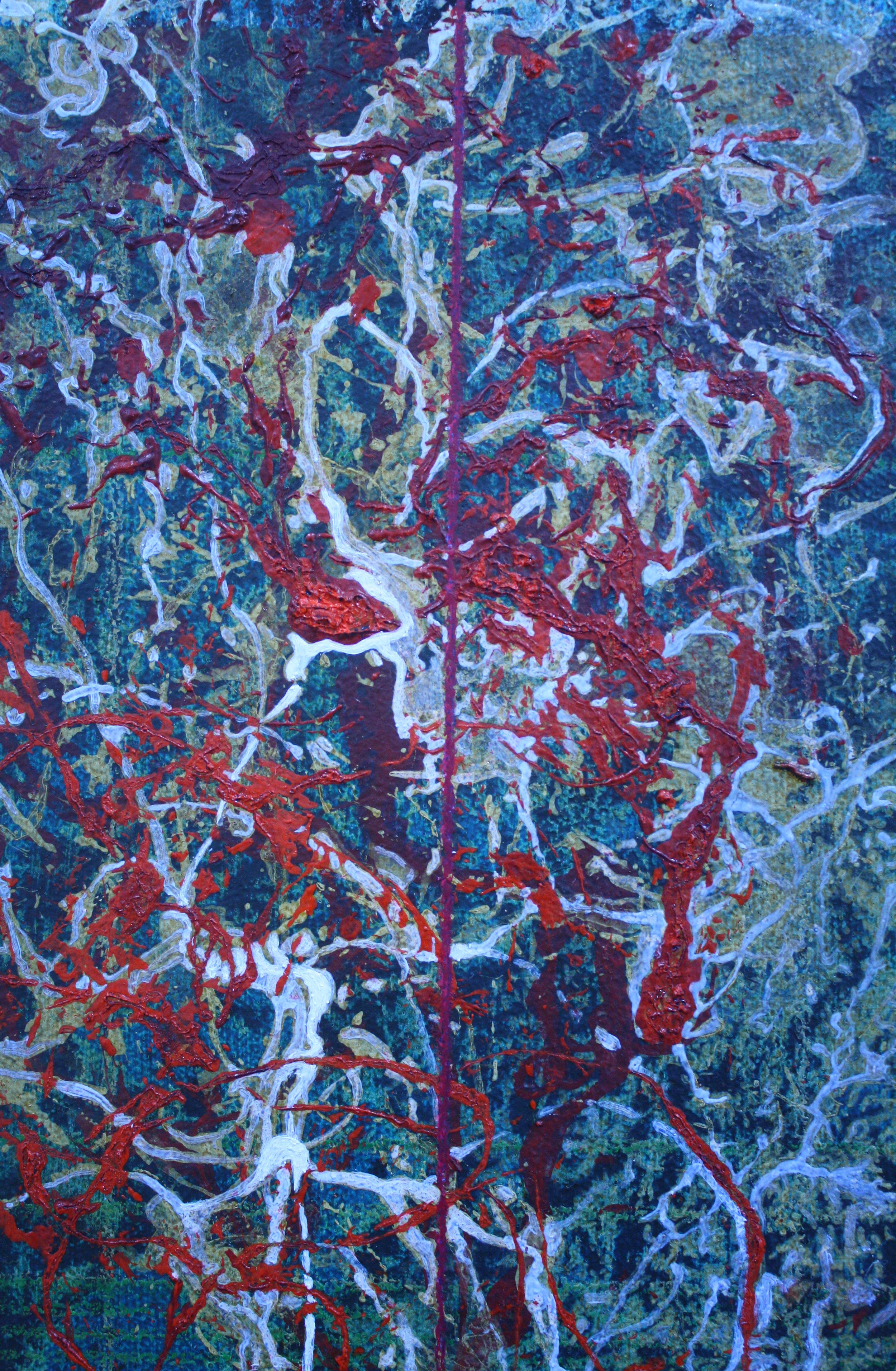
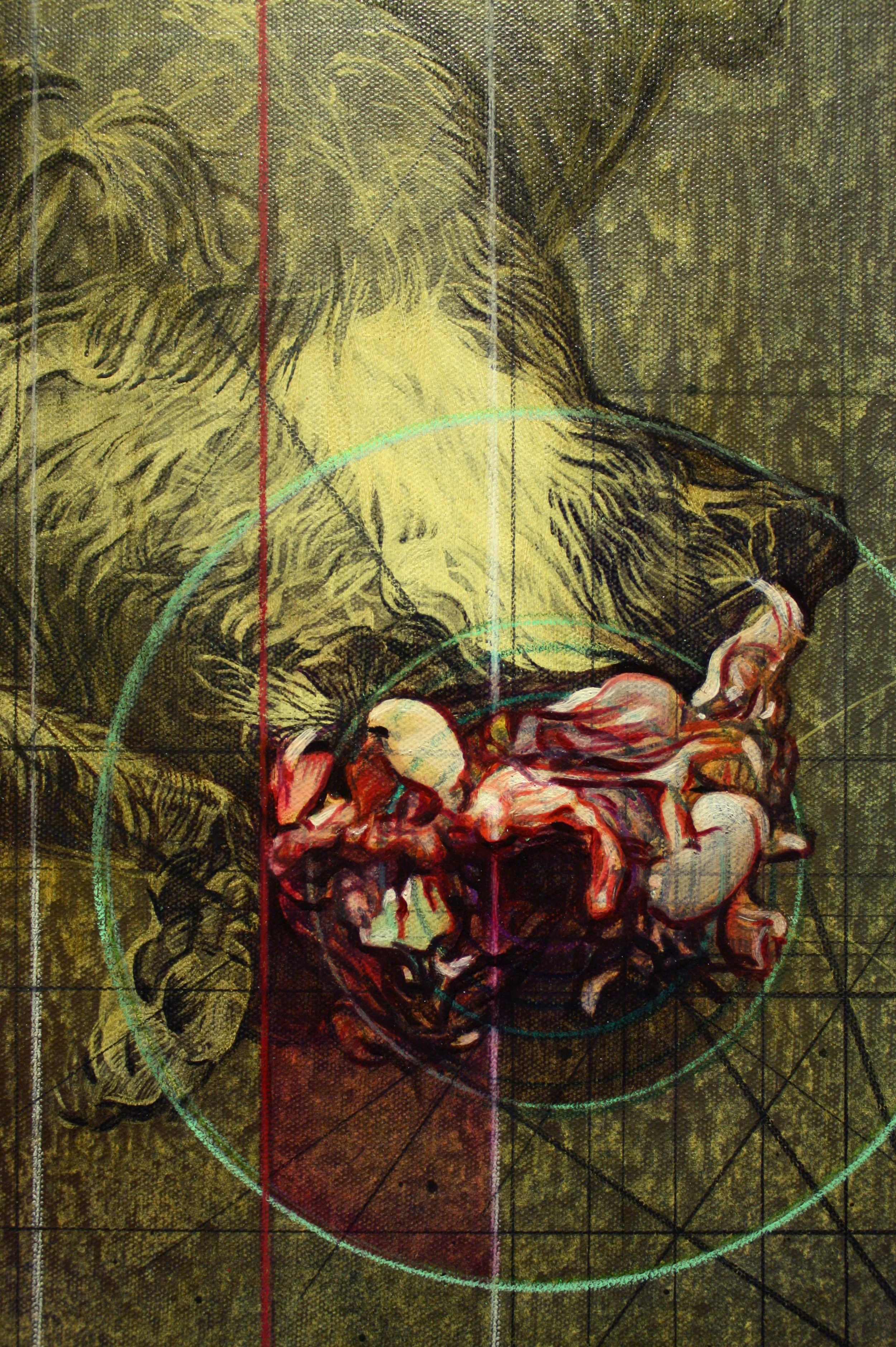
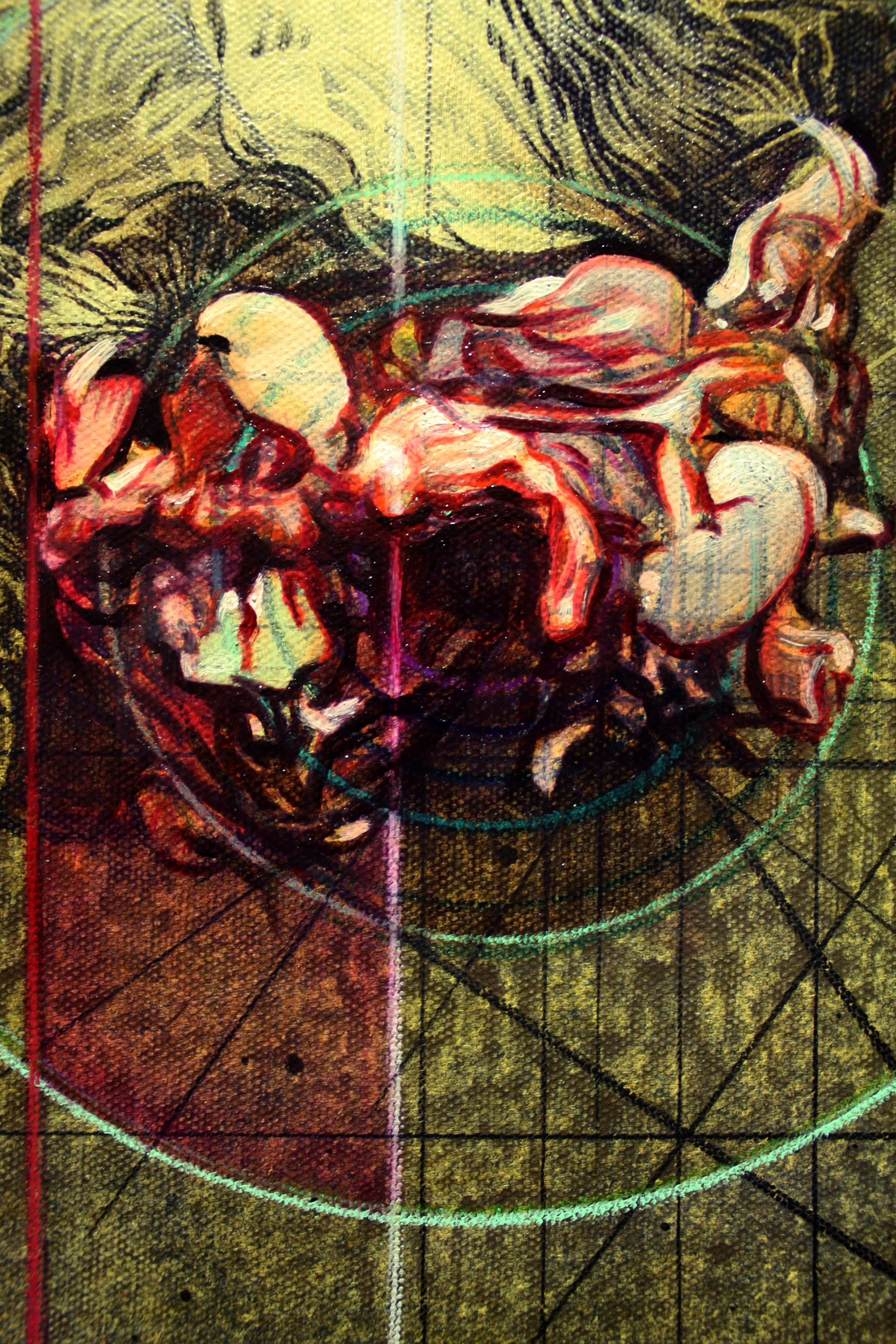
The painting draws from Schrödinger’s cat and Einstein’s objection to the paradox’s more radical interpretations: reality exists independently of observation, even when human systems struggle to account for it honestly. Leonov translates this conflict through a collision of visual languages. The cat is rendered with meticulous anatomical precision, carrying the weight of classical observation and bodily fact, while above it an explosive field of tangled red, white, and linear structures recalls the ruptures of abstraction, scientific uncertainty, and twentieth-century systems of thought. Art history and science become both subject and method: realism confronts abstraction, the body confronts the model, and observation confronts the violence hidden within frameworks of knowledge.
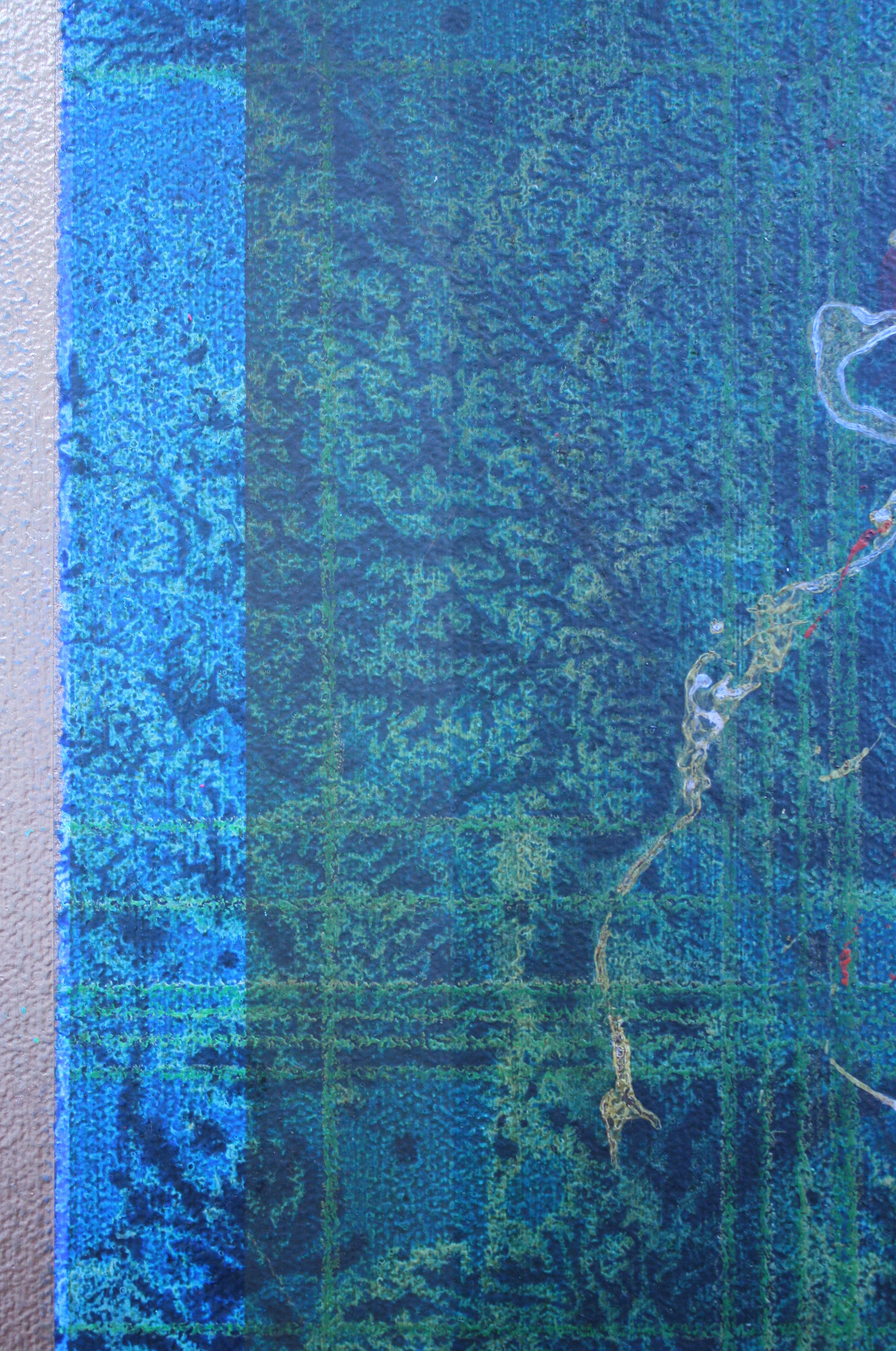
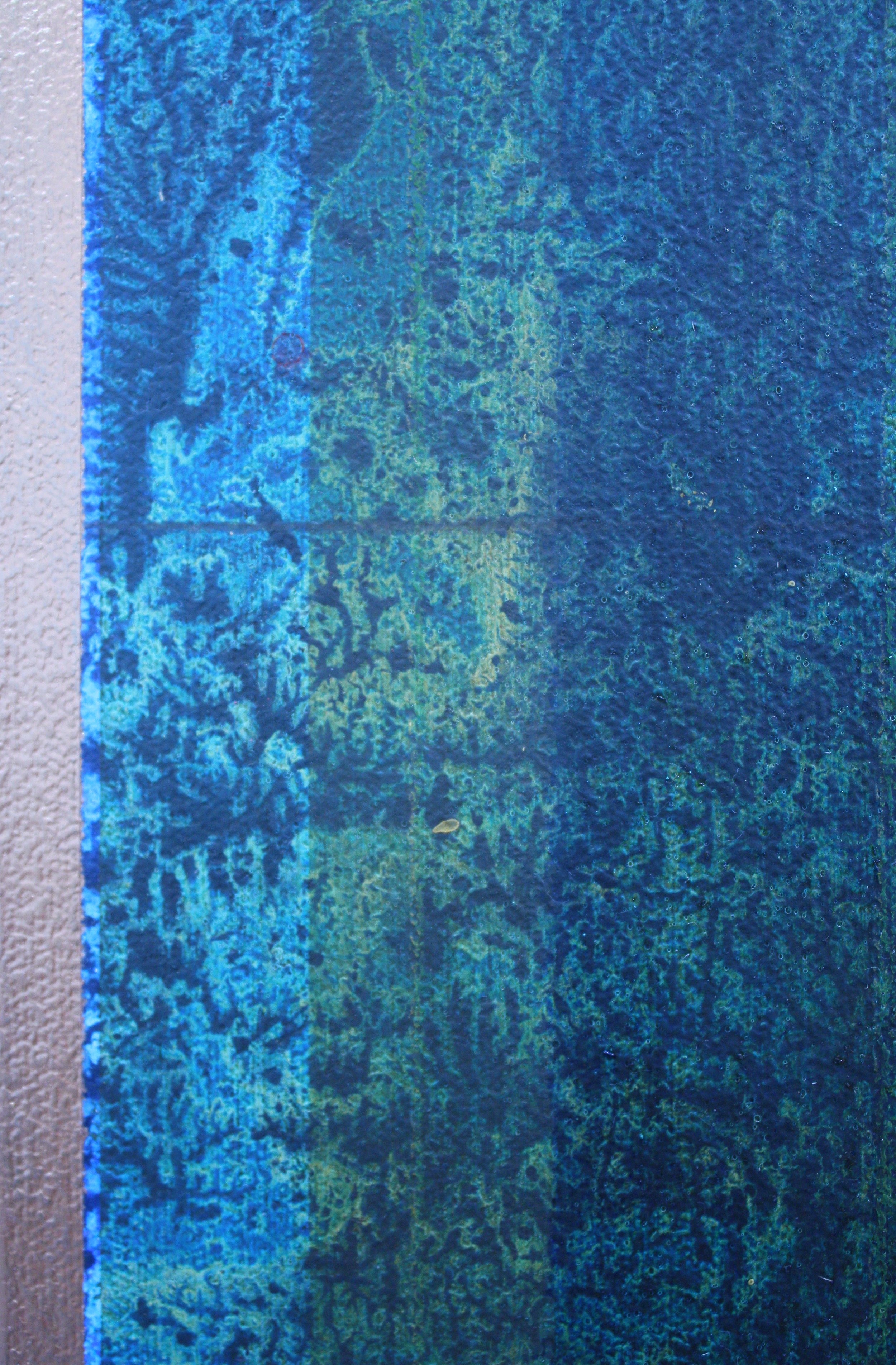
The work also resonates with the ethical terrain invoked in Skinny Puppy’s Testure: the use of animal bodies within systems of experimentation, control, and abstraction. Grids, circular forms, and measured divisions reassert containment across the surface, while the cool blues and greens evoke scientific imaging or forensic documentation. Observation here is not passive; to look is to participate in the collapse of uncertainty into fact. In this shift from inward psychological inquiry toward external ethical reality, Thought Experiment marks a pivotal expansion in Leonov’s practice.