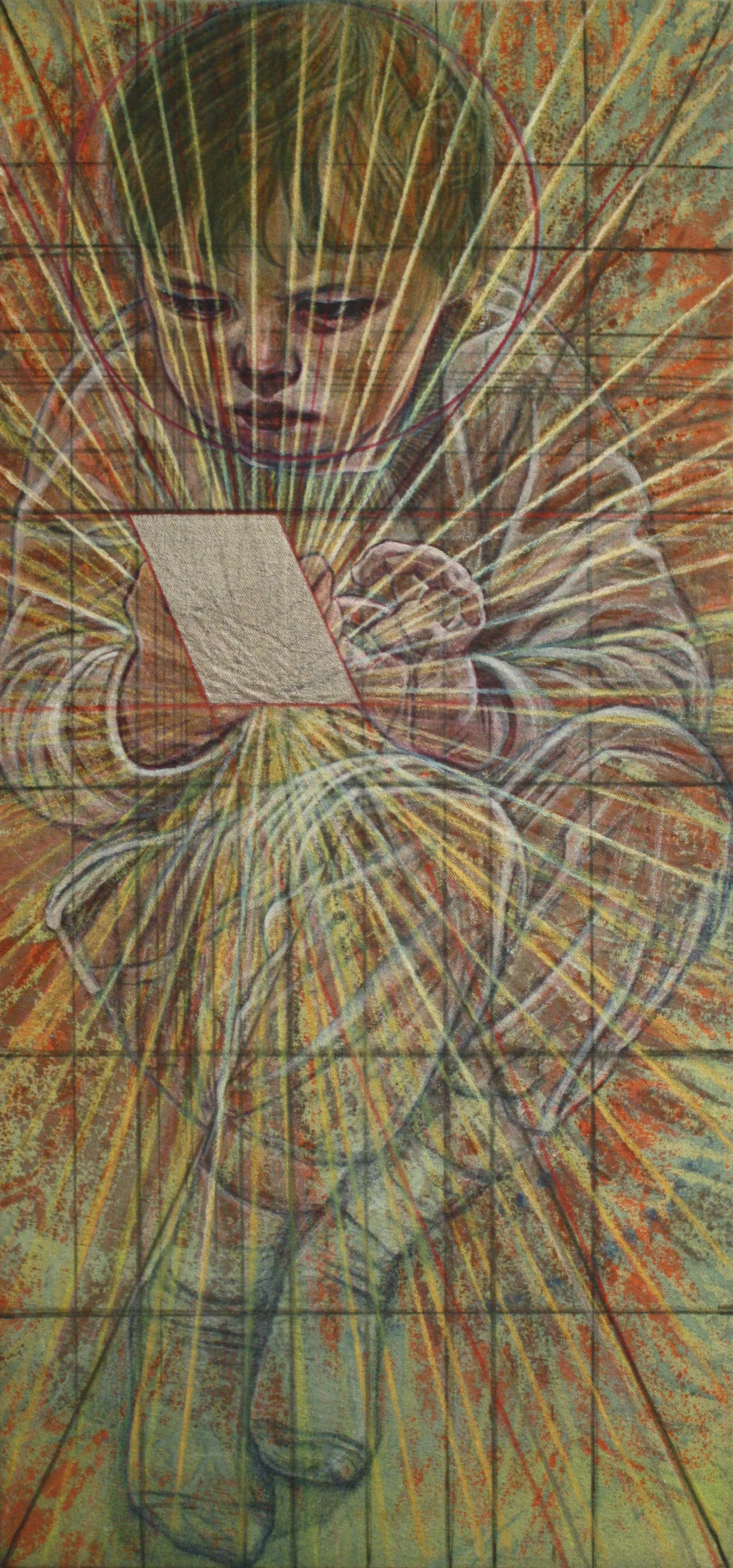
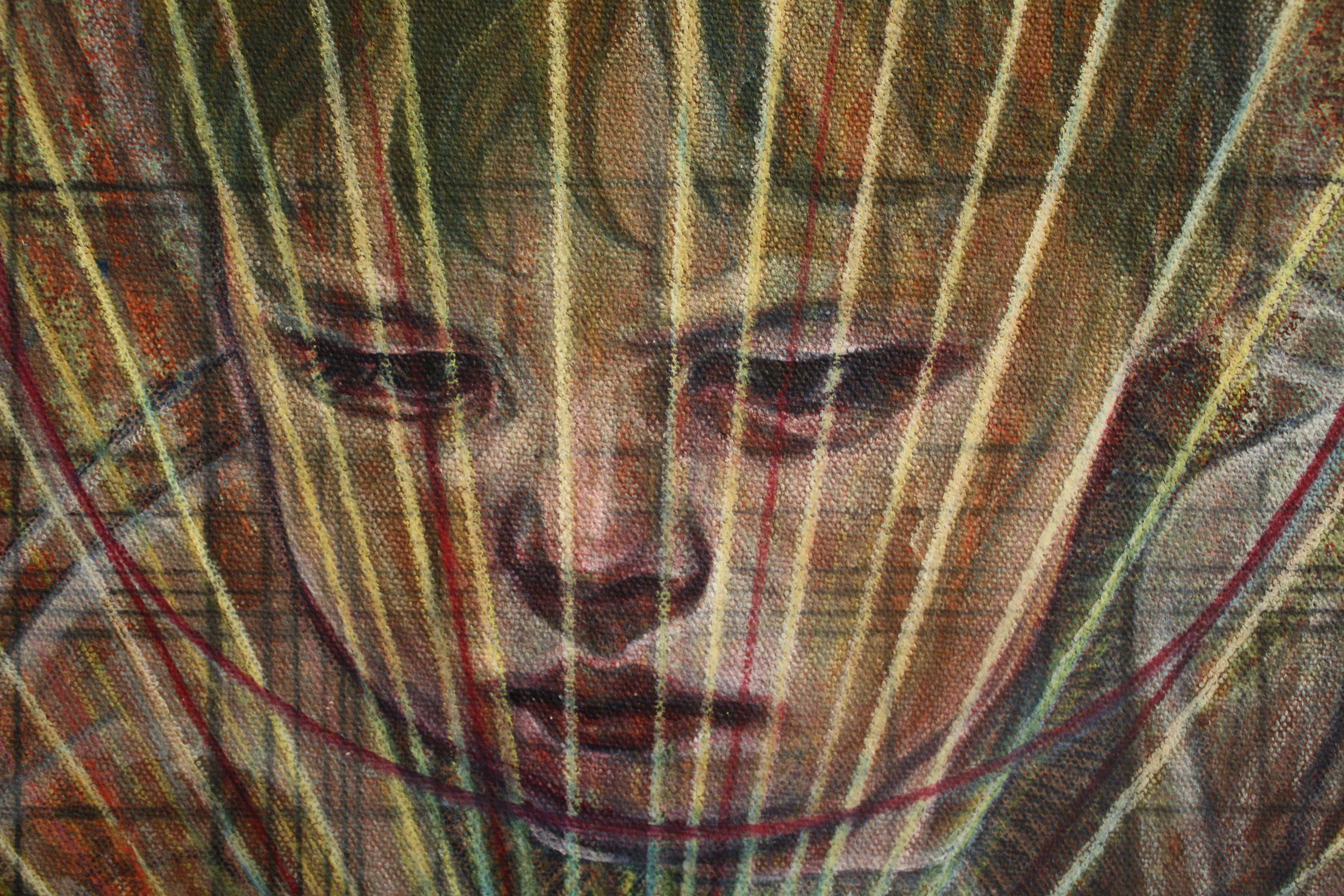
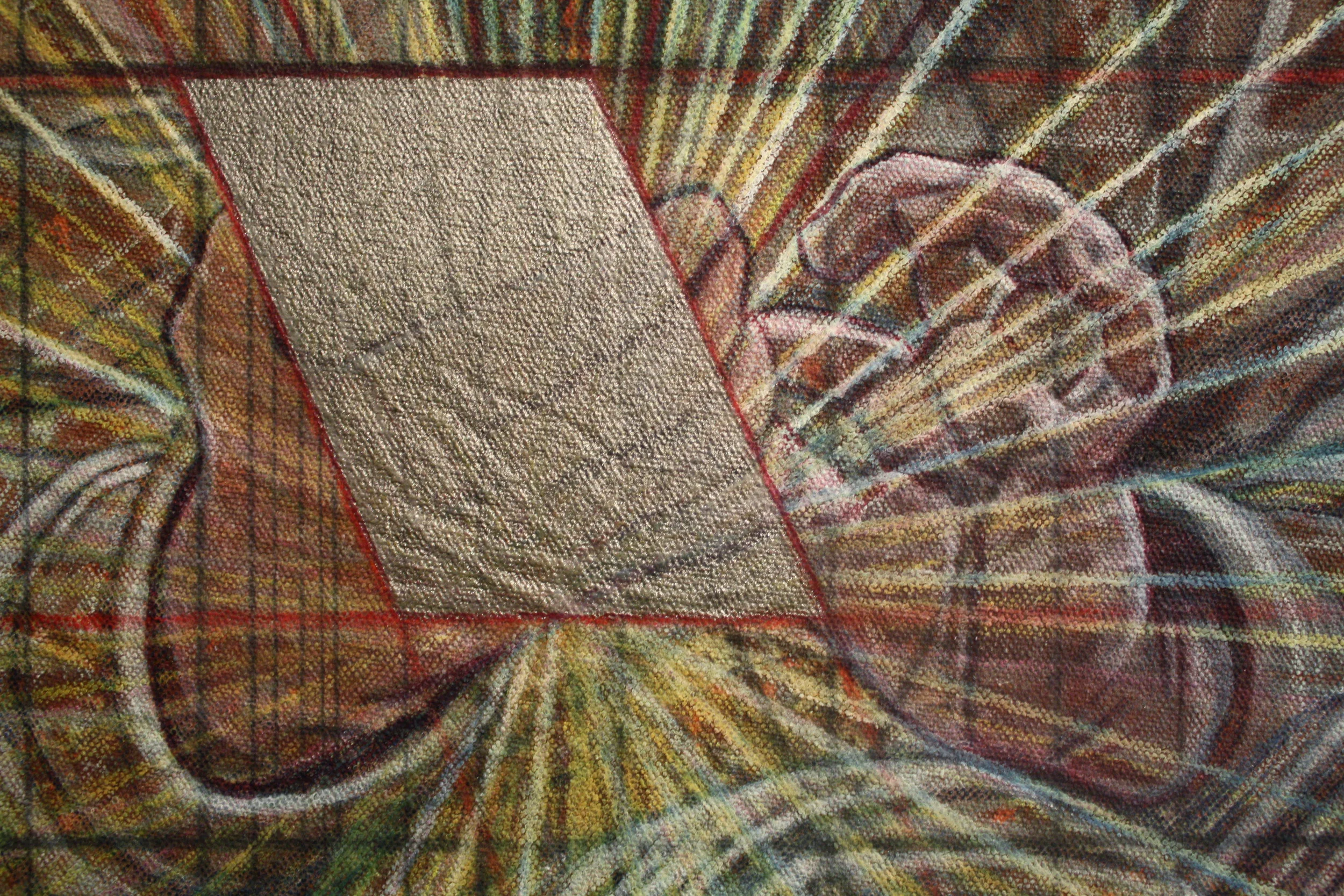

Unreality addresses early technological capture by converting format into content. The canvas itself adopts the proportions of a smartphone, implicating the viewer in the familiar act of holding and looking, while the child’s absorbed gaze establishes a condition of withdrawal from the surrounding world. The screen, rendered as a cold metallic rectangle, resists absorption into the body and becomes a blank site of projection: radiant, empty, and structuring.
Radiating lines extend from the device across the figure, transforming classical perspective into an optical cage. What might once have organized depth or harmony now operates as a system of containment, tightening around the child through grids, beams, and sharp spatial divisions. The halo is reinterpreted as digital enclosure, replacing organic or spiritual wholeness with a formatted field of attention.
Rather than moralizing technology, Unreality examines the structures through which artificial experience becomes normalized. The painting positions the device not simply as an object, but as a system shaping perception at its most formative stage. In this shift from sphere to rectangle, from presence to interface, Leonov gives visual form to a contemporary condition in which connection, attention, and reality itself are increasingly mediated by the screen.